
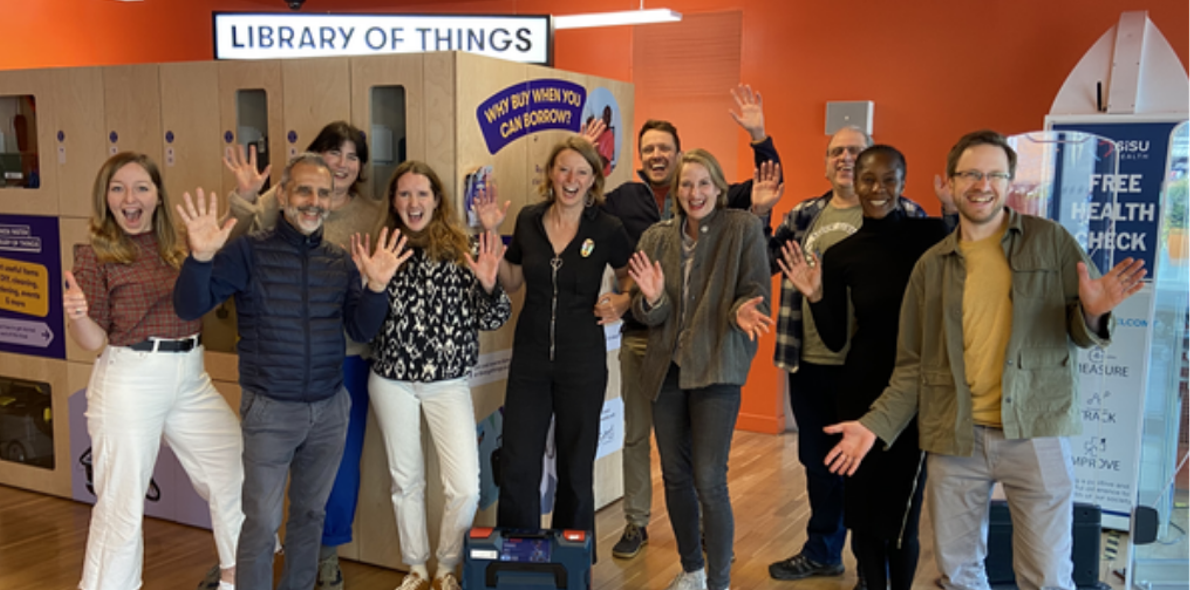
In a project that revives the culture of sharing and transforms libraries and community centers into hubs of service and empowerment, London’s Library of Things offers an innovative model for fairer, more sustainable consumption. Instead of buying tools and equipment outright, people can borrow them for short periods. Through user-friendly digital platforms, members access a wide range of items for a small fee—lightening financial burdens, reducing waste, and strengthening community ties. It’s an innovation that democratizes access to resources while supporting the transition toward a more inclusive and resilient circular economy.
Across London neighbourhoods, it’s no longer unusual to find a place where you can borrow a sewing machine, a carpet cleaner, or even a projector—just as you once borrowed a book from the local library. This is no gimmick and no passing fad. It’s a working model that redefines our relationship to consumption and sketches the outlines of a fairer, more sustainable economy.
The initiative, known as the Library of Things, began in South London and has since spread across the UK, Australia, and beyond. The premise is simple but powerful: you don’t need to own everything you use—you just need access when you need it. This shift from ownership to access challenges consumption patterns that have strained the planet and weighed heavily on households.
At its core, the model makes it possible to borrow rarely used tools and equipment for a nominal fee. The library’s catalog ranges from drills and lawnmowers to tents and steam cleaners. Users can reserve items online through platforms such as myTurn, then pick them up from community centers, public libraries, or even mobile units in rural areas.
But this is more than a digital platform—it’s a community enterprise. Volunteers are the backbone: they manage inventory, test items when returned, organize workshops, and provide day-to-day support. Much of the equipment comes from local donations or partnerships, embedding the project within a circular economy of reuse and shared value.
The beginnings were modest but intentional. In Totnes, the “Share Shed” launched as a mobile borrowing service. In Oxford, the first collection of 350 items was curated around seasonal demand: gardening tools in summer, heaters and dryers in winter, repair kits year-round. In Australia, libraries of things have spread with backing from a national network that shares templates, coordinates with city councils, and links projects to public libraries.
What matters most, however, isn’t the number of sites—it’s the tangible difference in people’s lives. Thousands of users now save money, free up space, and avoid unnecessary purchases. Renting a carpet cleaner for £10 can replace buying one for £250—or paying for an expensive cleaning service. At the same time, the library becomes a meeting point, a place for exchanging knowledge, and a space where neighbours rebuild trust.
The environmental benefits are equally significant. Every borrowed item means one less manufactured, packaged, and eventually discarded. By extending the lifespan of tools, the project puts circular economy principles into practice while easing pressure on natural resources.
The business model is straightforward but reveals deeper lessons. Smooth digital booking and trust in the platform are not luxuries but essentials for scaling. Community participation isn’t an add-on—it’s the engine that keeps the project alive. And smart, context-sensitive growth matters more than rapid expansion: each library thrives when it grows with its community’s needs, not just its founders’ ambitions.
Against the backdrop of rising living costs, high rents, and shrinking space, the Library of Things feels both logical and just. But it’s also more than practical—it’s a call to reimagine the economy, to rekindle communal spirit, and to remind us that dignity begins with access to the tools we need to live, work, and celebrate, without ownership or money as the gatekeeper.
The Library of Things is not only an innovation in how we consume—it is an innovation in how we think. It demonstrates that collective living is not a retreat from individuality but a step toward a stronger, smarter, and fairer society.
References: