
In an effort to expand energy access across rural India, an innovative project has developed a flexible model for distributing electricity. The system relies on portable, rechargeable batteries that operate on a “pay-as-you-go” basis. Residents can charge these batteries at local solar- or wind-powered stations, then carry them home to power essential devices. The approach removes the burden of high upfront costs and offers a cleaner, more practical alternative to polluting diesel generators. By blending modern technology with rural realities, the initiative introduces a scalable model that redefines access to clean energy.
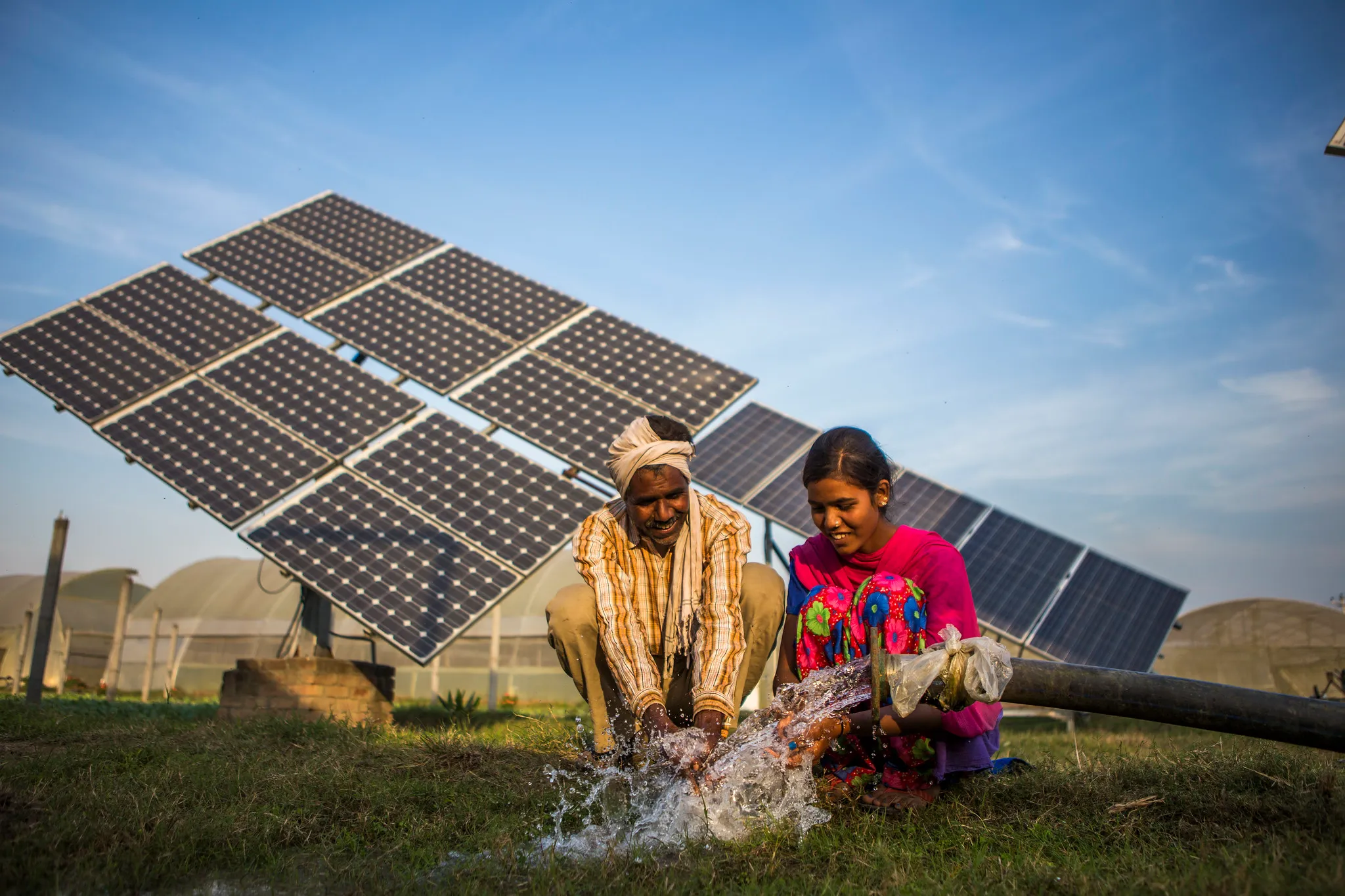
In states like Jharkhand and Odisha, electricity remains a distant luxury. Farmers often rely on expensive, polluting diesel generators for everything from lighting to irrigation. More than 300 million people in rural India live beyond the reach of the grid, most of them small-scale farmers with limited incomes. The lack of reliable electricity affects not only household life but also agricultural productivity, limiting access to basic tools like grain mills, cold storage, and water pumps.
From within Harvard University came an unconventional response. Two MBA students, Riya Savla and Vishesh Mehta, launched an ambitious project designed for rural realities rather than theoretical blueprints that collapse on contact with the ground. They created Zor Energy, a platform built on a simple but powerful principle: offer rechargeable batteries powered by renewables that users can borrow and pay for only what they consume, just as they would top up mobile phone credit.
The idea adapts the mobile-payments model to electricity itself. Using advanced lithium-ion cells, the batteries are charged at solar- or wind-powered stations. Farmers don’t need to buy their own batteries or install costly rooftop panels. Instead, they stop by a Zor station, swap out a depleted battery for a full one, and pay only for the time or energy consumed.
This pivot grew out of earlier trial and error. The team’s first product, Solara, was a solar-powered irrigation pump. While valuable, it proved too expensive to install and too dependent on consistent sunshine, making it unreliable during monsoons or cloudy days. The failure forced a reckoning: instead of pushing a single product, the team needed to rethink the problem from the ground up.
That meant fieldwork. The founders spent months meeting villagers and documenting needs that shifted daily, including lighting, cooling, milling grain, and charging phones. What people required was not a single-purpose machine but a flexible system that could adapt. Out of this realization came the concept of the portable battery.
Zor’s model is more than a technical solution; it’s a social and economic framework. Spreading infrastructure costs across small, regular payments processed via mobile apps, it gives farmers affordable access without long-term debt. Embedded smart software tracks consumption, enabling remote monitoring, maintenance, and payment management without requiring permanent staff in every village.
In November 2024, Zor launched its first pilot station. The test wasn’t just about delivering electricity; it was about validating the entire system, battery performance, user interaction with pay-as-you-go pricing, maintenance challenges, and station reliability under rural conditions. Simultaneously, the project gained recognition at Harvard competitions like the President’s Innovation Challenge and New Venture Competition, securing both funding and mentorship to move from concept to field reality.
Today, Zor operates as a collaborative ecosystem, bringing together users, engineers, NGOs, and policymakers. Local communities form the backbone not just as customers but as distributors, operators, and overseers. Farmer associations and NGOs help build trust and ease adoption, especially in villages where past promises have led to disappointment. Even the Indian government, while not a direct partner, plays an indirect role: its support for battery-swapping technologies and decentralized renewables provides fertile ground for the model to grow.
Several lessons emerge from Zor’s journey. First, deep field engagement and listening to people outweigh abstract feasibility studies. Second, flexibility wins multi-use batteries are more appealing than single-purpose devices. Third, building sustainability doesn’t require endless subsidies; it can come from rethinking ownership and access. And fourth, perhaps most crucially, trust grows not from slogans but from consistent presence, responsiveness, and long-term commitment.
As Zor expands, it is betting on open standards to scale faster, lower costs, and eventually export the model to other countries with similar challenges. What began as a rural Indian problem is in fact global, mirrored across dozens of nations.
What may look like just a “smart battery” is really something deeper: a reimagining of how energy is understood, distributed, and claimed as a right. A small project, rooted in both technology and empathy, is redefining electricity not as a commodity but as a shared entitlement achieved one battery at a time.
References
- https://harvardtechnologyreview.com/2024/12/02/building-battery-storage-for-off-grid-indian-farms-spotlight-on-zor-energy/
- https://www.irena.org/-/media/Files/IRENA/Agency/Publication/2020/Jul/IRENA_Pay-as-you-go_models_2020.pdf#:~:text=PAYG%20can%20provide%20affordable%20energy%20access%20from,available%20technologies%20to%20facilitate%20payment%20by%20installments.&text=The%20PAYG%20model%20provides%20access%20to%20electricity,in%20grid%20networks%20and%20renewable%20generation%20sources