
In a glimpse of what could reshape the future of food, Finnish company Solar Foods has developed a way to produce edible protein from unconventional ingredients: air, water, and renewable electricity. Using advanced microbial fermentation, bacteria consume carbon dioxide and hydrogen to generate a nutrient-rich substance that requires neither soil nor climate.
In 2024, the company opened a quiet factory in Finland. No seeds are sown there. No livestock are raised. No soil is tilled and not a drop of pesticide is sprayed. Yet, the facility produces a soft yellow powder resembling flour. It isn’t flour at all, but a complete protein literally born from the air. What once lived in the realm of science fiction—studied by NASA scientists in the 1960s—has now become an industrial reality, preparing to enter food markets from bakeries to space labs.
The product is called Solein®, the flagship output of Solar Foods. Its production requires no farmland, no planting seasons, and no rain. Instead, the process combines air, water, and clean electricity. Carbon dioxide, water, and energy are transformed into high-value microbial biomass that can be used in human food, animal feed, or even as a nutrition source for long-duration space missions and extreme environments where traditional farming is impossible.
The global food system doesn’t just need incremental improvements—it needs conceptual leaps. Modern agriculture faces a compound crisis: accelerating population growth, dwindling natural resources, and environmental damage driven by today’s production systems. Protein is especially problematic. Producing meat and soy requires vast amounts of land, consumes immense water resources, and contributes to roughly a quarter of global food-related greenhouse gas emissions. Even plant-based alternatives, while expanding, still depend on weather, soil, and climate.
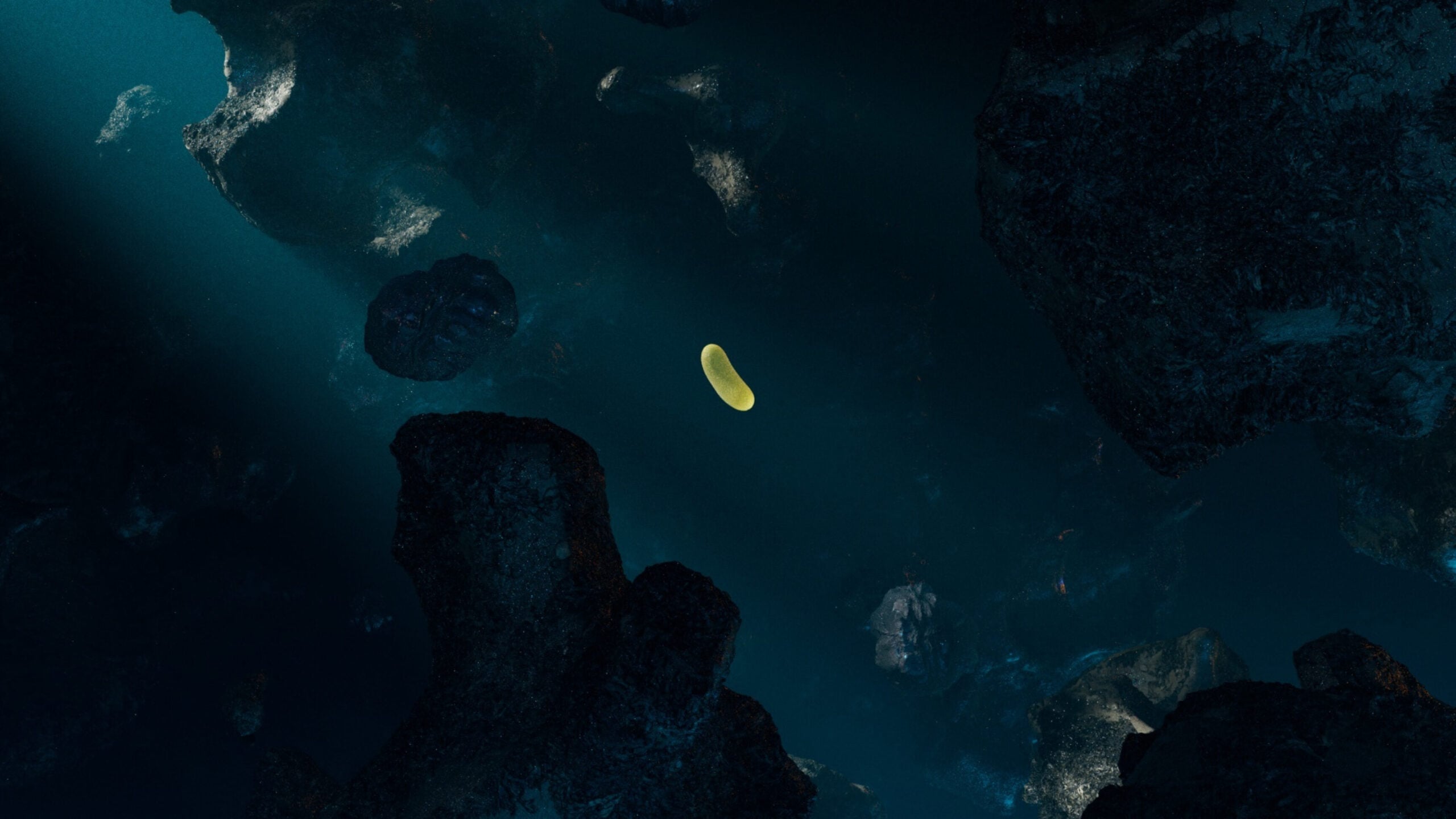
That is why the idea of “food from air” is revolutionary. The Solein process cultivates specially designed microbes that feed on carbon dioxide, powered by hydrogen generated from water electrolysis using renewable energy. Inside closed bioreactors, the gas mixture of CO₂, hydrogen, and oxygen is combined with nutrients like nitrogen, phosphorus, and calcium. The microbes proliferate through advanced industrial fermentation, producing a dense paste that is then dried into a golden protein powder.
The efficiency is striking. The process is 100 times more resource-efficient than raising animals and about 20 times more efficient than photosynthesis in plants. Producing one kilogram of Solein requires less than one-tenth the water used to make the same amount of soy protein and occupies 60 times less land—even after accounting for solar or wind installations.
The nutritional potential is equally significant. Solein contains all essential amino acids, is easily digestible, and is rich in B vitamins, iron, and other minerals. That makes it a strong candidate for plant-based diets, as well as in regions where access to animal protein is limited.
Solar Foods is moving beyond the lab. Its first commercial-scale facility, Factory 01, has already begun production, supplying Solein as an ingredient for protein-enriched drinks, baked goods, and meat alternatives. The company is working through the EU’s “novel foods” regulatory process, aiming to integrate Solein into mainstream supply chains within the next few years.
The implications extend well beyond sustainability. Because bioreactors don’t require farmland, they can be deployed in deserts, in the Arctic, or even aboard space stations. Scenarios that once required complex food logistics in isolated environments can now be solved with self-contained systems that ignore weather, crop disease, and water scarcity.
The project has attracted attention from space agencies, humanitarian relief organizations, and universities such as the University of Helsinki, which is conducting life-cycle assessments to evaluate environmental and nutritional impacts. Supportive European policies encouraging low-emission and low-impact food systems further strengthen the case for scaling this technology.
One of Solar Foods’ key insights is that food doesn’t have to start with soil or animals. Its building blocks—carbon, hydrogen, nitrogen—already exist in abundance. What humanity needs are innovative pathways to transform them safely into edible forms. With simple inputs and replicable processes, Solein is inherently scalable across geographies.
The journey is no longer just an experiment—it is a market-ready model. What once sounded like a space-age vision could soon be part of an ordinary meal. And the significance of Solein lies not only in replacing meat or eggs, but in inaugurating a new category of food: one that is light on the planet, rich in meaning, and full of possibility.
References:
https://ifst.onlinelibrary.wiley.com/doi/epdf/10.1002/fsat.3402_12.x