

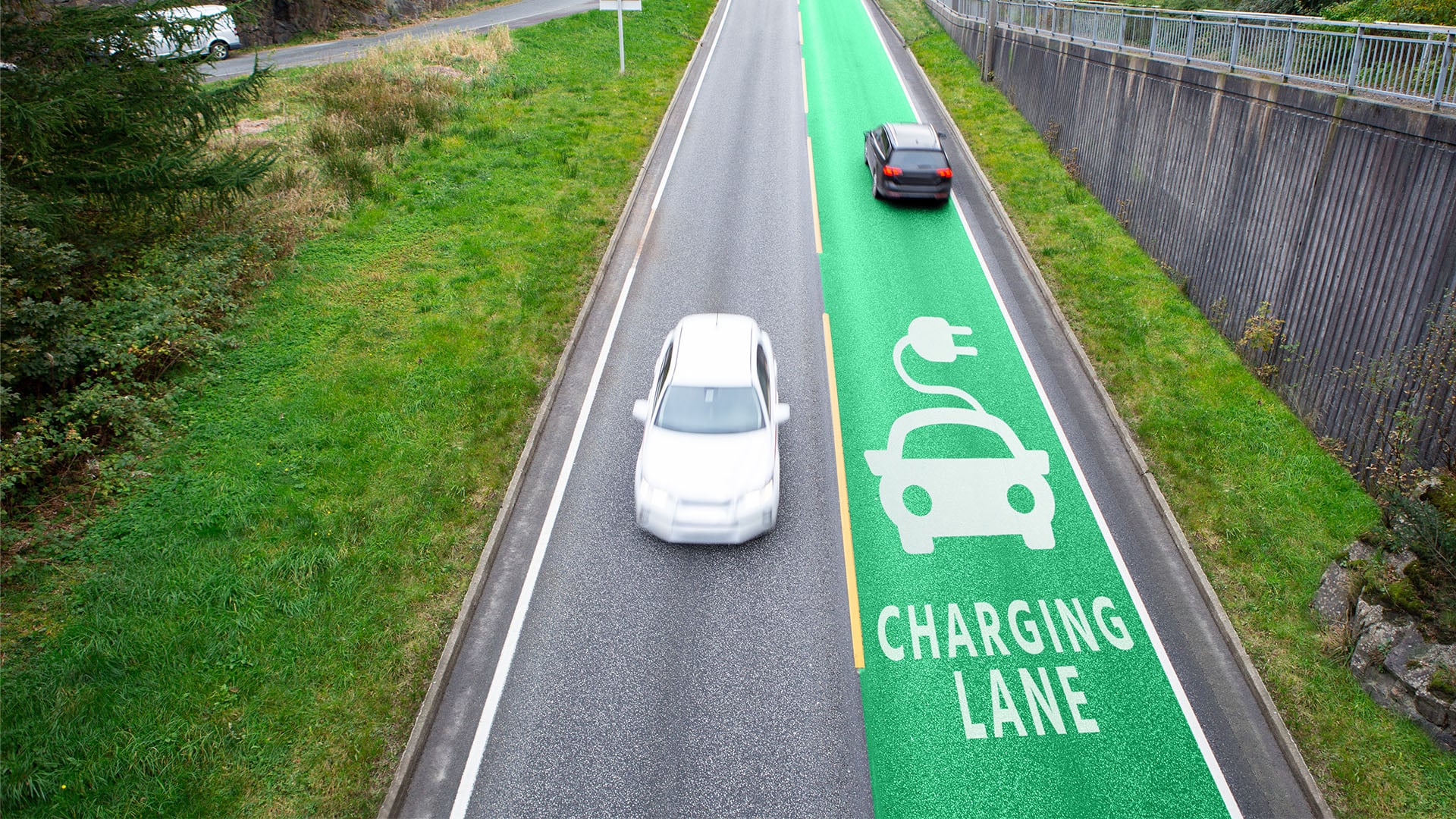
In a project that integrates dynamic charging into road infrastructure, Sweden is constructing the world’s first permanent electrified road—one that can charge electric vehicles while they are in motion. By embedding charging technology directly into highways, the system reduces dependence on stationary charging stations, enables smaller batteries, and boosts efficiency, especially for heavy-duty trucks. It’s an innovation that could reshape low-emission transport.
In a scene that feels lifted from the future, Sweden is preparing to open the first permanent road capable of charging EVs on the go—without stopping, plugging in, or manual connections. Scheduled to open in 2025 on the E20 highway, the project signals a decisive step toward decarbonizing transport and aligns with the EU’s mandate for zero-emission vehicles by 2035.
Despite rapid growth in EV adoption, barriers remain. Range anxiety, reliance on limited fixed charging points, and the high cost of large batteries all constrain the market—especially for freight. Oversized batteries are not only expensive and heavy, they also require resource-intensive manufacturing, limiting scalability.
The challenge is even sharper in dense cities, where space for new charging stations is scarce and power grids cannot absorb added loads without massive investment. A more flexible and sustainable solution was needed—one that factored in infrastructure limits and equitable energy distribution.
Sweden’s answer: move the charging into the road itself. By embedding dynamic charging into public highways, vehicles can draw power while driving. The E20 project, linking Hallsberg and Örebro, will be the first of its kind globally. It also marks the first step toward a larger plan to build 3,000 kilometers of electrified roads by 2045.
The country has already tested three systems: overhead catenary lines for heavy trucks, conductive rails embedded in the road surface with a mechanical arm connecting to the vehicle, and wireless inductive charging via coils buried beneath the pavement. These pilots weren’t just demos—they served as living laboratories to test efficiency, cost-effectiveness, and driver acceptance. Results showed that multiple vehicles could charge simultaneously, that energy use was highly efficient, and that downtime for logistics fleets could be significantly reduced.
With the E20 moving into full-scale deployment, the road is seen as a practical showcase of a new global model for electric mobility. Simulation studies suggest that the approach works even in crowded cities. In one case modeled for New York City, covering just 25 kilometers of road with dynamic charging cut detour distances by 12% and charging time by more than 18% compared with traditional station-based systems.
The initiative is backed by a wide coalition. Sweden’s Transport Administration oversees infrastructure. Tech companies like Electreon and Elonroad provide the charging systems and vehicle integration. Local governments supply regulatory support, while academic institutions conduct research on grid integration, battery downsizing, and performance optimization. The European Union adds another layer, setting standards, coordinating cross-border policies, and encouraging collaboration with countries such as France and Germany.
The impact extends well beyond convenience. Environmentally, it reduces dependence on fossil fuels and shrinks battery sizes—cutting mineral and energy use. Economically, it lowers operating costs for freight and public transit while saving on maintenance and fuel. From an infrastructure perspective, it relieves pressure on urban power grids and reduces the need for land-intensive charging stations. Technologically, it paves the way for global standards in dynamic charging and supports smart cities adopting distributed solutions. Socially, it broadens access to EV ownership, making long-distance travel more realistic and affordable.
Research from Chalmers University of Technology shows that covering just 25% of roads with dynamic charging, combined with partial home charging, could reduce EV battery sizes by up to 70%—resulting in lighter, cheaper, and more sustainable vehicles.
Sweden’s electrified highway isn’t just a new piece of infrastructure. It’s a statement: the future of transport won’t wait at charging stations. It will keep moving—charged, connected, and quiet.
References:
https://www.euronews.com/next/2023/05/09/sweden-is-building-the-worlds-first-permanent-electrified-road-for-evs-to-charge-while-dri
https://www.nature.com/articles/s41598-024-55863-3
https://smartcitysweden.com/best-practice/409/wireless-electric-road-charges-vehicles-as-they-drive/
Sweden Builds an Electrified Road That Charges Vehicles as They Drive
7 minute read
Subscribe to Ibtekr to stay updated on the latest government initiatives, courses, tools and innovations
Register Now