
The Government of Vietnam recently approved a two-year pilot project to test mobile financial services before they are officially launched for the first time at the end of the trial. As part of efforts to promote the inclusion of low-income groups in the processes of financial digital transformation, Raising the proportion of cashless financial transactions in Vietnam markets.
The Communications Commission of Vietnam has invited the private sector, From telecommunications companies and the development of electronic financial services, To propose a plan for the implementation of the project within the guidelines of the Ministry of Information and Communications, And submit it to the Central Bank for approval and obtaining permission to implement the project. The Authority asked the participating companies to include in the plan the preparation of solutions, including details relating to facilities, technology infrastructure, and human work cadres, As well as proposing relevant policies. The government will retain the powers to manage the project, These tasks will be shared by the Ministry of Public Security, The Ministry of Information and Communications, The Central Bank, In order to ensure the security and safety of transactions for users.
There is currently no accurate and definitive information about the technologies that the government wishes to adopt in the project. But it is expected to include some of the new technologies that have entered the Vietnam market in recent years, Like cloud computing, Data analysis and artificial intelligence.
It is worth noting that Vietnam has made great strides in economic development since it began the campaign of administrative and economic reforms in the mid-eighties of the last century in an effort to put the country on the path of development in the post-war and crisis phase. The country has adopted an economy policy geared towards promoting the growth of the domestic market, Today, Vietnam is one of the fastest growing emerging economies in the world. The Government of Viet Nam also did not lose sight of the importance of technological progress. Especially in the field of information and communication technology. But despite these achievements, Some key demographic indicators remained declining, Such as low usage of banking services, Especially in low-income rural areas that lack even modern methods of electronic payment – although this segment represents about 70% of Vietnam’s population – statistics show that the percentage of adults who have a bank account in Vietnam does not exceed 64%. This poses an obstacle to financial inclusion and limits social and economic development.
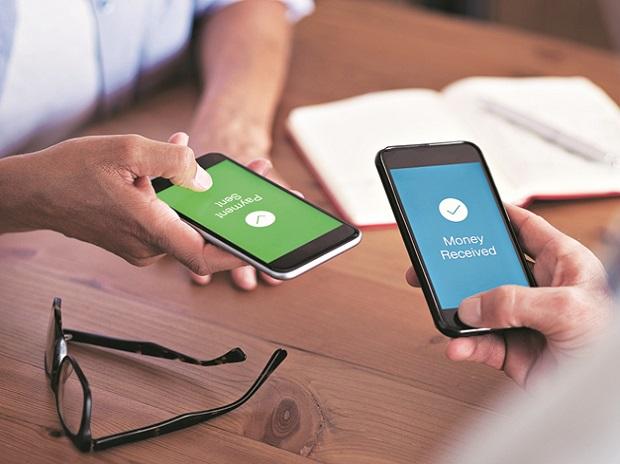
In response to this challenge, which has become most evident during the COVID-19 pandemic, and its restrictions on movement, The government has decided to take advantage of the widespread use of smartphones to encourage the population to adopt electronic financial services via mobile phones as part of its pilot project. Vietnam has 125 million mobile subscribers.
The pilot project aims to increase the percentage of cashless financial transactions, Achieving financial inclusion for low-income groups through smart phone services, This would increase the financial capabilities of these groups and provide them with direct electronic payment services for low-price purchases through the phone recharge card, As well as payment facilitation solutions such as deferred payment services, It will also pave the way for them to benefit from banking services such as microloans and others. Most importantly, smartphone financial transactions will provide users with access to basic paid online services. Such as health care, education, finance, employment opportunities, and social security. Agricultural trade, on which Vietnam’s millions of people depend, will benefit from the speed and security of telephone rather than cash.
The expected date for the launch of the new smart financial services has not yet been announced. But participating in it is not difficult, Where it is necessary to present an identity card or passport in which the personal data corresponds to those recorded in their mobile phone subscription file, Provided that they have completed a period of not less than three months from the date of their subscription to this service.
The project is also part of a financial strategy adopted by the government that aims to increase the number of individuals who own a bank account for financial transactions by at least 80% of the total adult population by the end of 2025.
It is noteworthy that there is an increasing demand for various electronic payment services and shopping applications among other categories, The number of electronic financial transactions increased by 66% during the first four months of 2021 compared to 2020. Driven in part by the COVID-19 pandemic. There has also been a significant growth in the use of e-wallets, Payment via smartphones and QR codes, and payment facilitation solutions.
A recently published study indicates that 56% of banking users in Vietnam feel that the services available to them are below their expectations. There are other types of services that the Government must provide to them. However, the project is expected to encourage more banks to accelerate the transition to digital platforms and offer a wider range of digital services over the phone. According to Central Bank data, 94% of banks were able to develop, or are in the implementation phase of plans to develop, Digital solutions.
Some analysts argue that the provision of mobile financial services will be an important catalyst for the adoption of new applications that will contribute to the transformation of Vietnam’s economy as a whole into a digital economy.
References:
- https://english.mic.gov.vn/Pages/TinTuc/tinchitiet.aspx?tintucid=147787
- https://en.vietnamplus.vn/vietnam-to-pilot-mobile-money-service-for-two-years/209523.vnp
- https://opengovasia.com/vietnam-to-pilot-mobile-money-services-for-two-years/
- https://vietnamnet.vn/en/business/70-of-vn-adults-use-banking-services-but-many-lack-access-to-credit-740825.html