
Driven by the need to leverage technological development and harness digital technologies to benefit all vital sectors, and since agriculture is one of these sectors, the local government in the Australian state of Victoria has developed a system that helps farmers experiment with IoT technology. This system provides LoRaWAN connectivity, which is known for its low power consumption and its ability to connect thousands of sensors via IoT and extend along tens of square meters to provide farmers with real-time data that improves the productivity of their farms. This agricultural technology serves many purposes, most notably the lack of internet connectivity in remote areas that prevents farmers from using IoT and other emerging digital technologies. Allowing local farmers to access these technologies enhances the productivity, efficiency, and sustainability of their businesses.
The government of Victoria and Agriculture Australia have partnered with NNNCo to launch On-Farm IoT with $8 million in funding. Under this partnership, Agriculture Victoria collaborated with around 600 farms to test IoT technology in farms and evaluate its impact on agricultural performance and production. The trial is supposed to be carried out in four categories of farms and across four different regions. This connectivity is expected to cover the dairy industry sectors in Wellington, grain cultivation in Buloke, sheep farming in Loddon, and horticulture in Greater Shepparton and Moira.
This trial promises many advantages for improving agricultural operations, including farm, water, and crop management, and weather forecasting, which yields higher productivity and returns for the farmer. Moreover, the trial overcomes a set of challenges that were affecting farmers, most notably the lack of internet connection. To overcome this obstacle, Agriculture Victoria has collaborated with NNNCo to provide IoT connectivity in the four regions included in the program.
To address the challenge of digital illiteracy among farmers, a group of technology coordinators experienced in farm management and digital technologies was assigned to assist farmers participating in the trial by helping them navigate the system’s apps and devices, allowing them to select the IoT solutions that suit the needs of their farms. Agriculture Victoria undertook to purchase IoT devices and apps in an attempt to provide capital to invest in on-farm IoT technologies. The devices and apps offered by the advanced on-farm IoT ecosystem include irrigation management, real-time monitoring of soil health, rainfall, cattle movement, farm assets, worker safety, and water tank levels so that they can proactively respond to the needs of the farm.
This system is receiving considerable attention in Australia since it targets four main axes: informed agronomy, water management, farm management, and production environment data. The first axe focuses on harnessing information systems to support decision-making by including data in key reports, analytics, alerting, and/or decision support, which will introduce additional data through free or allied services. Informed agronomy focuses on weather monitoring, including air temperature, relative humidity, barometric pressure, wind speed, rainfall, and solar radiation or photosynthetically active radiation.
The second axe, water management, relies on water flow measuring using meters installed on water networks, in addition to pipeline sensors ranging between 20mm to 100mm in size, and channel flow rate metering. Water tank levels are also monitored physically and remotely for livestock farming, irrigation, spraying, and domestic supply.
Farm management includes asset tracking and location, movement, and status of equipment, as well as site security monitoring. Moreover, it involves monitoring building gates, detecting motion via cameras, and recording security incidents. Finally, the system targets production environment data that includes pest monitoring and rapid identification of pest risks. Furthermore, plant pests are monitored and pest alerts are sent for analysis or control purposes, in addition to measuring crop environment temperature, humidity, and leaf wetness to monitor fungal disease risk.
It was decided to fund the trial in several phases. The first phase is the research process entrusted to Agriculture Victoria, which will seek to enroll 100 farms in the trial (25 farms in each region). Based on the valuable information generated from the first phase, the design of the overall trial begins and subsequent funding will be determined. Farmers are currently required to contribute $1 for every $2 provided by the Department of Agriculture. After a two-year trial period, Agriculture Victoria will evaluate the selected technologies on farm performance and decisions will be made based on the results of the evaluation.
Although this trial is still in progress, it promises great achievements for farmers in particular and the agricultural sector in general. These achievements include enhancing the efficiency of farmers and enabling them to align between crop inputs on the one hand, and harvest timing on the other in accordance with the seasonal performance of livestock. This technology also provides the ability to learn about the nature of rainfall and soil moisture to rationalize water consumption and make smarter production decisions.
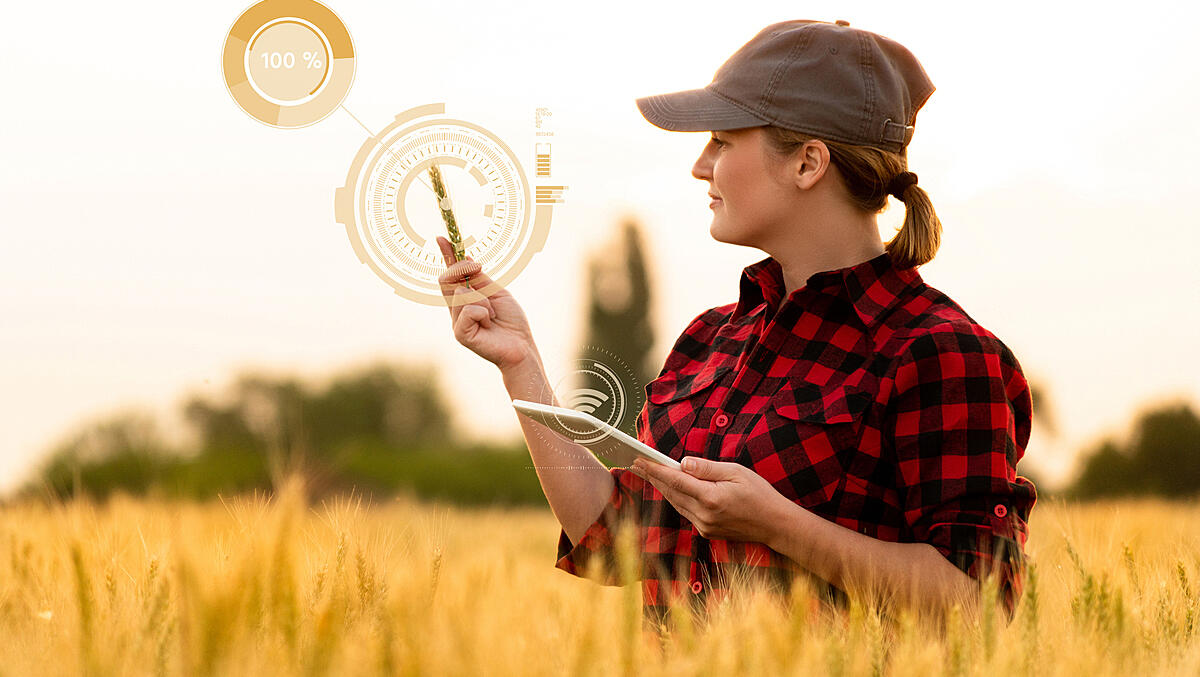
By integrating sensor-enabled IoT technologies, farmers can receive more accurate and reliable results to create production modeling tools and manage their farms remotely by monitoring multiple sites simultaneously and sending commands from the network to one of the sensors installed on the farm. All these features help farmers understand the performance of their farms and identify their strengths and weaknesses, thus taking the appropriate measures to enhance efficiency, productivity, and sustainability.