

As part of its smart city initiative, Tsukuba City has pioneered a privacy impact assessment policy, demonstrating a commitment to ethical data use. By balancing technological advancements with individual rights, the city has set a new standard for smart city governance, aiming to foster public trust and guide equitable urban development.
At the forefront of urban development, smart cities embody a complex interplay of innovation and sustainability. These technologically advanced systems leverage cutting-edge solutions to address some of the world’s most pressing challenges, particularly in nations leading the digital revolution.
When discussing technological innovation, Japan’s cities often come to mind as global leaders. However, the Japanese government has frequently exhibited caution before adopting digital transformation, sometimes even transferring this hesitation to the private sector.
As urban growth presents increasingly complex challenges, the Japanese are embracing digital transformation. This growing demand is prompting the government to respond by developing digital capabilities and implementing smart city projects to enhance public services and economic vitality.
In 2022, the Japanese government designated its ambitious smart city initiative as the “Super City” project, aiming for completion by 2030. A smart city integrates technology to enhance efficiency, sustainability, and quality of life. By analysing citizen data to understand and improve living patterns, consumption, and services, these cities aim to stimulate economic growth.
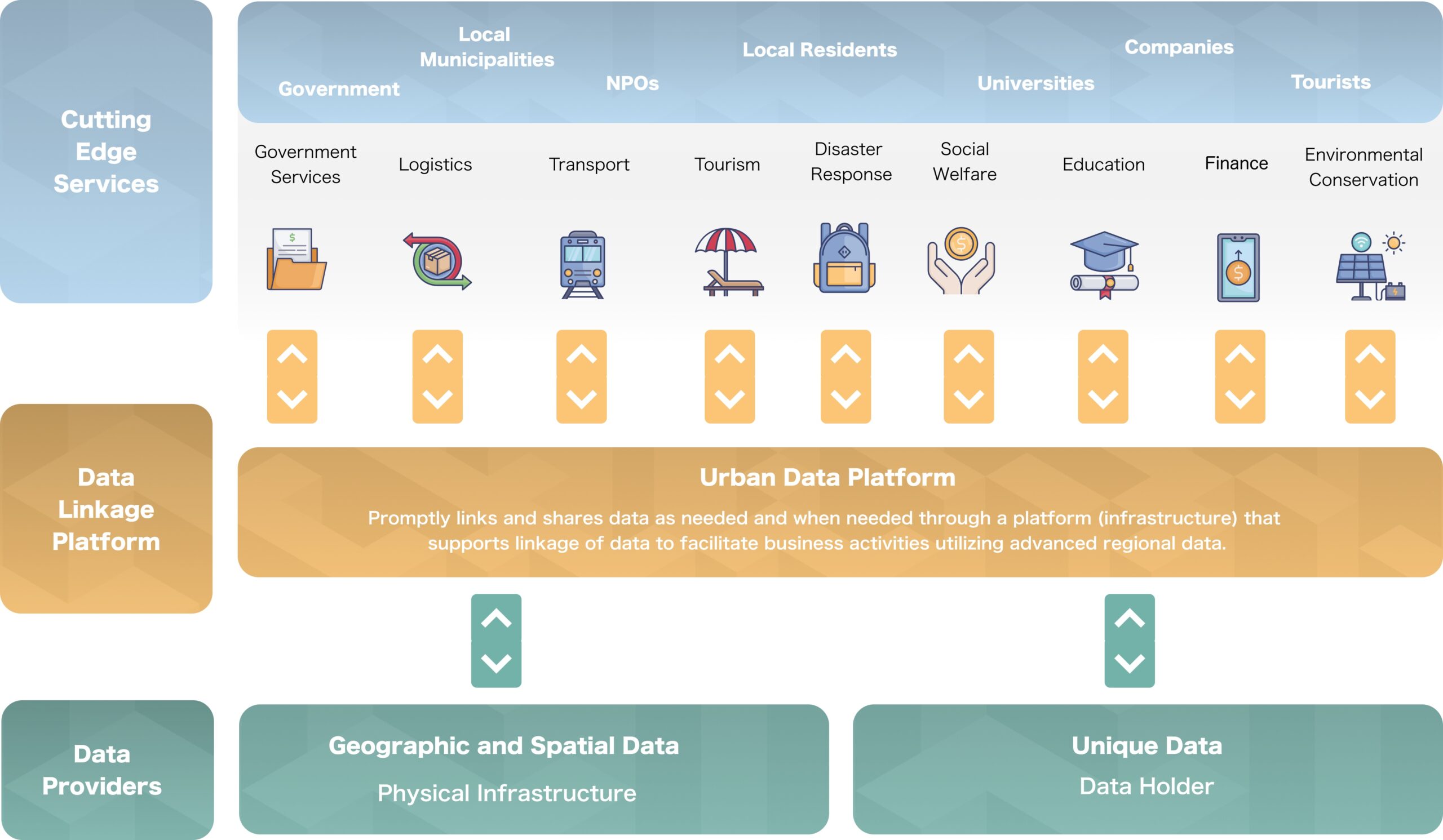
To optimize government services, transportation, healthcare, and education, Japan has divided its smart city project into three interconnected elements: data platforms for integrated knowledge sharing, regulatory reforms enabling bold initiatives like the Super City Law, and the appointment of “smart city engineers” to foster public-private partnerships.
Tsukuba City, a technological hub since the 1960s and home to major research and academic institutions, was among the first to join the initiative. The city will routinely collect data through its daily activities and services, employing advanced technologies in six key sectors. These include transportation and delivery, with solutions like public transport, delivery robots, and drones; government services, such as online voting and a user-friendly multilingual app; healthcare, enhanced by integrating health data with Japan’s digital system; safety, resilience, and infrastructure, providing real-time evacuation guidance and emergency medical coordination; a digital twin, creating a cutting-edge 3D digital infrastructure; and an open centre to support entrepreneurship, foreign investment, and streamline procurement processes.
While data-driven governance offers numerous benefits, it also raises legitimate concerns regarding data privacy, security, and the individual’s right to have their personal information protected or to consent to its disclosure. The absence of clear national guidelines further complicates these challenges.
Recognizing the sensitivity of privacy issues, Tsukuba City sought guidance from the G20 Global Smart Cities Alliance Regional Centre. The city adopted the concept of privacy impact assessments, a systematic process for identifying and mitigating privacy risks throughout the data lifecycle. This led to the adoption of the “no harm” principle, ensuring the security of citizens’ data and maximum transparency, thereby empowering citizens to play a central role in this journey.
To ensure inclusivity, Tsukuba established a stakeholder group comprising legal experts, academics, privacy policy specialists, municipal officials, and representatives from the public and private sectors. This group was tasked with fostering a shared understanding of the project and promoting its implementation. Through discussions on key questions such as “What are the current challenges? Why are assessments important?”, the group defined the purpose and scope of the project. Additionally, they explored questions about evaluation, such as “How can we assess the results? Who will conduct the assessments? What are the evaluation criteria?” and “How will assessment results be communicated to the public?” Furthermore, the group addressed the issue of penalties for non-compliance, determining appropriate consequences for individuals who refuse to provide necessary information.
In essence, governments must establish robust regulatory frameworks and strategies for the conscious and responsible management of data to earn public trust. This urban revolution cannot progress without striking a balance between the vast potential of smart cities and their fundamental obligation to protect individual liberties.
Tsukuba City’s initiative promises to set a new benchmark for Japanese municipalities in developing privacy impact assessments and smart city projects.
By demonstrating the potential of technology to improve governance, services, and emergency response, Tsukuba is positioning itself as a leader in leveraging data and automation for the benefit of its citizens.
References: