
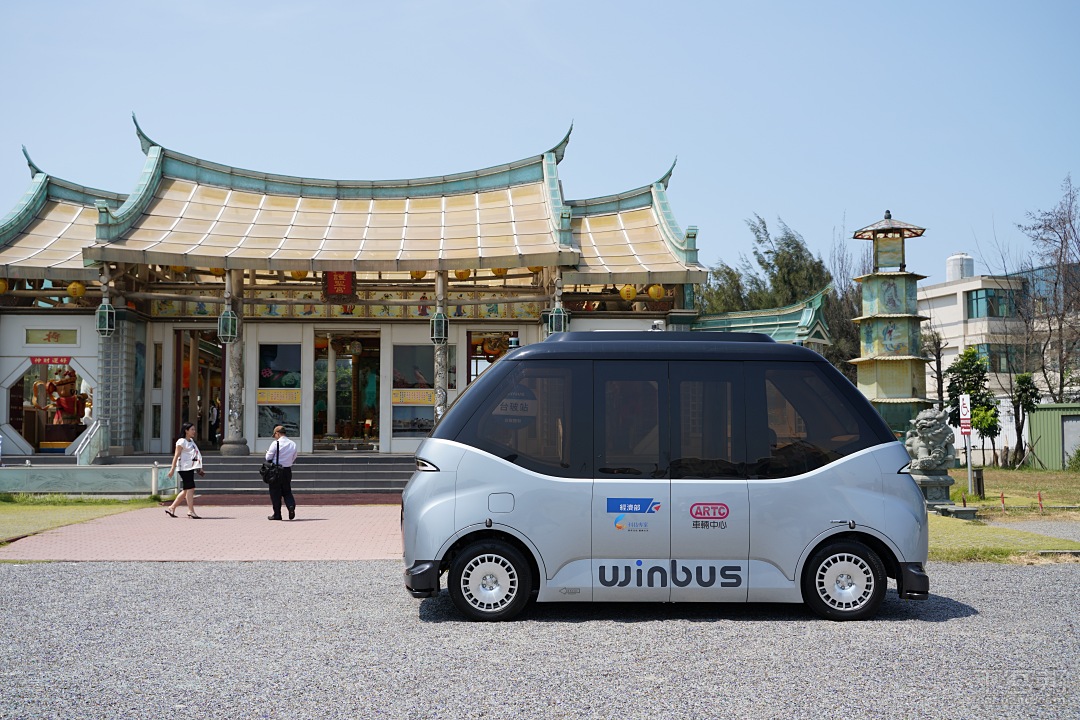
The government of Taiwan, represented by the Ministry of Economic Affairs, is harnessing its resources and abilities to come up with innovative solutions that keep up with the digital age’s developments and its vision to consolidate its position as a modern country that encourages innovation and technology-based solutions. As part of this vision, the Ministry approved a Bill on Unmanned Vehicle Technology Innovation and Experiments to encourage R&D and implement unmanned vehicle technology to provide the sector with new and innovative services. In cooperation with the Department of Industrial Technology and Kin Wei International, the Automotive Research & Testing Center (ARTC) and the Ministry of Economic Affairs unveiled the first autonomous electric minibus, WinBus, in 2019, and began implementing the pilot project for USD 1.26 million in March 2020. The government intends to include Taiwan’s WinBus in its strategy to create local supply services and establish the country as a center for the development of autonomous vehicle systems and vehicle export in the future.
WinBus has reached SAE Level 4 driving automation (high automation). Within the autonomous driving standards, this level approves vehicles that can operate under limited conditions without human intervention. The project also includes a one-year operational trial named Lukang Changbin Smart Tourism Connection.
To keep pace with the global trend of using technological means of transportation, Taiwan has launched a research project dealing with autonomous minibusses, especially since 50% of these means are related to the public transport sector. Minibus manufacturing required several technologies in the autonomous vehicle sector, which is also expected to grow simultaneously with the advancement of AI technologies and connectivity to the 5G network. This innovation was the result of 20 suppliers working together within the local supply chain in Taiwan, including chassis, powertrain, body, battery, and key systems for sensing, decision-making, and connection. These efforts led to the creation of the Taiwanese WinBus, which is capable of monitoring the surrounding environment and performing self-driving tasks without any human intervention.
In the first phase of the pilot project, the autonomous bus provides transportation services in the Changhua Coastal Industrial Park, which includes companies operating in the fields of food production, spinning, chemical industries, and metal processors. According to the plan, the WinBus will implement 12 experimental scenarios related to sightseeing activities throughout a 12.3-km route. The first phase of the project is a self-driving operation without passengers.
Furthermore, the WinBus has many advantages, including driving within a fixed route with five connection stations: The Taiwan Glass Gallery, Zhangbin Xiuchuan Hospital, Brand’s Health Museum, the Ribbon King Tourism Factory, and the Lugang Tianhou Palace. The minibus also enabled self-driving through various sensors, such as cameras, LiDARS, and RADARS to control the vehicle’s systems like steering, braking, and acceleration, which all meet the requirements of the SAE level 4 driving automation. On another note, WinBus relies on dual-axis steering, drive system designs, and two self-driving systems. The minibus does not include a steering wheel, brakes, or accelerator pedal, and is equipped with active and passive safety systems to ensure the highest safety standards. The WinBus was developed to provide new and innovative transportation solutions that can meet the diverse requirements of the local government, including off-peak transportation, transportation to remote areas, and transportation to and from attraction sites.

This autonomous minibus is Taiwan’s latest step towards building a smart transportation system, in addition to integrating supply services and business opportunities in the tourism sector. Given the feedback resulting from this innovation, about five major cities and nine transportation companies in Taiwan have expressed interest in adopting the WinBus business model. WinBus will be used in the future to transport tourists, leveraging autonomous driving systems, smart road facilities, and operation management platforms. The unmanned bus is expected to achieve the goal of driving 1,000 kilometers and transporting 1,500 passengers in the first year of its operation. Moreover, the minibus is expected to grow by three times in its second year of operation.