
Towards the integration of sustainability principles into urban design, The management of Geneva International Airport has launched a new pavilion with a futuristic vision that uses renewable energy sources to reduce the negative impact of the building on the climate, Such as solar panels, water refinery system and heat pumps, To be the most environmentally friendly pavilion in the world.
The design of the new Geneva International Airport pavilion is based on Switzerland’s commitment to global efforts to tackle climate change and adopt environmentally friendly measures. The Model Energy Union initiative was launched in 2006. With participation from different sectors, The initiative focused on the areas of buildings, mobility, data centers, green technology, and promoting the use of renewable energies instead of fossil fuels. It aims to increase energy efficiency within the federal administration and state companies by 25% by 2020. This figure exceeded 30% in 2018.
Among the ten most important participants in this initiative, Geneva International Airport comes, The second largest airport in Switzerland and one of the financial centers in Europe. Since 2009, its administration has been able to save about 9.9 GWh, The equivalent of the annual consumption of 4200 households. But the airport has an old suite dating back to 1975. It is used for Boeing 747 long-range aircraft. Over time, The pavilion that was built became mainly as a temporary solution, Old-fashioned and with a design that is not qualified to integrate modern technologies and does not meet environmental requirements or climate change standards.
therefore Geneva Airport has financed a progressive design designed to replace the old wing with a modern one within a project distributed in 4 phases, Where several architectural companies cooperated with the airport management to complete it, There have been more than 40 companies.
It took several years to complete the project until the recently opened New East Pavilion in 2021, which represents an ambitious approach aimed at reducing operational capacity by adopting passive design and efficient systems to reduce energy demand and maximize the use of renewable energy sources so that production is greater than consumption.
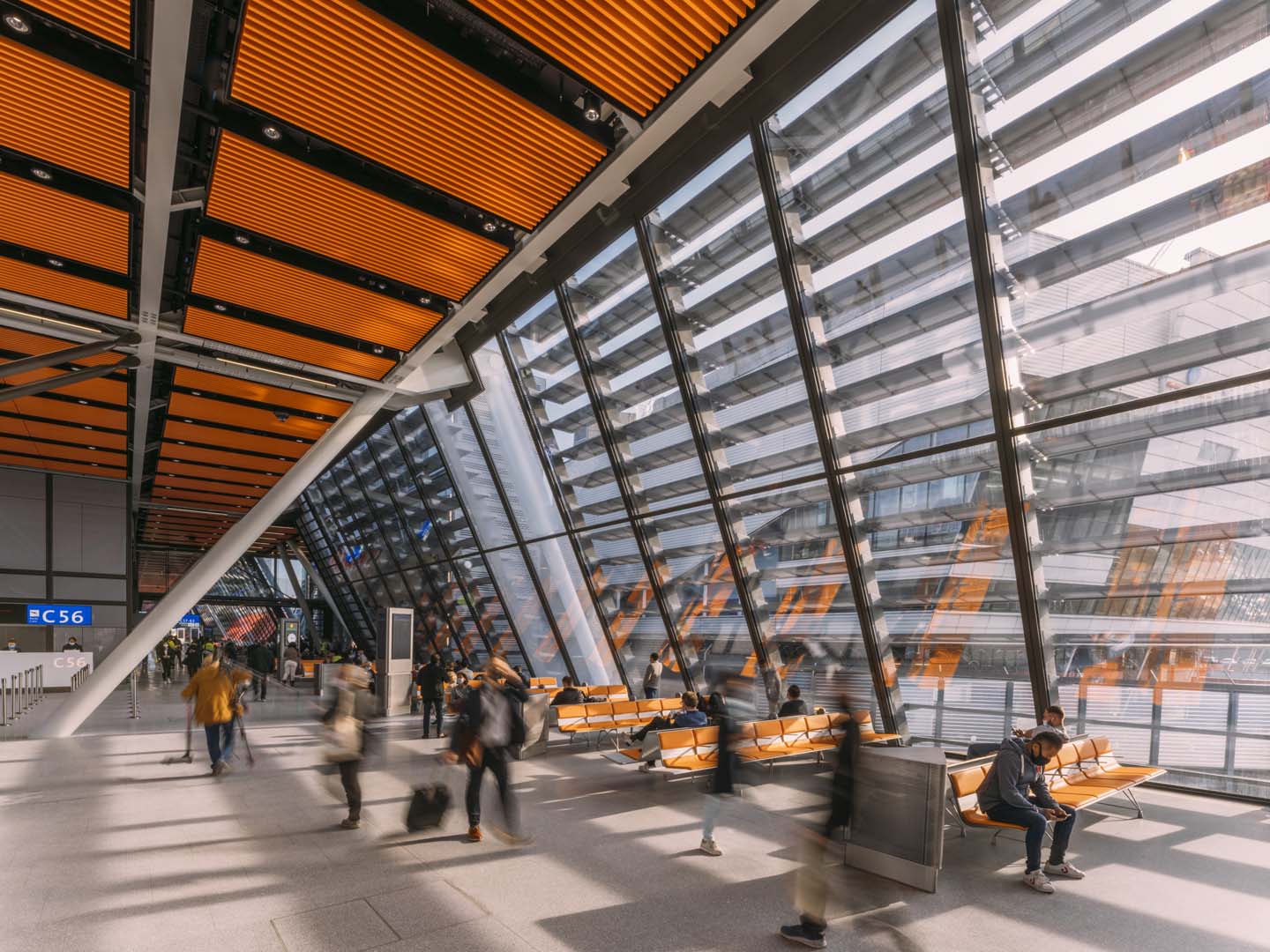
Despite the simplicity suggested by the exterior of the suite, It is a high-efficiency building with a length of 520 meters on two levels of glass and steel, It can accommodate approximately 2,800 departing passengers and 3,000 incoming passengers per hour. It also serves 6 aircraft via new carrier airlifts, These are the passages that passengers cross from the terminal to the door of the aircraft. The facility is divided into areas designated for take-off, another for landing and a third for transportation, In addition to border security points and new lounges for various airlines.
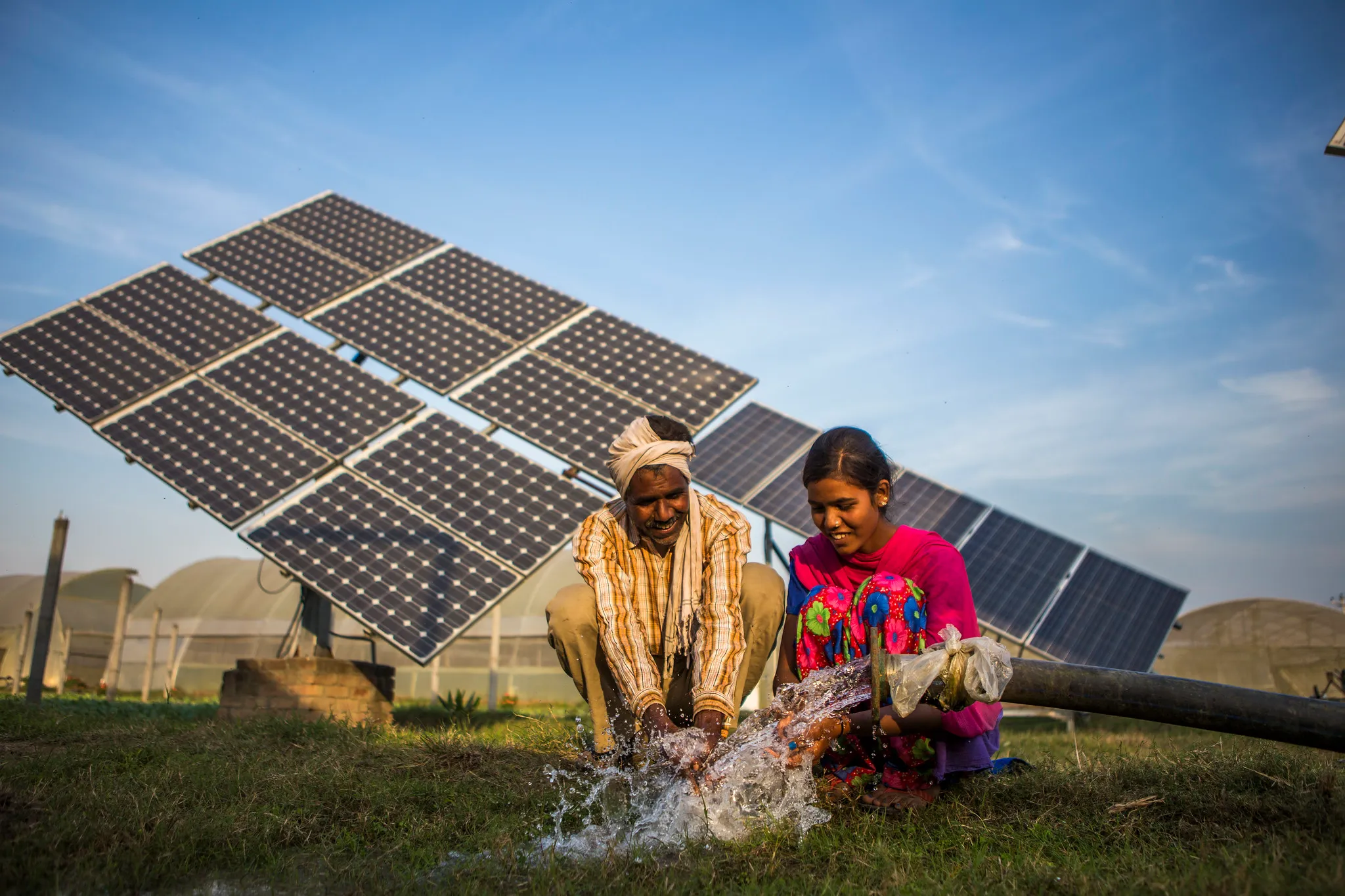
Operational The building is based on renewable energy sources, Electricity is produced via photovoltaic panels covering a total of 7,020 square meters of the building’s roof to absorb and store solar energy. It is equipped with a special rainwater collection system for reuse, With high-quality heat pumps that produce and store geothermal energy across 110 substrates stretching over a depth of 300 meters. The infrastructure also includes a wastewater recycling system to rationalize water consumption.
To ensure daylight reaches buildings located directly to the south, The building is constructed with the main facades of glass completely, with an inclination angle of 26 degrees, So as not to lead to the entry of sunlight heavily that may disturb the building’s visitors and cause high temperatures, The facades have been selected from high-performance triple glazing to provide good thermal insulation and additional protection.
The architects of the building have chosen a visual identity that tends to simplicity in which different colors are combined on the floors, benches and stairs, It overlooks the Jura Mountains.
The thermal system will connect in the future, the hydrothermal network provided by the Industrial Services Authority in Geneva, Energy is thus obtained through it for the next thirty years. Lake Geneva’s water will also be used for heating and air conditioning from 2023. Where water will be drawn from the lake at a depth of 45 meters, Then transported to buildings via underground pipes, This water will cool the buildings in the summer. As for winter, It will integrate with heat pumps to enable the system to produce heating energy. The airport management has allocated 80 million Swiss francs for this investment. It has already begun the construction of a thermal plant spanning an area of 1900 square meters. and the resulting surplus energy, It will be re-pumped into the network, Within an agreement regulated by a contract concluded by the parties for the repurchase of energy.
The executive team faced many challenges to reach a clear and transparent common vision for an architectural achievement that combines simplicity, modernity and sustainability at the same time, The nature of the site, for example, has imposed some restrictions, It obliged the designers to modify the shape of the east wing to be a parallelogram that appears to the beholder to float above the service road.
Underground thermal substrates provide 90% of building conditioning and cooling loads. It is integrated with glass facades, which in turn contribute to reducing the use of artificial lighting, Thermal insulation also helps reduce the energy footprint emitted by the building.
By joining the efforts to build the hydrothermal network, Geneva airport will save two million liters of oil annually, and to shift the burden of their environmental impacts on the surrounding natural areas, It will also reduce carbon dioxide emissions by 5,300 tons per year. Thus, Geneva Airport will deliver on its commitment to fully operate its infrastructure and facilities with renewable energy by 2025 and take a major step towards a genuine sustainable development policy.
References:
- https://www.smartcitiesworld.net/air-travel/geneve-aeroport-builds-sustainability-into-its-east-wing-terminal-7322
- https://www.gva.ch/en/Site/Geneve-Aeroport/News/2020-2016/Exemplarite-energetique-Geneve-Aeroport,-pionnier
- https://robbreport.com/motors/aviation/geneva-airport-east-wing-terminal-1234658498/
- https://www.internationalairportreview.com/article/109274/geneve-airport-lake-heating-source/