
In a blend of technology and ecological necessity, a team of innovators is confronting the crisis of seagrass habitat loss with an unusual ally: robots. Their pioneering approach could chart a more sustainable future for marine biodiversity.
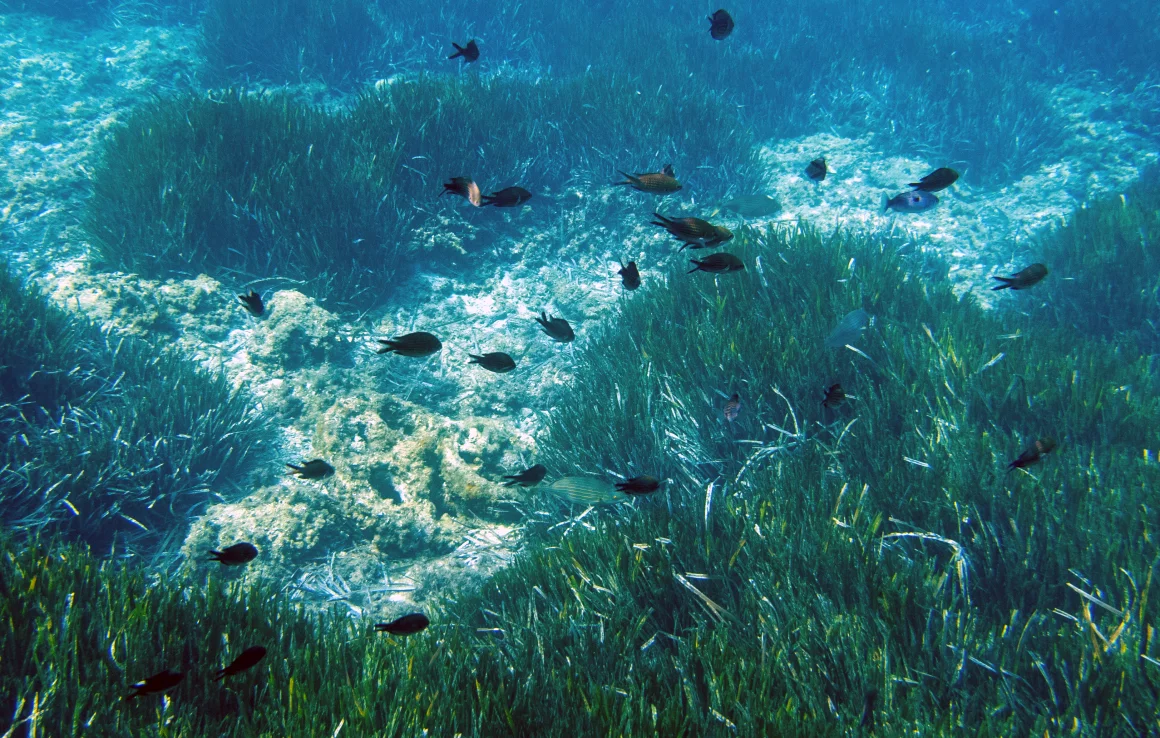
Beneath the steady pulse of the oceans lies a hidden but vital world—a fertile garden of seagrass meadows that stabilize coastlines, nourish marine life, and lock away blue carbon. Though they cover only 0.1% of the ocean floor, their impact on biodiversity and climate regulation is immense.
Historically, seagrass fields spanned nearly 18 million hectares. Yet over the past few decades, 30–40% of these habitats have vanished, and the pace is quickening, with global losses estimated at 7% each year. These aren’t just numbers—they mark the erosion of a natural system that shields coasts from waves, sustains coral reefs, and serves as nurseries for countless species. As these meadows recede, coastal protection weakens, coral systems lose their water-purifying partners, marine productivity declines, and perhaps most critically, carbon absorption drops—intensifying the effects of climate change.
The Problem With Manual Restoration
Efforts to restore seagrass have been ongoing for years, but most relied on divers painstakingly planting seeds or shoots by hand. The process is labor-intensive, slow, costly, and risky. At the rate seagrass is disappearing, manual methods alone cannot keep up.
That’s where ReefGen, an environmental technology company, saw an opening. Bringing together ecologists, technologists, and marine biologists, the team reframed the issue: not as a purely biological problem, but as one demanding a technological shift.
Enter the Robots
ReefGen designed a new class of underwater robots nicknamed “Lobsters.” Small but powerful, these agile 23-kilogram machines draw on the company’s earlier work with “CoralBots,” which were built to help rehabilitate coral reefs.
Each robot uses sled-like appendages to glide over soft seabeds without disturbing them. Equipped with cameras for navigation and monitoring, they carefully plant seagrass shoots and seeds. A built-in 20-liter hopper can carry up to 20,000 seeds, allowing each robot to inject a mud-seed mixture into the seabed at a rate of 60 seeds per minute. Instead of scattering them randomly, the robot plants about four seeds in each spot, then hops roughly 30 centimeters to the next location—a technique designed to avoid damaging the surrounding environment.
Currently, human operators guide the robots from a ship, ensuring precise coverage of priority areas identified by divers. But ReefGen is already working on semi-autonomous upgrades, using advanced navigation algorithms to reduce reliance on manual control and expand scale.
Engineering Against the Ocean
Building a robot that works reliably in unpredictable underwater conditions required solving a host of challenges. Ocean currents, sediment composition, and other environmental factors could easily throw off precision. The team also had to integrate real-time monitoring and navigation systems robust enough for deep-water deployment—overcoming the perennial difficulties of underwater communication and control.
Balancing speed and accuracy posed another major hurdle. To be useful at scale, the robots had to cover large areas quickly without compromising the careful placement needed for seeds to take root. Every “hop” was thus meticulously calculated.
Early Results, Big Potential
In a 2022 pilot project, ReefGen’s robots successfully planted seagrass patches that showed growth and health comparable to those established manually—but achieved far faster and at scales impractical for divers. The machines can also work in environments too dangerous or inaccessible for humans.
Follow-up studies, including collaborations with the University of North Carolina’s Institute of Marine Sciences, have reinforced the promise of this approach. The data are helping refine seeding techniques, boost planting success rates, and point toward further innovations in ecological robotics.
If the trend continues, robotic restoration could become a cornerstone of marine conservation, not only reviving lost seagrass meadows but also restoring the vital ecological functions they provide.
References: