
The estimates indicate that Americans spend nearly 10 billion hours per year on government paperwork, making it an exhausting and boring experience that may prevent people from receiving certain basic services. Paperwork has become an obstacle at times, rather than a means for leveraging services.
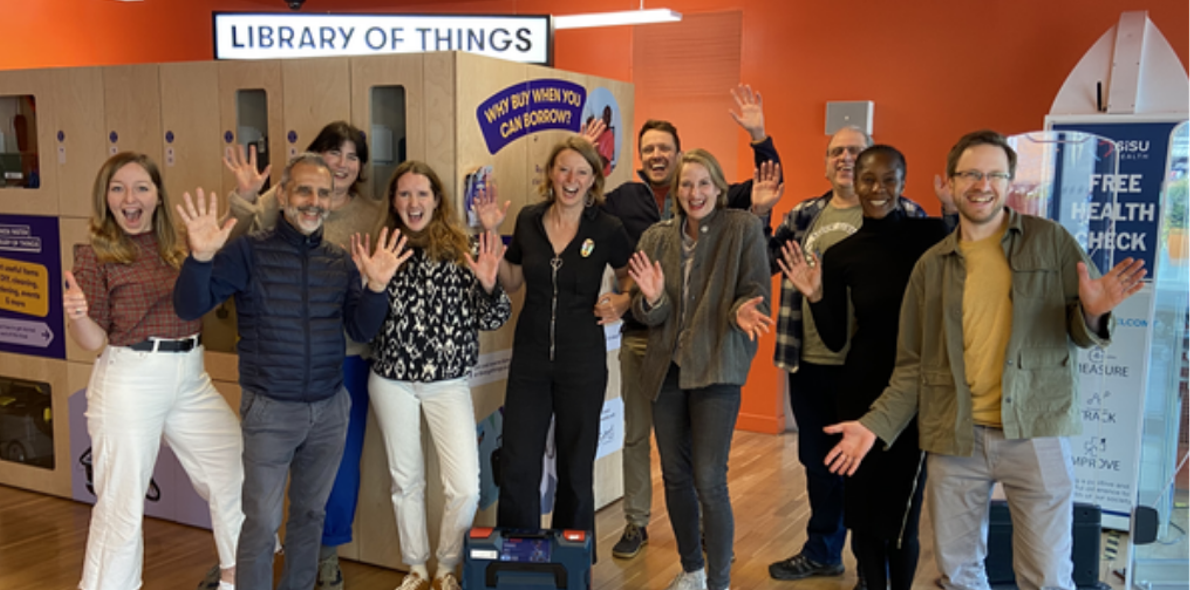
After recognizing this challenge and the potential paperwork opportunities, The Lab@DC, a science team under the department of District of Columbia Mayor Muriel Bowser, launched an initiative and workshop called Form-a-Palooza in 2017. Community members are asked during this one-day event about the forms that give them the most grief and are invited to redesign them in collaboration with government officials and experts in plain English. The traditional approach shows that people do not interfere with form design, which pushes them to perceive them as complex, confusing, and time-consuming. This shows that these old forms are an example of design bias.
The Form-a-Palooza initiative can be described as a brainstorming session that not only generates a set of clear ideas on how to simplify commonly used forms but also involves community members in the core of the process, allowing them to express their opinions and thoughts, given that they are ultimately the ones to use them. In partnership with entities in the district, the initiative corrects existing approaches that result in unintended inequalities.
Form-a-Palooza is a fertile ground to rethink the design of forms and help city hall innovators. This initiative is structured into two interweaving parts: The first part begins with the participants attending the seminars, presenting their inspirational insights, and attending sessions led by academics and city leaders who provide helpful information and tips on how to write simple and easy-to-understand forms. The second part takes place during sessions, as participants attend workshops that focus on one of the selected forms for critique and analysis, in addition to presenting ideas to enhance and streamline the form.
Prior to the event, The Lab@DC collects the forms nominated by community members and city employees who believe that they need to be improved. Then, the team works with stakeholders to ensure that they agree to make changes and amend the forms that they use, and sends invitations to different entity heads to participate in the workshop with community members.
After the Form-a-Palooza sessions end, The Lab@DC starts working with stakeholders and lawyers to showcase and sort people’s suggestions and determine the ones that can be implemented at the administrative and legal levels. Then they begin the process of refining the design and content of the forms, in addition to testing the new versions with customers to receive useful suggestions and feedback to be leveraged in the following experiment.
Once the new forms are completed, The Lab@DC celebrates by holding a City Hall gallery. Form-a-Palooza participants were invited to see the results of their contributions in real life, with oversized before-and-after forms hung on the wall side-by-side for comparison.
The Form-a-Palooza experiment in D.C. was so successful that many US cities replicated and adapted the idea to their own needs. A similar event was held in Durham, New York, in April 2019, called (Re)Form and Philadelphia held another redesign event in May 2019. The city of Austin, Texas, is planning its own version of the initiative as part of a broader collaboration with the Austin Tech Alliance to digitize paper-driven city services. In the same context, the city of Anchorage, Alaska, was inspired by the idea of redesigning the forms and implemented it in government letters and emails. The city organized several events dubbed Letter-Palooza to help stakeholders achieve clearer and more understandable communications with community members.
Changing government forms is no easy task, as the simplest amendments can have ripple effects. The changes may also affect the way the city stores data across its various computerized systems, as well as the staff involved in management.
A bad government form is not just a complex form that takes time to fill, it is a part of major bureaucratic challenges that may not be visible to all. This is why government forms are a good starting point for innovation and reform. Some of them are complicated because they were initially the result of complex and overlapping processes. The conversation about back-end government processes may be complex, but initiatives such as Form-a-Palooza are a good pressure point to broaden the dialogue and discussion in this regard. In reality, several redesigns of government forms during these events sparked deeper conversations, not only in terms of paperwork but also in terms of existing processes and how to simplify them.
Since the start of the project, 37 forms have been redesigned, including the school enrollment packet, the driver’s license application, and basic business licenses. The team continues its efforts with the district’s entities to encourage them to redesign their forms so that community members can fill them out easily. During 2019 and 2020, the team is focused on implementing the user-centered design of the district’s programs that support prospective and current DC homeowners.
Resources: