
Within the global trend to address the effects of climate change, The Indian government is working to protect its rivers from pollution. In the course of the Ganges, The Indian Institute of Technology is testing its innovation of an automatic water observatory that monitors the state of the water, collects samples and transmits live data to specialists. As a first step towards decontamination.
Today, the world is experiencing a critical and unprecedented climate situation that calls for swift action. Pollution issues in India are one of the most important challenges the country has faced. This burdens the government with pressing concerns related to the management and control systems of large rivers, Any accident involving it will be the responsibility of the State, Such as flash floods, toxic water bodies, unexpected rise in water levels, pollution of rivers, or other phenomena affected by global warming and human activities.
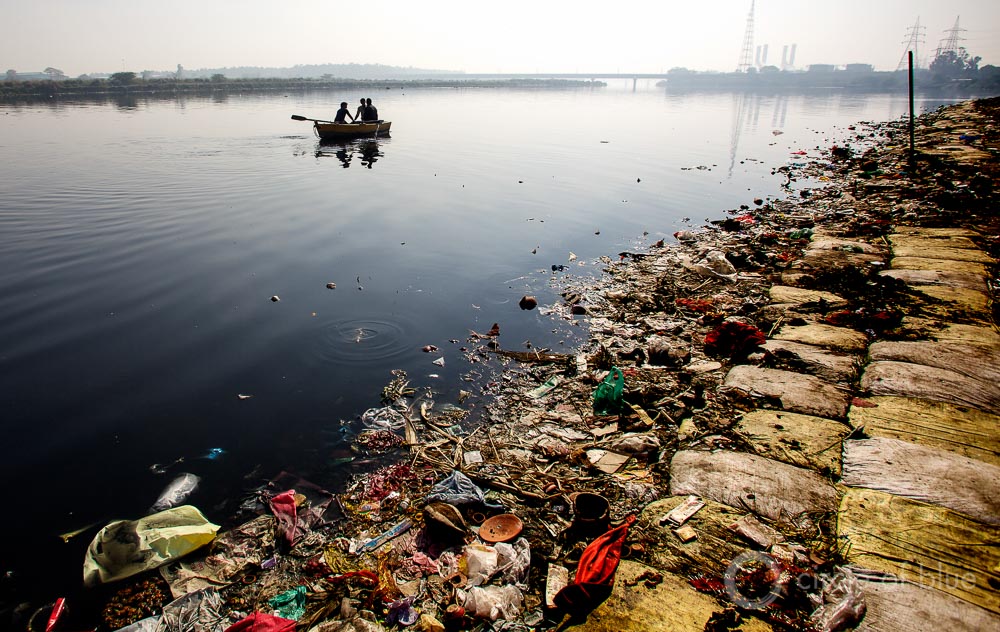
All of this is manifested in the Ganges, One of the world’s most polluted rivers, Scientists have shown that the spread of bacteria resulting from the dumping of sewage waste has reached a level harmful to human health and the environment. The cleaning of this river is a focal point in the Indian subcontinent, It is for him that one initiative after another is launched. For the civilization of India, this river is a cultural heritage that must be protected. However, it represents a constant threat to public health and the environment. However, the clean-up of the Ganges faces several challenges. The first is the sewage networks, 151 of which are poured into the river, carrying more than one million liters of waste per day. 20% of them still need to be addressed. In addition, lack of skilled manpower, poor scheduling, lack of available data, and difficulty in obtaining water samples when needed.
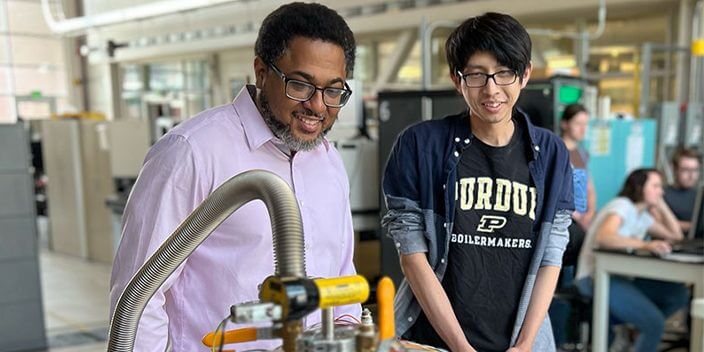
In response to all these data, The Indian Institute of Technology is making continuous efforts and developing various mechanisms to study the effects of climate change on river ecosystems. He has recently developed a self-operating hydroscope to perform the task of monitoring the river and transmitting live data and live images from the Ganges. This project was supported by the Ministry of Science and Technology of the Government of India and the Science and Technology Forum of the American University of India. In cooperation with a team of earth scientists, mechanical, electrical and aerospace engineers.
The new system monitors water quality according to multiple factors and metrics, Using a number of devices added to a platform installed in water, So that it is semi-submerged and able to operate in various weather conditions and at wind speeds of up to 110 kilometers per hour.
The system is equipped with miniature and low-cost sensors to measure water quality, In addition to an automatic device that takes samples for the purpose of measuring different sanitary standards in the river, Where data is collected automatically every 15 minutes, It is then sent to the institute via a wireless network.
To make the platform fully independent, They are also equipped with systems to produce energy through solar cells and through vibration from water vortices that generate energy from the river water flow itself.
At the current stage, The system uses 3 types of sensors to track 3 important factors, These are the acidity rates, the ability of water to transfer electric current, and the capacity of oxygen dissolved in water, All of these factors are used to measure water pollution. The system is also capable of containing 3 additional sensors. These factors can also be used to estimate the total solute and the presence of mineral ions in water.
Moreover, An open platform for the system has been designed so that staff from institutes and other research centers working on the development of sensors can benefit from it and share information.
This is not the first time the institute has focused on environmental challenges in India, especially those involving rivers. The institute recently launched an atlas called the “Ganges Atlas” and a working guide that users can refer to to process and analyze images documenting riverine environments. At the lowest possible cost and through open source software, He also conducted research on the high elasticity of heavy metals dissolved in the river, And about the renewal of streams in the river basin, He signed a memorandum of understanding with the Delhi government to examine air pollution levels.
It is worth noting that the preparation of the prototype of the Ganges River pollution measurement system took 3 years with a budget of nearly two hundred thousand US dollars, 60% were spent on calibration of high-precision sensors and automatic data collection system design.
This prototype is still being tested, The team believes that the time is not yet ripe to present results and assess challenges. The system should continue to collect data for at least a full year to understand the characteristics of the river in different seasons. A comprehensive and comprehensive vision would require the deployment of several devices downstream.
While the Institute is currently working on an automated system that can collect solid waste from the water surface remotely, The team believes that scaling up technology is always possible with the help of both government and non-state actors.
Authorities see the move as a project that could make a real difference in the effort to clean up the huge river that traverses more than 2,500 kilometres of Indian territory.
References:
- https://www.telegraphindia.com/edugraph/news/iit-kanpur-develops-robust-and-self-sustained-mechanism-to-check-the-health-of-ganga/cid/1838580
- https://www.downtoearth.org.in/coverage/pollution/namami-gange-5-reasons-why-ganga-will-not-be-clean-by-2020-61891
- https://www.indiatimes.com/news/india/monitoring-system-by-iit-kanpur-will-help-in-the-fight-to-improve-river-gangas-water-quality-554933.html