
Seattle has launched a hub in collaboration with the private sector to test parcel delivery innovations, aiming to make the “last mile” delivery process carbon-free and reduce its associated costs. This testing hub is part of Seattle’s new vision to rethink parcel delivery modes by enhancing public-private partnerships.
The population in Seattle has been relying even more on parcel delivery services due to COVID-19 and its resulting increased demand for online shopping and delivery services beginning at shipping centers and ending at the recipient, a process known as the last mile of delivery. The shipping and delivery sector faces two major challenges in this area, namely the high cost of last-mile operations and their resulting carbon emissions. It is estimated that the last mile accounts for 25-50% of shipping costs. With the incremental growth of e-commerce and daily delivery orders, this issue was prioritized by the Seattle Department of Transportation. The latter partnered with the University of Washington’s Freight Lab to be one of the key partners at Seattle’s hub to test innovations and solutions for optimizing parcel delivery and shipping technology and methods during the last mile.
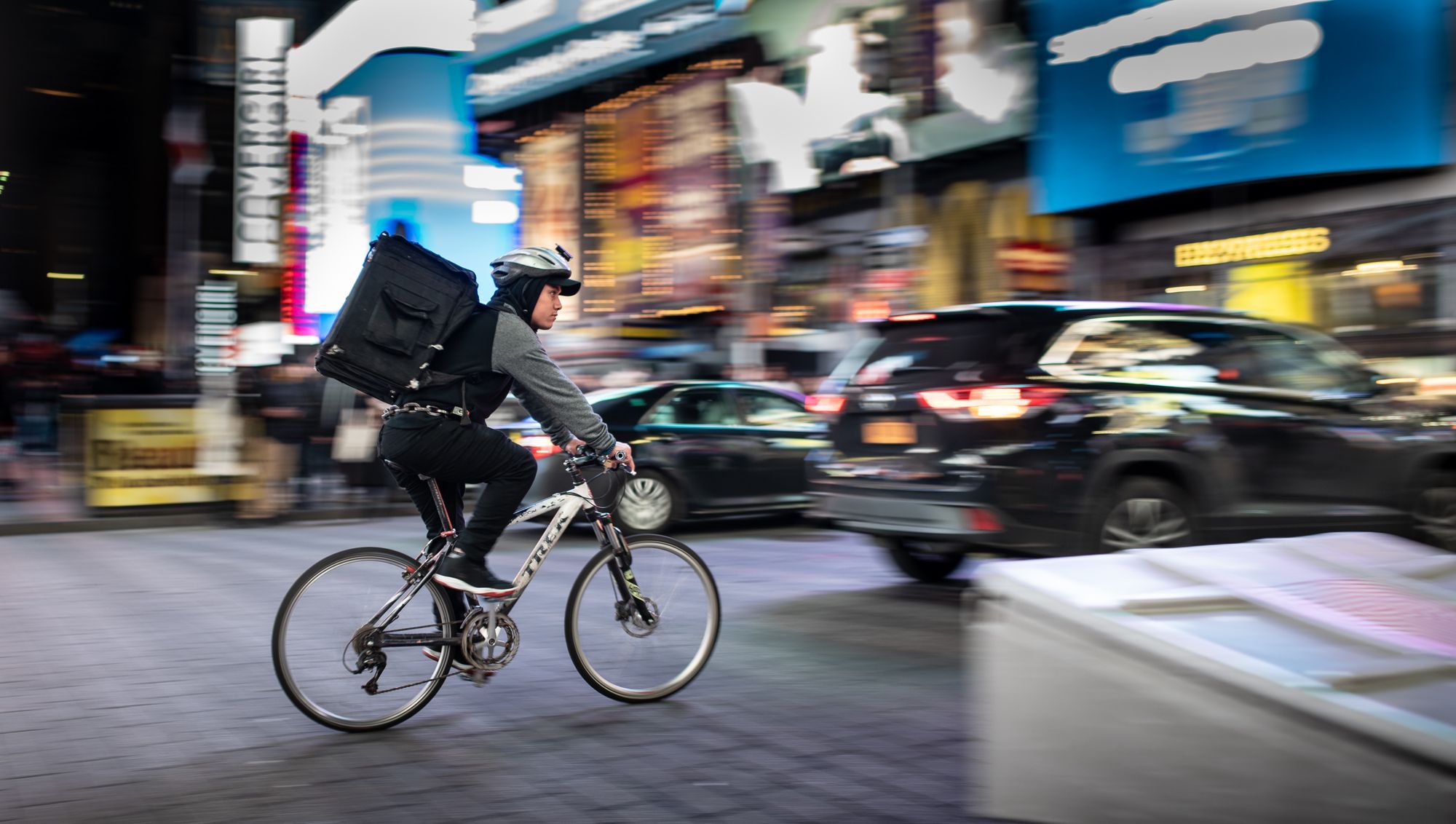
This test hub is the first of its kind in Seattle that supports the city’s 2030 strategies and goals to reduce greenhouse gas emissions from parcel deliveries by 30% and encourage eco-friendly delivery methods, such as cargo bikes. These goals are part of a broader vision announced by the city in 2011 to reach zero emissions by 2050. In addition to addressing environmental pollution, this project hopes to improve the city’s infrastructure and activities, including alleviating traffic congestion and reducing noise pollution.
The hub, which is located in a parking lot, brings together some of the most important logistics and delivery companies to intensify efforts aimed at creating and testing new solutions at the hub for the last mile, in addition to fostering partnerships between the private and public sectors. This is how the city will benefit from fostering a culture of innovation in shipping, as private-sector labs play a key role in driving innovation. Bringing together major delivery and shipping companies under one roof provides an opportunity to create collaborative projects and exchange experiences that will boost innovation in the city in general. This will also help decision-makers at the Department of Transportation recognize the infrastructure needed to achieve this.
Eco-friendly delivery is one innovation pillar emphasized by the testing hub. The project’s innovations include multiple solutions, some of which rely on new technologies and others resort to simple but effective means. Among the involved innovations is a set of solutions that can be used together to achieve the best results. One of the project’s innovations entails loading the parcels into an electric carrier to reduce physical strain on delivery workers for short-distance deliveries. The carrier can be attached to an electric tricycle for package deliveries. Delivery workers then use the last mile digital platform technology to deliver packages and choose the route that ensures fast delivery.
The project is expected to provide a clearer understanding of the infrastructure needed to adopt new and environmentally friendly means of delivering goods and parcels. The tests revealed, for example, the need for regulatory changes, such as license plates for delivery bikes and a special postal address for the parcel locker of the project that receives deliveries from various shipping companies. Furthermore, the Freight Lab will monitor innovations through a range of sensors, following for example the reduction in traffic congestion or the number of packages delivered. The project will analyze the data collected in order to estimate the decrease in CO2 emissions compared to traditional truck-based delivery systems, and provide feedback to companies involved in the project as they improve their products and test their operating models.
According to the project team, Seattle’s hub serves as a testing ground for innovative and sustainable solutions, where professionals can experiment and evaluate new technologies and delivery models in an effort to reach efficient solutions in terms of costs and performance to reduce greenhouse gas emissions and improve city traffic. The project’s organizers believe that, in addition to reducing emissions and adapting to new trends, the hub is capable of delivering an unprecedented system of parcel delivery through online shopping, as well as becoming a place for people to pick up their packages in the neighborhood and socialize at the same time.
References:
https://www.seattleneighborhoodhub.com/
https://www.seattle.gov/council/meet-the-council/mike-obrien/carbon-neutral