

Most innovation hubs, whether academic, technological, or industrial, gravitate toward urban centres and their immediate surroundings. However, the Finnish capital, Helsinki, has turned its attention to its suburban areas, aiming not only to develop them but to gradually transform them into smart living and working districts, driving long-term innovation-based economic growth. By adopting and developing sound ideas through practical collaborative projects, these suburbs are poised to keep pace with the development of Helsinki’s city centre. This initiative aligns with Helsinki’s vision of becoming a leading smart city globally.
Recognizing the widening gap between urban and suburban areas, and the lack of resources, networks, and support systems necessary for entrepreneurship and innovation in suburban communities, Helsinki has identified the untapped potential of its suburban districts. The city has prioritized improving infrastructure and quality of life to revitalize these areas and make them as attractive as the city centre. To achieve this, the city, in collaboration with relevant authorities and a non-profit government company, launched the “Helsinki Innovation Districts” project, inviting private companies to participate.
Compared to other suburban development projects, this initiative stands out in several ways: its emphasis on cooperation, participation, and open dialogue; its approach to presenting and discussing innovative solutions that align with residents’ needs; and its focus on real-world testing, earning Helsinki’s suburbs the moniker “living labs.” The project aims to create an environment that attracts investment, fosters innovation, and generates new job opportunities for residents by supporting various infrastructure and service projects while preserving green spaces and a tranquil atmosphere.
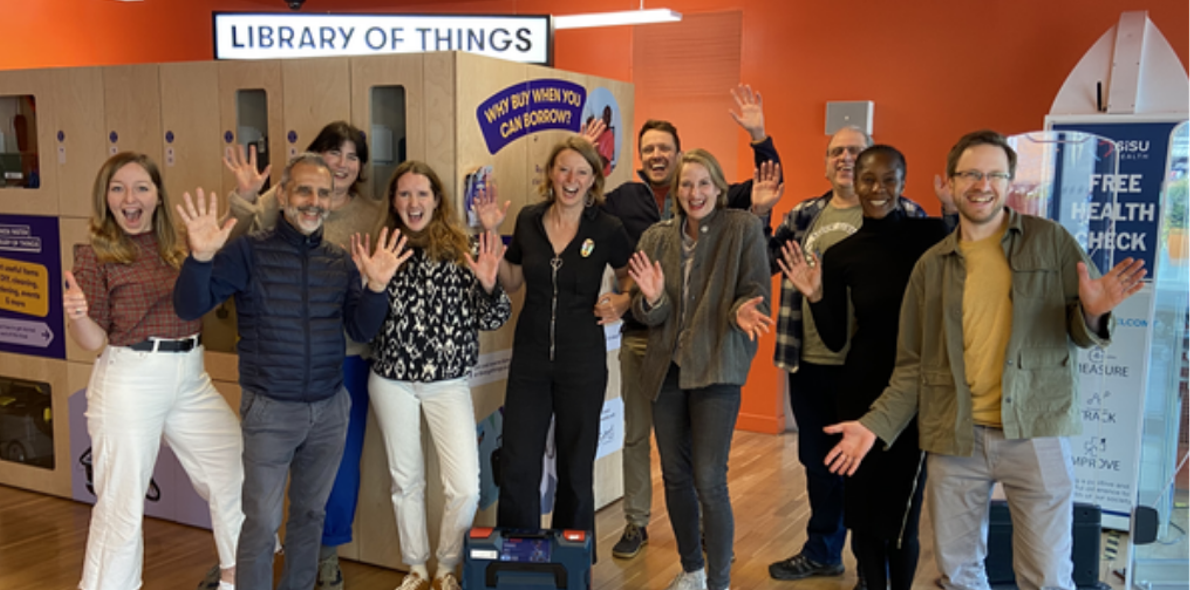
To facilitate this, “temporary workshops” have been established in empty spaces within the pilot suburban districts. These workshops serve as meeting points for all stakeholders, including companies, government experts, researchers, and residents. The workshops remain open throughout the project’s duration, typically a few months, to foster discussions and monitor progress. Designed to be comfortable and inviting, these spaces can be used by residents for meetings or personal interactions with other participants.
To identify the most effective innovative solutions and develop new ones for future projects, the workshop activities are accompanied by a “digital urban twin.” This digital platform contains detailed project information that is updated as the community reaches agreements, allowing for real-time discussions. The platform includes relevant data and analytics, as well as visualizations and other resources that enable users to create simulation models of the project, develop new scenarios, and conduct tests.
The solutions developed for each district are tailored to its specific characteristics, needs, and priorities, and incorporate the latest technologies. The initiative has been launched in five different suburban districts, successfully completing nearly 20 projects, including street lighting, playgrounds, public transportation, and improvements to green spaces and public areas. Over 100 additional projects are currently in the pipeline. The initiative focuses on implementing innovative solutions that improve existing infrastructure rather than replacing it, making projects more practical and faster to implement. It also aims to enhance the attractiveness of parks and public recreational facilities to encourage young people to spend time outdoors.
Lessons Learned Helsinki’s pioneering experience has provided valuable lessons in achieving social inclusion between urban and suburban residents. The strategy implemented through the “Innovation Districts” and “Living Labs” initiatives has served multiple purposes. On the one hand, it has increased the attractiveness of suburban areas for living and working, stimulating business creation and investment, revitalizing the suburbs, and creating local job opportunities. On the other hand, the initiative has encouraged innovation activities aimed at establishing innovation hubs in the suburbs, which will contribute to strengthening Helsinki’s smart city economy. This means that the city can leverage human resources and geographic assets that were previously neglected, at a relatively low cost, as most projects involve innovating within existing infrastructure and services rather than new developments.
The digital twin has proven to be an invaluable tool for clarifying all aspects of the project for all stakeholders and answering their questions. It is available at any time for users to simulate the project and visualize its outcomes.
References:
- https://forumvirium.fi/en/helsinki-innovation-districts-turned-suburbs-into-living-labs/
- https://www.hel.fi/en/urban-environment-and-traffic/urban-planning-and-construction/planning-and-building-goals/suburban-regeneration#helsinki-innovation-districts