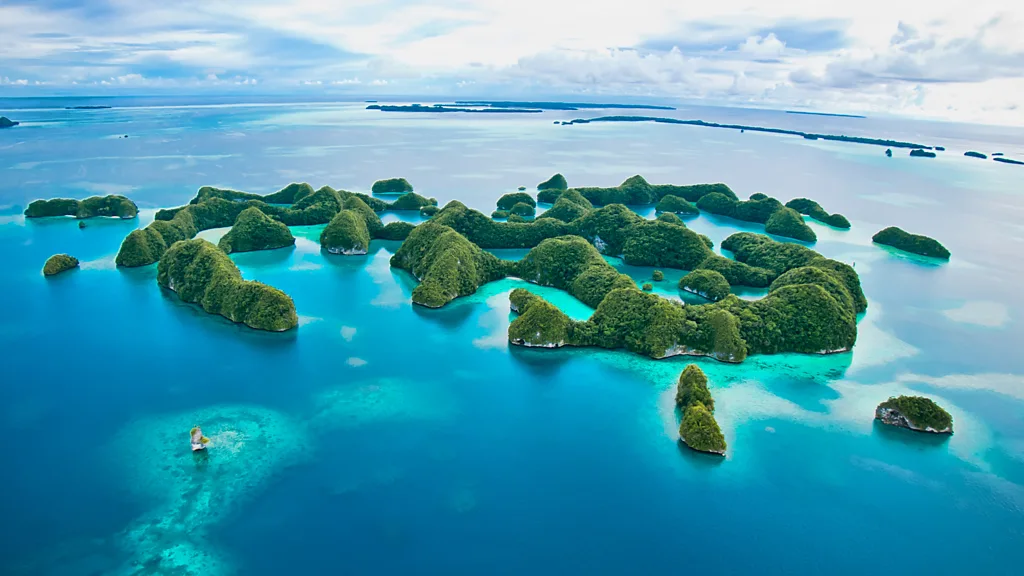

In a bid to better manage Europe’s seas, policymakers and scientists have turned fragmented data into a predictive tool: the European Digital Twin of the Ocean. This living virtual model uses artificial intelligence, satellite data, and ocean sensors to simulate marine systems in real time—allowing decision-makers to run “what if” scenarios, gauge the impacts of pollution, and anticipate the outcomes of environmental projects before they unfold. The goal: smarter, more sustainable ocean planning.
At a time of mounting climate threats and growing urgency to understand marine ecosystems, Europe has put the ocean squarely on the technology table. Not as a static map or scale model, but as a digital twin—a data-rich, AI-driven replica that reflects, moment by moment, what is happening beneath the surface.
In 2024, the European Commission launched the EU Digital Twin of the Ocean (EU DTO), the first near-real-time digital model for monitoring European seas. Unlike traditional databases, this initiative doesn’t just collect data—it recreates the ocean virtually, complete with currents, species, risks, and opportunities. The platform lets scientists and policymakers explore “what if” scenarios around climate change, marine pollution, and resource planning—before those scenarios materialize in reality.
Led by Mercator Ocean International (MOi) in partnership with the Flanders Marine Institute (VLIZ), the project is designed not only to observe the seas but also to interact with them and predict their future. Its architecture integrates AI, simulation models, satellite monitoring, and distributed sensor networks scattered across the depths.
Europe learned the hard way that fragmented knowledge cannot drive solid decisions. For years, services like Copernicus Marine Service and EMODnet amassed massive volumes of ocean data. Yet much of it sat in siloed repositories, difficult to combine or analyze at the speed needed to confront accelerating threats—climate disruption, habitat loss, plastic pollution, industrial pressures, and overfishing.
The disconnect was stark. While satellites circled Earth, plankton were still cataloged through microscopes. That mismatch between the scale of the threat and the tools available demanded a digital revolution.
The ocean twin was conceived as more than a visualization project. It’s a dynamic platform that integrates physical, chemical, biological, and even economic data—then presents it through an interactive interface. Imagine testing the effects of a new offshore wind farm, predicting the impact of a coastal spill, or simulating a large-scale aquaculture project—all before a single intervention is made.
Its edge lies in speed and interactivity. AI can now classify plankton in minutes instead of hours, track dolphins and porpoises through sound recordings, or simulate the drift of microplastics through virtual oceans. Researchers can model whether seagrass restoration will reduce coastal erosion or dampen wave action—without disturbing the environment itself.
The project even builds in a civic dimension. Through avvistAPP, coastal visitors can log sightings of marine life. These observations are validated, then fed into the database, effectively turning citizens into contributors to the digital twin.
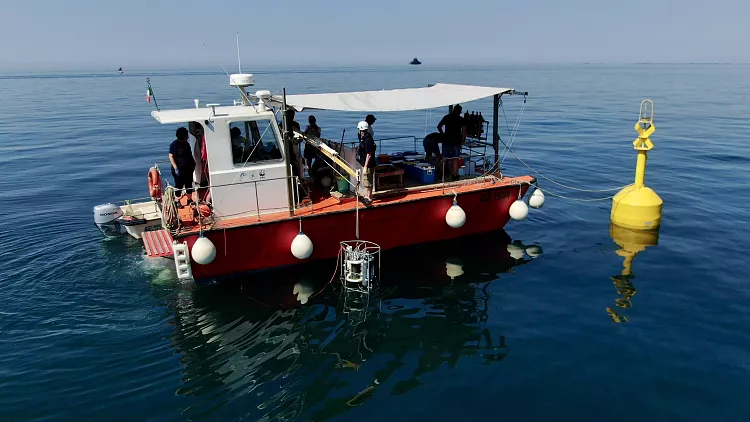
By mid-2024, the effort had already reached key milestones. At the Digital Ocean Forum in Brussels, a prototype platform went live. Autonomous buoys began transmitting around-the-clock ocean data directly into the system. Researchers demonstrated simulations of plastic pollution and coastal restoration. Lab analysis that once took days was compressed into minutes.
The digital twin is set to integrate with Europe’s larger digital initiatives, including Destination Earth (DestinE), and contribute to the European Green Deal, the EU’s digital strategy, and the UN Decade of Ocean Science.
Its reach spans a wide network of actors: EU institutions, national research centers, marine data agencies, German institutes like Hereon, and even ordinary citizens reporting sightings. The diversity of partners highlights both the project’s ambition and the degree of European coordination required to keep this “ocean brain” alive, adaptive, and constantly learning.
The deeper lesson may be this: the real power is not in the volume of data, but in connecting it, analyzing it in real time, and translating it into actionable knowledge. When data becomes a medium for simulating futures, errors can be caught before they happen. Environmental planning becomes preventative, not reactive.
Artificial intelligence is changing the game. It collapses the gap between scientific intuition and political decision-making. What once took days of lab work now takes minutes. What was once the domain of experts is increasingly accessible to lawmakers, planners, and citizens alike.
References