

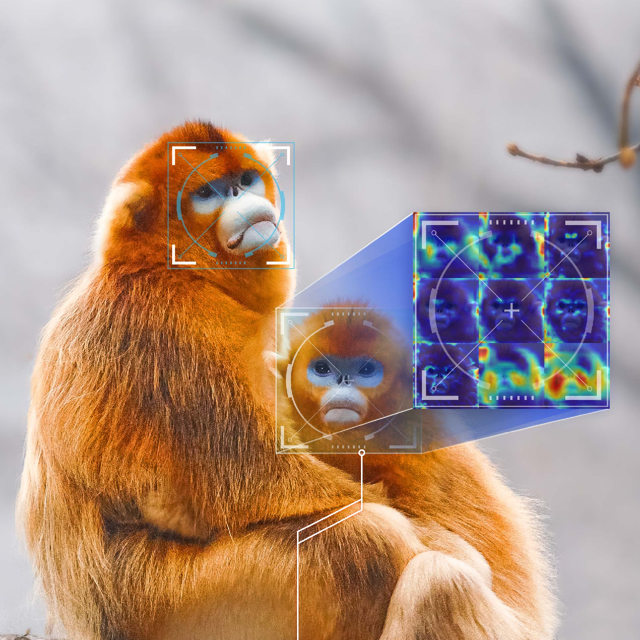
China aspires to be one of the most advanced countries in the world in the development of artificial intelligence technologies in various fields, One of its most recent initiatives was the application of these technologies in the field of protection of the endangered white leopard in Gansu Province by working to transform traditional and challenging monitoring and tracking processes into intelligent operations that are extremely fast, accurate and efficient.
The white leopard is an endangered animal according to the classifications of the International Union for Conservation of Nature and its resources, Its protection is a priority for the protection of wildlife at the national level in China. There are an estimated 2,000 tigers, the majority of which are found in the mountains of the Kilian Nature Reserve in Gansu County. Northwest China. They make up nearly half of the remaining white tigers in the wild found in some of China’s neighbours in Central and South Asia.
White tigers are spread in barren rocky areas that extend over vast and rugged areas, This is an ideal environment for these tigers, Where they are difficult to watch, Especially its fur is camouflaged and similar to the surrounding environment. But despite having over 200 infrared video cameras, Equipped with sensors in the areas where these tigers are found, to monitor their movement around the clock, Reviewing the hundreds of thousands of videos and photos produced each quarter for scenes featuring white tigers is a big challenge in itself. It requires long weeks of grueling work by reserve staff who review these clips in detail to determine white tiger sightings. This is in addition to human errors that may occur, The long period of time that elapses from the capture of clips until their content is determined.
Reserve officials explain that a large part of the videos reviewed are devoid of any useful content. That’s because cameras record every movement in front of the lens, even if it is small, Such as the movement of grass by the wind; the proportion of videos in which white leopard is actually photographed is low.
But this monitoring process has changed radically in the Kilian Reserve after linking the cameras to an artificial intelligence-based system in cooperation with the Chinese company “Tencent” multinational specialized in technology and Internet technologies. In partnership with the World Wildlife Fund and the One Planet Foundation.
Thanks to the big visual data analysis and machine learning capabilities provided by the artificial intelligence technology of the Kilian Reserve, For example, employees can search 1,000 images and identify those with white tiger footage in just about 20 minutes. This represents a vast difference from what was previously the case. Artificial intelligence also helps researchers in the reserve to form an accurate and updated picture of the numbers, locations and movement of these tigers. and the types of threats to their survival, As well as studying them thoroughly.
The artificial intelligence system in the reserve is based on an algorithm developed using a number of modern technologies related to machine learning through continuous feeding of algorithms with data. This algorithm enables the system to not only locate the White Panther, but also to identify all other animal species present in the reserve, Which includes rare or endangered species. The team behind the project notes that the combination of monitoring data from the smart system and inspection field trips will help researchers develop clear and detailed plans to protect all animal species. Maintain the natural balance between them in the ecosystem of the reserve. The white tiger has a major role in maintaining this balance, Its numbers are a key indicator of the well-being of the reserve as a whole.
On the other hand, The smart system will help early detection of attempts at poaching or poaching. The price of white tiger skin on the black market in China’s thriving cities is thousands of dollars. Its bones are an alternative to the expensive orange tiger bones used in traditional Chinese medicine. The white tiger cub can be sold to public or private zoos for about $20,000.
It is noteworthy that China aspires to be the first country in the world in the field of artificial intelligence applications by 2030, Central and local government spending is estimated at tens of billions of dollars. China adopted, which sees artificial intelligence as a means to raise the level of national productivity, A fast-paced approach aimed at finding practical technology-based solutions to various challenges on the ground. Having made significant progress in a number of areas, Especially in the education and healthcare sectors. Local governments in various provinces of China are promoting the central government’s orientation by forging multi-sectoral partnerships with research institutions and technology companies to create an active environment that stimulates the adoption of artificial intelligence and technological innovation. It accelerates research and development.
In light of the rapid growth of the artificial intelligence sector, China’s Ministry of Science and Technology has issued a code of ethics to be considered when working on existing and future AI models and applications; it places special emphasis on the importance of making the final decision in various affairs always in the hands of man and not machine. And that the human has the absolute authority to accept or reject the services of the artificial intelligence system at any time.
References: