
In a bold attempt to mimic the elegance of photosynthesis, researchers at MIT have introduced a promising concept: artificial leaves that, like solar panels, harvest sunlight—but instead of generating electricity, they transform that light into storable hydrogen fuel. This approach could open a pathway to decentralized energy solutions.
Nature has long mastered the art of energy conversion. Every leaf on every branch quietly sustains life by capturing sunlight and transforming it into fuel through photosynthesis. Inspired by this enduring process, scientists have sought for decades to replicate it—building systems that could deliver reliable and sustainable energy.
The challenge has always been clear: how can we convert sunlight into a storable fuel? Conventional solar panels can generate electricity, but they require extensive infrastructure for storage and distribution. Hydrogen emerged as a compelling alternative: it can be produced, stored, and used when needed, without reliance on centralized power grids.
But earlier attempts to split water with sunlight often stumbled. Many required corrosive solutions or rare, costly materials such as platinum. Even when successful, hydrogen storage and transport remained formidable obstacles. What was needed was a low-cost, efficient, and practical system—something robust enough for daily life, especially in communities lacking reliable energy infrastructure.
MIT’s renewable energy researchers answered that call by developing a radical new approach: an artificial system that mirrors photosynthesis using readily available materials. Their design splits water into hydrogen and oxygen, just as a natural leaf does.
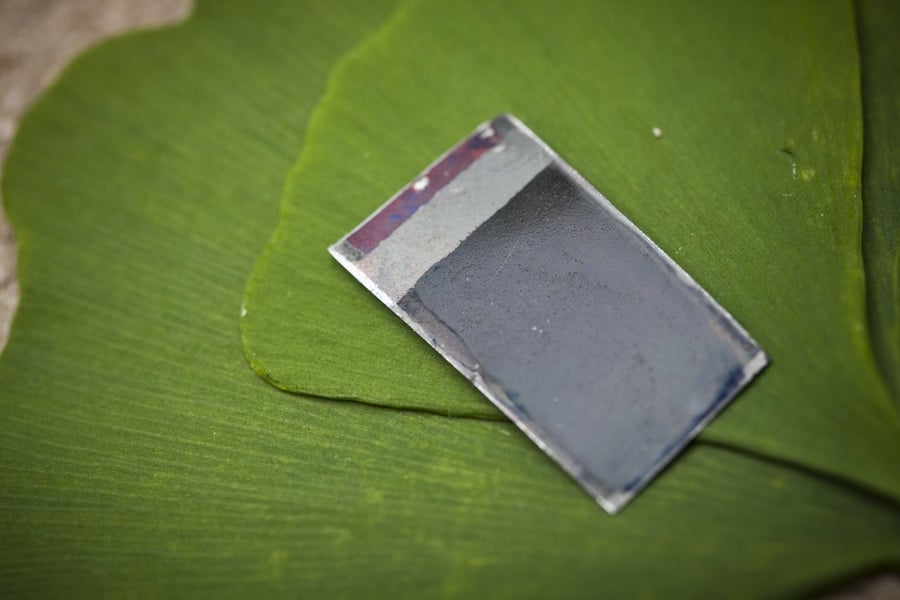
The device combines semiconductor technology with novel catalysts. At its core is a thin layer of silicon—an established semiconductor also used in solar cells—that absorbs sunlight and converts it into electrical current. What makes the invention distinct is the way it embeds catalysts directly on the leaf’s surface. One side is coated with a cobalt-based catalyst that releases oxygen, while the other is covered with a mixture of nickel, molybdenum, and zinc, which drives hydrogen production.
Once placed in water and exposed to sunlight, the artificial leaf begins operating autonomously—bubbling oxygen and hydrogen with no external wires or control circuits.
Crucially, the system avoids expensive or scarce materials, relying instead on abundant elements like cobalt and nickel. It can also operate in ordinary water, making it simpler and more practical than previous designs.
Getting here wasn’t easy. The team faced major hurdles, beginning with materials selection. Many catalysts were either unstable in water or prohibitively costly. Identifying alternatives that were reliable, effective, and affordable took years of research. Next came the challenge of efficiency. For the technology to scale and reach commercial use, energy conversion rates must improve, manufacturing must be streamlined, and storage and usage methods must be enhanced.
If these hurdles are overcome, the artificial leaf could be transformative. It offers a path to decentralized energy access, particularly in remote areas unconnected to the power grid. By enabling hydrogen production at the point of use, it reduces dependence on centralized infrastructure—allowing homes and communities to generate their own fuel from nothing more than sunlight and water.
The system is also sustainable: it emits no harmful byproducts, unlike fossil fuels. It can integrate seamlessly with existing solar power setups, giving homeowners the ability to store solar energy as hydrogen and draw on it when needed.
With continued refinement, the artificial leaf holds out the promise of a future where clean energy is not a luxury but a universal resource—one powered by the most abundant source of all: the sun.
References: