

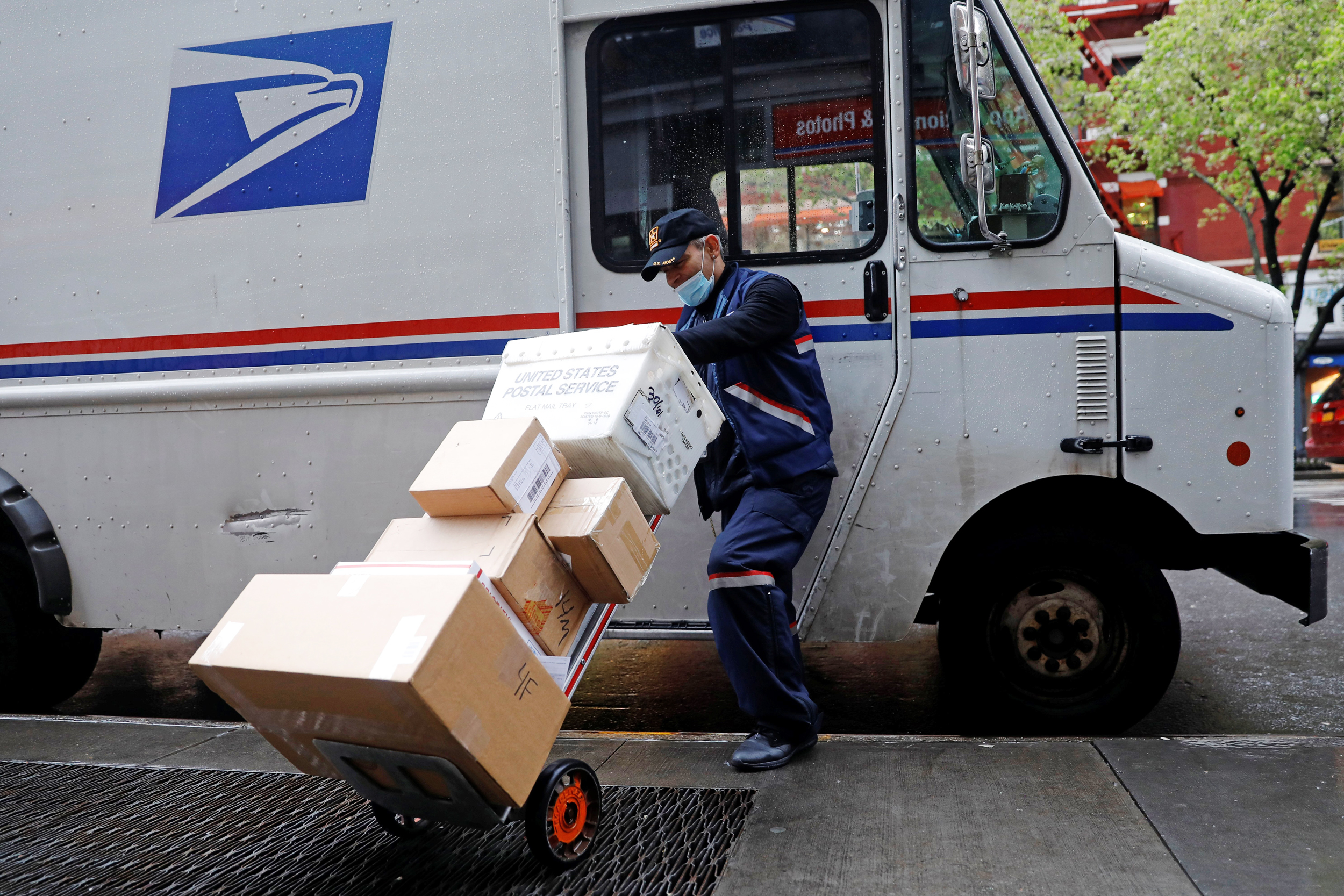
To face a complex series of difficulties, The U.S. Postal Service has begun exploring solutions provided by technology to manage a smart system in which algorithms recognize postal parcels, track their journeys from sender to recipient, and find them if they are lost. To get it back on track quickly and efficiently.
Specialists say that technology with its various innovations has come during the second decade of the twenty-first century more than it did during the last century as a whole. It established a new type of thinking that no institution or entity could do without. While technology has replaced traditional means of correspondence, At the same time, it has contributed to the development of the postal system, which is still widely used for sending parcels.
In the United States of America, All postal operations are carried out through a single central entity, It is a postal service that handles 129 billion transmissions annually, That's 230,000 envelopes and ejected every second. Given the large size of this federal institution, Becoming a smart organization can be a long, arduous and challenging journey. Not only operational, But legal, technical, financial and regulatory, This was confirmed by the COVID-19 pandemic, which increased the need for deliveries on the one hand and reduced the size of the workforce on the other. The problem was exacerbated during the 2020 presidential election, which overwhelmed mail centers with the arrival of ballots sent from various states. Where 22% of customers complained of delays in receiving their mail, which may be cash receipts, important documents, or even pharmaceutical supplies. It is also frequent that parcels are lost at some point in the process, It may take several days or even weeks to find them. Or their handwritten numbers cannot be read in different fonts and are sometimes difficult to understand.
After ten years in which the Postal Service focused on integrating technology into its operations and services, This year she laid out her plan for the next decade. With a budget of nearly $2.4 billion, The ten-year plan was called "Action for America: Our vision and ten-year plan in achieving financial sustainability and service excellence", It aims to implement eleven strategies for future work that will be based mainly on modern technologies, Technological development efforts in the past focused on two main elements, These are postal innovations and data analytics.
Among the new strategies, Taking advantage of AI tools comes in all post centers distributed in 195 locations, By entering the parcel data, which allows tracking them from the sender to the recipient and determining their location in case of loss, 4 servers process 20 TB of images using OCR and borderline computing software. It is not so much a technical model as a geographical one, It is based on the principle of placing computing elements and storing data in a location close to the user or the final destination that benefits from the computer service. Hence, This whole system can be described as a "digital postman" who delivers AI models from 195 branches to the head office. The mail service also uses a conversational device that uses artificial intelligence to receive calls, help customers, and answer the most frequently asked questions.
Automatically A photo is taken of each parcel entering the mail system, Whatever its source or destination. Then Algorithms classify packages according to internal business needs, which include reverse image search by processing their barcodes. and verify the addresses to which they will be sent, and analysis of their transponder lines by comparing them with pre-existing patterns, Determine the requested package from tens of thousands of photos.
For now The Postal Service is exploring about 30 other uses of artificial intelligence. Such as reading damaged barcodes and automatically checking the postage stamp and its suitability for the size of the package, its weight and the distance it will travel. Meanwhile, Experts are exploring the possibility of employing IoT, blockchain and autonomous vehicles in the postal ecosystem.
Whereas, the Postal Service reviewed this experience in a detailed report, It reported the challenges it faced, They mainly relate to limited funding and weak investment in R&D and technological infrastructure, Especially after the recent action taken by the administration to reduce its investment spending, This restricts opportunities to compete with private companies that are already privileged because they have been freed from the burden of bureaucracy, Unlike the postal service, it does not face the regulatory challenges that government agencies face before testing new concepts. which delay the development of internal products, It hinders investment in emerging technologies and the development of information expertise.
In any case, The Postal Authority tries to make the most of available resources and enhance its ability to innovate by conducting operational and market tests, collaborating with startups, and publishing research papers that study emerging technologies and analyze their potential impacts and possibilities.
It is hoped that these efforts will lead to better customer service, financial efficiency, and reduced margin of error in an ecosystem that serves millions across U.S. states every day.
References: