

To harness the promising technological horizons in developing local administration, the Tunisian municipality of Beni Khallad has started a major shift in its operations. In cooperation with a private sector partner, they’ve implemented a suite of technologies – including Geographic Information Systems (GIS), smart applications, and a live dashboard – to streamline service delivery, boost operational efficiency, and foster a more transparent and participatory civic environment. This digital transformation paves the way for sustainable community development.
Local administrations play a crucial intermediary role, in a chain that starts with governments and ends with the citizens. Part of their responsibilities is to provide services to people, improve their lives, and meet their needs.
However, local governments are constantly grappling with the evolving needs of a digital age. Once a small agricultural town, Beni Khallad’s population surge to over 26,000 strains traditional service delivery models. This necessitates a shift towards tech-enabled solutions for the municipality to effectively serve its growing citizenry.
Until 2022, the Beni Khallad municipality team used paper documents and outdated work mechanisms that burdened them, challenged their operational efficiency, and caused delays in identifying and solving problems.
Beni Khallad recognized the need to leverage technology to address inefficiencies. Partnering with a leader company in Geographic Information Systems (GIS), the municipality embarked on a digital transformation journey. This involved integrating GIS solutions into their work processes for a data-driven approach to service delivery.
They opted for a comprehensive cloud-based platform enabling them to create maps, analyze data, and share best practices in addressing community needs and solving problems.
Beni Khallad launched a companion mobile app, “Surve 123,” enabling residents to report issues directly through their smartphones. This citizen-centric platform allows for reporting diverse urban challenges, from waste management to streetlight outages. Users can categorize reports, add detailed descriptions, and even upload photos to pinpoint the problem’s location.
Once a report is submitted and a response is initiated, the reported case enters a dedicated dashboard that provides a live visual representation of the on-ground situation and the progress of the response, organized by priority.
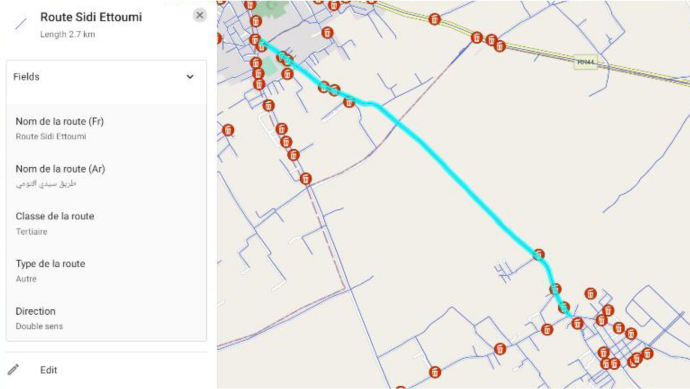
Recognizing the complexities of managing infrastructure data, the municipality adopted a maps application designed for smartphones and tablets. This solution enables real-time data recording, road condition documentation, waste management oversight, and service delivery monitoring.
Concurrently with the software development, the technology partner conducted workshops to train municipal staff and community members on GIS technology and its various applications for effective community service delivery.
This step was crucial for overcoming the challenge of a major shift in the work culture that had been in place for years, perhaps decades. The transition from a traditional paper-based system to a sophisticated digital platform requires a significant change in work mentality and approaches. It also requires practitioners (employees) and targets (local residents) to invest considerable time and effort to adapt to the new tools. Successful implementation requires more than just technical solutions, as it involves addressing the subtle operational differences within the organization.
Therefore, it was essential for community members to participate in the training to overcome another sensitive challenge: ensuring the app’s accessibility and usability for the general public, especially in a community unfamiliar with these advanced technologies.
Adopting this technology has simplified and accelerated the reporting and resolution of issues. The dashboard, which provides real-time information, has also helped municipal teams prioritize reported incidents and plan their operations with greater accuracy and efficiency.
Moreover, this innovation has enhanced the ability of employees to manage resources, improve decision-making processes, build trust, and establish transparency and accountability in municipal operations, due to the direct sharing of information between decision-makers and the public.
By empowering citizens to report their needs quickly and accurately, the app has achieved an unprecedented level of public participation and helped the Municipality of Beni Khallad cross a new threshold towards a more inclusive and responsive approach to local governance, setting a new standard for the field in Tunisia and beyond.
References:
- https://www.undp.org/arab-states/blog/gis-and-citizen-data-change-case-waste-management-beni-khalled
- https://www.esri.com/en-us/lg/industry/government/stories/beni-khalled-municipality-case-study
- https://www.undp.org/arab-states/blog/relying-new-sources-data-municipal-level-road-full-behavioral-ambushes
- https://govinsider.asia/intl-en/article/nadia-ben-ammar-head-of-exploration-undp-accelerator-lab-tunisia-women-in-govtech-2021
- https://www.ageos.org/projets?view=article&id=174&catid=30