MBRCGI Websites
|
Ibtekr.org
|
MBRCGI.gov.ae
|
UAE Innovates
|
Edge of Government
|
Pitch@Gov

The drive-through service guarantees swift detection and diagnosis

4 minute read
Drive-through screening centers for COVID-19 offer a quick and safe screening system in Korea and the UAE
Share this content

Add to Favorite ♡ 0

PCR testing is a crucial capability for managing disease outbreaks because COVID-19 infection symptoms are diverse and people with mild symptoms can still infect others. Hence, effective daily mass testing methods are an important intervention strategy for controlling any disease because they can contribute to detecting infection cases and enforcing the necessary mitigation strategies, such as social distancing. At the beginning of the outbreak, China and South Korea both suffered from a severe shortage of testing kits.

To ensure high-quality testing for large numbers of people, South Korea established temporary drive-through screening centers. The steps include testee registration and specimen collection. A short message is sent within 24 hours with the results. The entire service takes about ten minutes. These labs became at the forefront of this global pandemic control process.

One screening center in Seoul consists of four trailer-like offices with white canopies in front. Doctors in full protective suits and goggles take the driver's temperature with an infrared thermometer and hand out a questionnaire to fill out.  If you're running a fever and, in the doctor's opinion, may be at risk based on where you've been or whom you'vecontacted, you're eligible for a test. Only the driver is tested — passengers are not.

Within the same context, the Abu Dhabi Health Authority launched a similar initiative. Screening centers will be established in Dubai and Sharjah to serve Ajman, Umm Al Quwain, Ras Al-Khaimah, Fujairah, Al Ain, and Al Dhafra by mid-April. These centers operate daily in Abu Dhabi from 8:00 am until 8:00 pm. The test is provided free of charge while taking into account that priority is given to potentially infected people and those at a higher risk of infection, such as the elderly, pregnant women, or people suffering from chronic diseases.

South Korea has more than 500 screening sites, which have screened 100,000 people. Drive-through screening centers speed up tests and increase their number, thus allowing South Korea to surpass other countries as it has tested as many as 384 people in one day.

As for the United Arab Emirates, the screening center in Abu Dhabi offers its services to 600 at-risk persons. Moreover, a decision was made to establish screening centers in other emirates to improve testing potentials across the country.


Subscribe to Ibtekr to stay updated on the latest government initiatives, courses, tools and innovations
Register Now
Subscribe to Ibtekr’s Newsletter
Innovators’ Mailing List
Our newsletter reaches more than 30,000 innovators from around the world! Stay up to date with innovations from across fields of practice in the public sector.
Subscription Form (en)
More from Ibtekr

When Data Warms Homes: Denmark Utilizes Data Centers Heat

In an innovative approach that transforms an environmental problem into a sustainable solution, Denmark is repurposing excess heat from data centers to warm thousands of homes. Instead of wasting energy, projects led by tech giants like Microsoft and Meta are channeling this heat through advanced heat pumps into local district heating networks — reducing carbon emissions and providing stable home heating.

 · · 15 December 2025

Resilient Corals Help Degraded Reefs

As coral reefs teeter on the brink—battered by climate change, pollution, and overfishing, the world stands to lose not just vibrant underwater landscapes, but entire ecosystems that sustain marine life and millions of people. Enter Coral Vita, an ambitious startup that’s flipping reef restoration on its head by growing coral on land using a mix of cutting-edge techniques like microfragmentation and assisted evolution—dramatically accelerating coral growth and boosting resilience in warming seas.

Data-Driven Harvests: How Precision Farming Is Redefining Agriculture in India

As Indian farmers grapple with the compounded pressures of climate change, soil degradation, and dwindling resources, a quiet digital revolution is taking root in the country’s fields. A partnership between two companies—Zuari FarmHub and CropX Technologies—is delivering real-time soil intelligence to the palms of farmers’ hands, helping them irrigate more efficiently, fertilize more wisely, and ultimately grow more with less.

 · · 12 December 2025

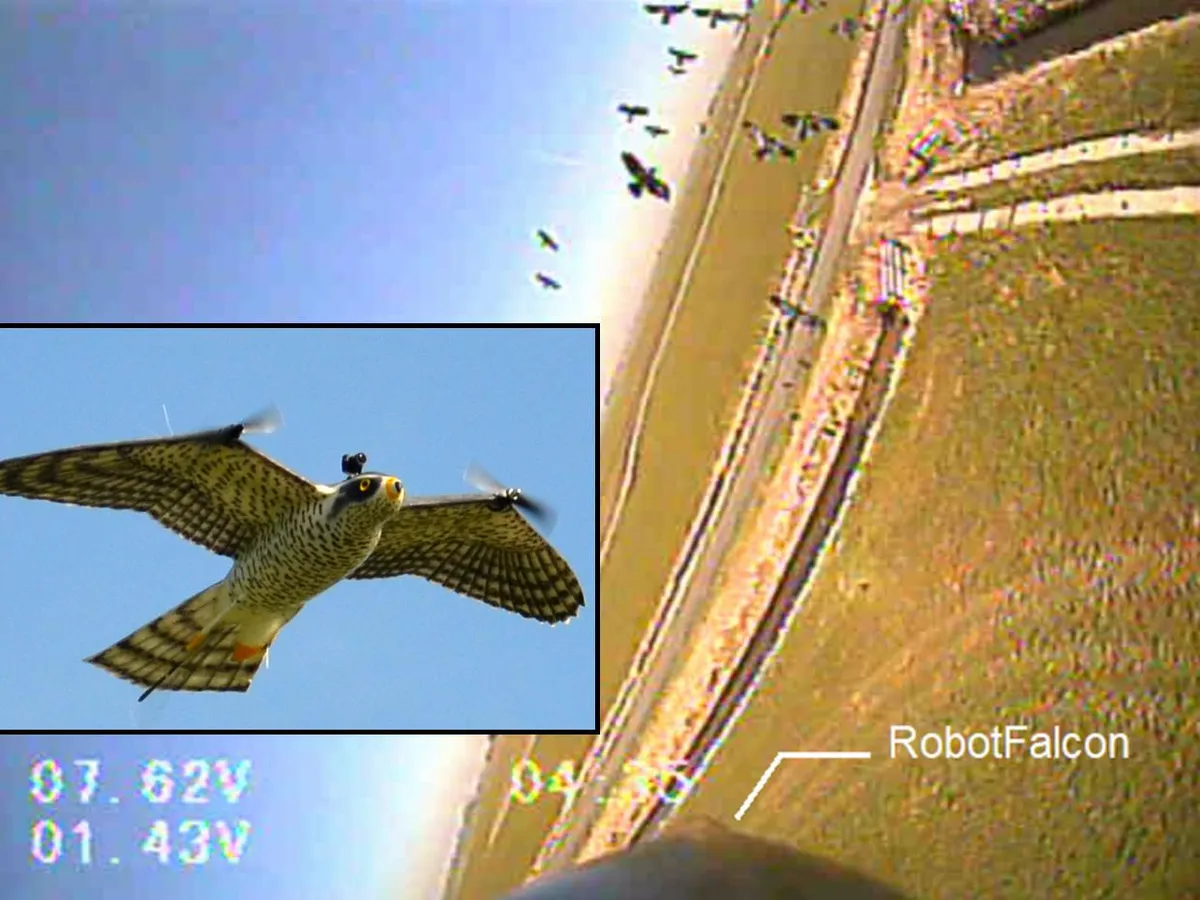
The Robotic Falcon: Guarding Birds from Planes—and Planes from Birds

As aviation continues its relentless expansion, balancing flight safety with wildlife protection remains one of the field’s most stubborn challenges. But a recent innovation—a robotic falcon that merges cutting-edge technology with natural predator behaviour, is offering a novel, perhaps transformative, solution.

 · · 29 October 2025

The Internet of Animals: A Glimpse Into a New Tech Frontier Connecting Wildlife to the Web

In a scene that mirrors the always-on, real-time connectivity of human communication, it's now possible to record every flap of a bird’s wing or the tiniest stir of an insect. This isn’t a science fiction scenario. It’s the unfolding reality of a new generation of remote sensing systems. These tools are revolutionizing the way we track animals, not just to push the boundaries of technology, but to protect and understand the biological diversity that sustains life on Earth.

 · · 29 October 2025
1 2 3 92
magnifiercrossmenuchevron-down