MBRCGI Websites
|
Ibtekr.org
|
MBRCGI.gov.ae
|
UAE Innovates
|
Edge of Government
|
Pitch@Gov

Smart Water Meters

6 minute read
Akron, Ohio, has launched a promising project to harness digital technology, specifically water meters, in the field of water management to study new options that would allow the government to provide useful services that meet the needs of its 90,000 citizens.
Share this content

Add to Favorite ♡ 0

Akron, Ohio, has launched a promising project to harness digital technology, specifically water meters, in the field of water management to study new options that would allow the government to provide useful services that meet the needs of its 90,000 citizens. Akron has relied since 2003 on analog water meters that took about two years to be installed at a cost of USD 17.9 million and were expected to remain effective for twenty years. Since they needed to be replaced soon, the city decided to study new options that keep pace with technical developments and achieve greater benefits.

In 2017, the idea of smart meters was introduced and a pilot project was launched to measure their effectiveness. In light of this project's success, the municipality decided to install digital meters in all homes and the tender for the supply of meters by the private sector ended in September 2019. The Water Supply Bureau and the Public Service Department are expected to begin installing the new meters between 2020 and 2022 at USD 35 million.

The smart water meters were chosen due to their many advantages, starting with their reasonable cost that does not exceed USD 65, in addition to the installation cost that ranges from USD 80 to USD 160 to be paid by the user. Smart meters do not have to be read by meter readers as it was the case with traditional meters installed in every home, thus allowing these employees to take on the new role of monitoring reports issued by the automated system. The new meters also display the amount of consumption in gallons, which is a more accurate unit of measurement compared to the traditional meters that used cubic meters and provided rounded readings that results in inconsistencies in monthly bills.

Smart meters enable users to view their water consumption online, which is useful for property owners, summer residents, or caregivers. These meters help users avoid costly bills by sending them instant alerts when their water consumption is high. The water authority also benefits from these smart meters by checking direct information that can identify water leakage or theft cases more accurately compared to the current system, since an alarm is triggered as soon as the meter is stolen and its cover is removed.

To evaluate the performance of this pilot project, daily reports were sent to users via email, in addition to providing a dashboard through the website that displays the consumption of the 225 participants per hour of use. When the meters were used for two years, the project was a major success. After the city used to allocate 18 meter readers to visit the units, record water consumption, and issue bills to users, the process of issuing water bills has become more efficient and relies on automated reading. With time, meter readers will be assigned to prepare the reports issued by the system to avoid layoffs of governmental employees. Many US cities are replacing analog meters with digital ones, proof of the project's success.  On another note, the water meter market is expected to grow at a compound annual growth rate of over 12% by 2023, and more than 56% of this growth will take place in North and South America. It is expected that 400 million smart water meters will be installed worldwide by 2026.


Subscribe to Ibtekr to stay updated on the latest government initiatives, courses, tools and innovations
Register Now
Subscribe to Ibtekr’s Newsletter
Innovators’ Mailing List
Our newsletter reaches more than 30,000 innovators from around the world! Stay up to date with innovations from across fields of practice in the public sector.
Subscription Form (en)
More from Ibtekr

When Data Warms Homes: Denmark Utilizes Data Centers Heat

In an innovative approach that transforms an environmental problem into a sustainable solution, Denmark is repurposing excess heat from data centers to warm thousands of homes. Instead of wasting energy, projects led by tech giants like Microsoft and Meta are channeling this heat through advanced heat pumps into local district heating networks — reducing carbon emissions and providing stable home heating.

 · · 15 December 2025

Resilient Corals Help Degraded Reefs

As coral reefs teeter on the brink—battered by climate change, pollution, and overfishing, the world stands to lose not just vibrant underwater landscapes, but entire ecosystems that sustain marine life and millions of people. Enter Coral Vita, an ambitious startup that’s flipping reef restoration on its head by growing coral on land using a mix of cutting-edge techniques like microfragmentation and assisted evolution—dramatically accelerating coral growth and boosting resilience in warming seas.

Data-Driven Harvests: How Precision Farming Is Redefining Agriculture in India

As Indian farmers grapple with the compounded pressures of climate change, soil degradation, and dwindling resources, a quiet digital revolution is taking root in the country’s fields. A partnership between two companies—Zuari FarmHub and CropX Technologies—is delivering real-time soil intelligence to the palms of farmers’ hands, helping them irrigate more efficiently, fertilize more wisely, and ultimately grow more with less.

 · · 12 December 2025

The Robotic Falcon: Guarding Birds from Planes—and Planes from Birds

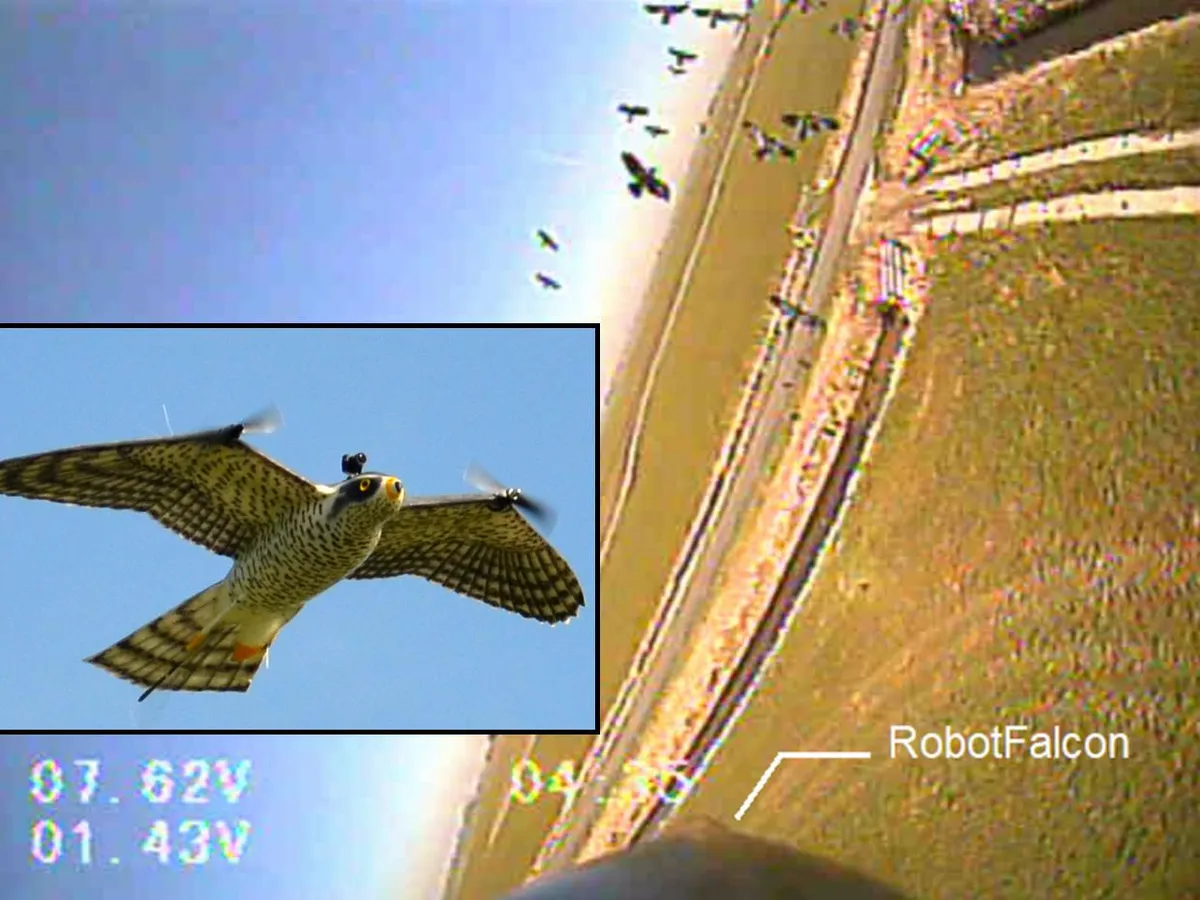
As aviation continues its relentless expansion, balancing flight safety with wildlife protection remains one of the field’s most stubborn challenges. But a recent innovation—a robotic falcon that merges cutting-edge technology with natural predator behaviour, is offering a novel, perhaps transformative, solution.

 · · 29 October 2025

The Internet of Animals: A Glimpse Into a New Tech Frontier Connecting Wildlife to the Web

In a scene that mirrors the always-on, real-time connectivity of human communication, it's now possible to record every flap of a bird’s wing or the tiniest stir of an insect. This isn’t a science fiction scenario. It’s the unfolding reality of a new generation of remote sensing systems. These tools are revolutionizing the way we track animals, not just to push the boundaries of technology, but to protect and understand the biological diversity that sustains life on Earth.

 · · 29 October 2025
1 2 3 92
magnifiercrossmenuchevron-down