
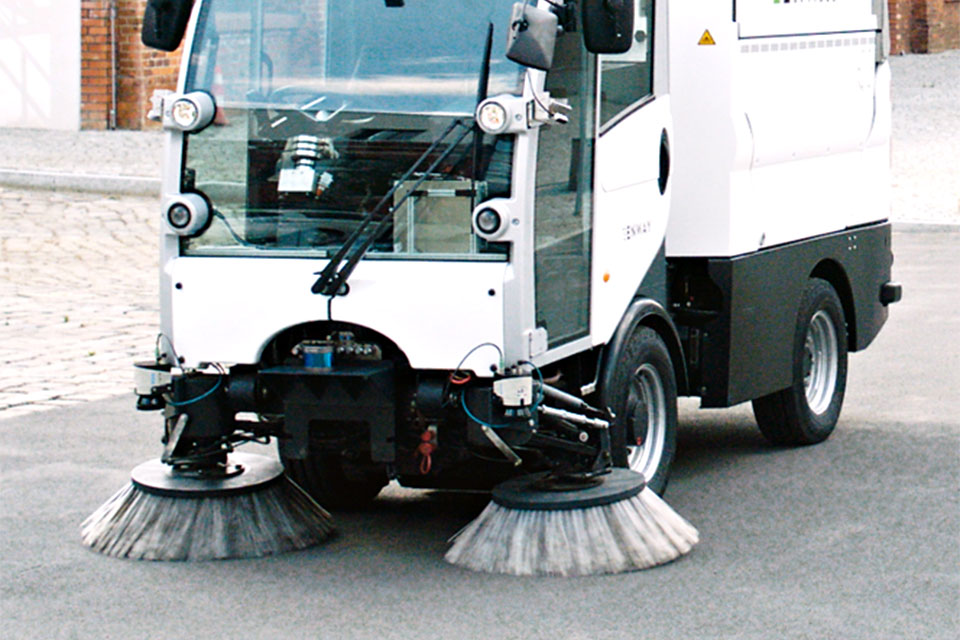
Singapore is known for maintaining general hygiene, It is one of the cleanest countries in the world. The most important reason for this is that the Singapore government has always sought to employ the latest technology in its environmental services. In a new step within this trend, Singapore's National Environment Agency is testing prototypes of autonomous vehicles to carry out street cleaning tasks with high accuracy and efficiency while preserving the environment.
The importance of maintaining hygiene has been highlighted due to its essential role in the response to the COVID-19 pandemic. The new reality imposed by the pandemic has prompted environmental services authorities to find cutting-edge innovations that help teams perform cleaning tasks while maintaining social distancing measures. Technology and robotics have proven their ability to carry out these tasks and fill the gaps that governments suffer from in the work system. Especially in countries facing labour shortages such as Singapore, Which leads the world in the percentage of reliance on robots.
Singapore's National Environment Agency handles street clean-up, It is one of the most encouraging government agencies to innovate and adopt the latest technologies to support its services, Including cleaning robots that save the government time, effort and cost. In this context, The agency, in cooperation with the Ministry of Transport, has launched several trials to verify the effectiveness and feasibility of two models of autonomous vehicles used in street cleaning.
These trials, together with Singapore's National Environment Agency, bring together academics and relevant private companies to develop cutting-edge technologies that improve cleaning services. In preparation for the official operation of these vehicles on the streets of the State, Implementers have begun testing the technologies contained in the vehicles in a test of 3 small-scale areas in Singapore as specific and controlled test environments. These areas will conduct several tests of self-driving vehicles that clean streets during non-busy periods and on weekends.
Several teams of academics and experts from the government and private sectors have developed two prototypes of autonomous vehicles. The first model is carbon-neutral due to its complete dependence on electricity, Which also makes it low noise. The second model, It is able to save up to 60% of the water consumed in cleaning with conventional vacuums, It can also clean more accurately and effectively. The two models are equipped with additional features such as a mechanical filtration and suction system to completely eliminate fine particles, and techniques to increase the sensitivity of sidewalk cleaning processes.
The two models have undergone rigorous safety assessment tests by the Land Transport Authority, They were approved to be tested on public roads in space-limited and controlled environments. Despite the fact that the vehicles are self-driving, However, it allows for a trained driver to take immediate control of the vehicle in an emergency. The vehicles also rely on a system that allows for pre-dynamic planning of their route and distribution based on need. So that it is subject to control from the command center. As for its ability to drive autonomously, Vehicles can detect any obstacles in their path, Sensor technologies enable them to create a clear picture of the surrounding environment, move safely, adjust their speed to maintain a safe distance from external objects, and apply emergency brakes in the event that a foreign object enters the vehicle's collision range. Besides, They are provided with markings to enable the public to distinguish them, It is digitally secured against any cyber penetration attempts.
To come up with a holistic experience, The Agency has taken a proactive step to monitor and address challenges, It launched an incubator program for projects and experiments, It was joined by 21 partners who conducted 46 experiments on the use of technology in this field. The National University of Singapore is one of the most important partners, It is currently experimenting with using ozone water for disinfection instead of chemical compounds to reduce odor and environmental hazard. Another partner is testing a robot that performs several tasks such as cleaning, guiding social distancing, and scanning points exposed to repeated touching, such as door handles. As well as waste containers with sensors that send full notices to cleaning crews.
Through all this, the Agency seeks to build a base of skilled and flexible workforce, Workers can later perform more useful tasks such as running robots and analyzing data, This will improve the efficiency of cleaning services and change the image of the environmental sector from an area that relies on unskilled labor to a future system that is efficient and sustainable. To this end, The Agency holds digital workshops for its employees in partnership with the Information Development Authority. In addition, The Agency adopts a targeted approach in examining the offers of cleaning service providers, It focuses on the use of technology and automation to choose the most appropriate parties to contract with, Today, machines are relied upon to clean gardens and sidewalks and manage drainage pipes.
When the trial of self-driving cleaning vehicles is completed, these vehicles are expected to relieve pressure on the workforce and improve the level of work. Since the work of vehicles is not linked to the official hours of municipal employees, and therefore, It is able to ease congestion during the day by cleaning roads at night.
By prioritizing technology for the best results, The agency aims to motivate service providers to invest in this growing field and develop innovative solutions to improve productivity.
References:
- https://govinsider.asia/future-of-work/how-can-singapores-cleaning-industry-prepare-for-an-endemic-nea-dalson-chung/
- https://www.nea.gov.sg/media/news/news/index/proof-of-concept-trials-of-autonomous-environmental-service-vehicles-commence-in-designated-testbed-environments
Singapore is known for maintaining general hygiene, It is one of the cleanest countries in the world. The most important reason for this is that the Singapore government has always sought to employ the latest technology in its environmental services. In a new step within this trend, Singapore's National Environment Agency is testing prototypes of autonomous vehicles to carry out street cleaning tasks with high accuracy and efficiency while preserving the environment.
The importance of maintaining hygiene has been highlighted due to its essential role in the response to the COVID-19 pandemic. The new reality imposed by the pandemic has prompted environmental services authorities to find cutting-edge innovations that help teams perform cleaning tasks while maintaining social distancing measures. Technology and robotics have proven their ability to carry out these tasks and fill the gaps that governments suffer from in the work system. Especially in countries facing labour shortages such as Singapore, Which leads the world in the percentage of reliance on robots.
Singapore's National Environment Agency handles street clean-up, It is one of the most encouraging government agencies to innovate and adopt the latest technologies to support its services, Including cleaning robots that save the government time, effort and cost. In this context, The agency, in cooperation with the Ministry of Transport, has launched several trials to verify the effectiveness and feasibility of two models of autonomous vehicles used in street cleaning.
These trials, together with Singapore's National Environment Agency, bring together academics and relevant private companies to develop cutting-edge technologies that improve cleaning services. In preparation for the official operation of these vehicles on the streets of the State, Implementers have begun testing the technologies contained in the vehicles in a test of 3 small-scale areas in Singapore as specific and controlled test environments. These areas will conduct several tests of self-driving vehicles that clean streets during non-busy periods and on weekends.
Several teams of academics and experts from the government and private sectors have developed two prototypes of autonomous vehicles. The first model is carbon-neutral due to its complete dependence on electricity, Which also makes it low noise. The second model, It is able to save up to 60% of the water consumed in cleaning with conventional vacuums, It can also clean more accurately and effectively. The two models are equipped with additional features such as a mechanical filtration and suction system to completely eliminate fine particles, and techniques to increase the sensitivity of sidewalk cleaning processes.
The two models have undergone rigorous safety assessment tests by the Land Transport Authority, They were approved to be tested on public roads in space-limited and controlled environments. Despite the fact that the vehicles are self-driving, However, it allows for a trained driver to take immediate control of the vehicle in an emergency. The vehicles also rely on a system that allows for pre-dynamic planning of their route and distribution based on need. So that it is subject to control from the command center. As for its ability to drive autonomously, Vehicles can detect any obstacles in their path, Sensor technologies enable them to create a clear picture of the surrounding environment, move safely, adjust their speed to maintain a safe distance from external objects, and apply emergency brakes in the event that a foreign object enters the vehicle's collision range. Besides, They are provided with markings to enable the public to distinguish them, It is digitally secured against any cyber penetration attempts.
To come up with a holistic experience, The Agency has taken a proactive step to monitor and address challenges, It launched an incubator program for projects and experiments, It was joined by 21 partners who conducted 46 experiments on the use of technology in this field. The National University of Singapore is one of the most important partners, It is currently experimenting with using ozone water for disinfection instead of chemical compounds to reduce odor and environmental hazard. Another partner is testing a robot that performs several tasks such as cleaning, guiding social distancing, and scanning points exposed to repeated touching, such as door handles. As well as waste containers with sensors that send full notices to cleaning crews.
Through all this, the Agency seeks to build a base of skilled and flexible workforce, Workers can later perform more useful tasks such as running robots and analyzing data, This will improve the efficiency of cleaning services and change the image of the environmental sector from an area that relies on unskilled labor to a future system that is efficient and sustainable. To this end, The Agency holds digital workshops for its employees in partnership with the Information Development Authority. In addition, The Agency adopts a targeted approach in examining the offers of cleaning service providers, It focuses on the use of technology and automation to choose the most appropriate parties to contract with, Today, machines are relied upon to clean gardens and sidewalks and manage drainage pipes.
When the trial of self-driving cleaning vehicles is completed, these vehicles are expected to relieve pressure on the workforce and improve the level of work. Since the work of vehicles is not linked to the official hours of municipal employees, and therefore, It is able to ease congestion during the day by cleaning roads at night.
By prioritizing technology for the best results, The agency aims to motivate service providers to invest in this growing field and develop innovative solutions to improve productivity.
References:
- https://govinsider.asia/future-of-work/how-can-singapores-cleaning-industry-prepare-for-an-endemic-nea-dalson-chung/
- https://www.nea.gov.sg/media/news/news/index/proof-of-concept-trials-of-autonomous-environmental-service-vehicles-commence-in-designated-testbed-environments