
The traditional concept of legal personhood, typically applied to individuals and corporations, is gaining significant traction in the protection of rivers, driven primarily by Indigenous communities in countries like Canada, the United States, and New Zealand. These communities assert that this novel perspective has the potential to broaden the scope of biodiversity conservation, freshwater resource management, and the cultural significance of rivers.
Throughout history, humans have viewed the Earth and its resources as commodities to be exploited. However, as the planet faced imminent threats, a shift in perspective emerged: Could the solution lie in redefining the relationship with the Earth? What if we acknowledged the inherent rights and value of all beings and ecosystems?
Rivers, though constituting a relatively small portion of the world's freshwater, supply a significant portion of the global population, making them a critical resource. This is especially true given the threats to their quantity, quality, and future, coupled with the biodiversity they harbour and their cultural significance to communities that have thrived along their banks.
Among the numerous approaches developed to enhance human accountability for the health and vitality of rivers, the concept of "legal personhood" has garnered global attention and has been implemented in Canada, the United States, and New Zealand through initiatives led by Indigenous communities.
In essence, this concept empowers legal enforcement when humans infringe upon natural environments. By granting rivers legal personhood, akin to corporations or other entities in global legal systems, it bestows specific rights and responsibilities upon these waterways that they would not otherwise possess. While human involvement remains essential to uphold the rights of such natural entities, these rivers are not considered the property of any individual.
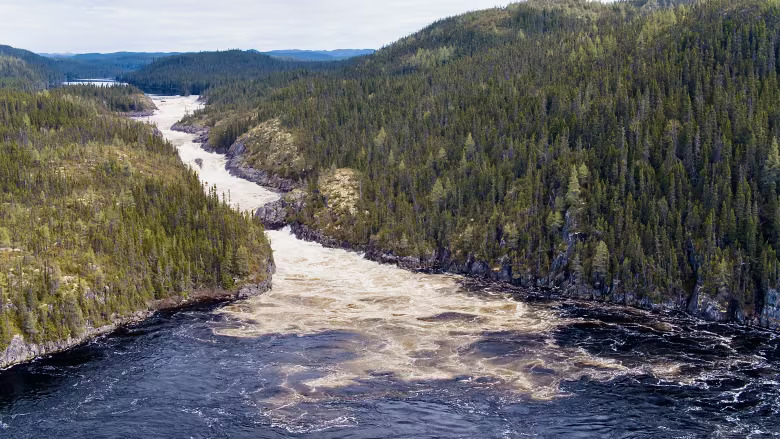
Indigenous peoples view elements of their environments as entities with inherent rights, a perspective that predates Western concepts of legal personhood. In Canada, for example, the Innu Nation has relied on the Magpie River for transportation, sustenance, and medicine for centuries, referring to it as "Muutihkamu Shipu." Before hydroelectric dams diminished its flow, causing significant social and environmental harm that outweighed any renewable energy benefits, the Innu Council of Ekuanitshit and the Municipalité régionale de Minganie declared the Muutihkamu Shipu a legal person in 2021.
This granted the river nine rights, including the rights to flow, maintain biodiversity, and be protected from pollution, and the ability to sue those who violate these rights. This legal recognition enables legal action against entities that harm the river, rather than merely compensating for damages to other parties' property interests.
Similarly, the Yurok Tribe in the United States granted legal personhood to the Klamath River, likely pioneering this concept in North America. Driven by necessity, the Tribal Council recognized the severe consequences of declining water flows, including increased salmon disease and lost fishing seasons. Invoking the UN Declaration on the Rights of Indigenous Peoples, which supports Indigenous peoples' rights to protect their lands and resources, the Tribe sought to safeguard the river's health.
The story of New Zealand’s Whanganui River is a much older one, rooted in the 140-year struggle of the indigenous Māori people to achieve legal personhood for the river. As the third largest river in the North Island, the Whanganui is central to Māori culture and identity. In 2017, after nearly a century and a half of advocacy, the river became the world’s first to be granted the rights of a legal person. This landmark decision inspired other countries to follow suit, such as Colombia, where the Supreme Court recognized the Amazon River as a legal entity. New Zealand has also extended legal personhood to other natural entities, including Te Urewera National Park and the 120,000-year-old Taranaki volcano.
Despite the promise shown by these experiments, it is essential to acknowledge the challenges. The legal personhood of natural elements remains a novel concept with limited practical application and has yet to enter courtrooms. Its actual impact, at least for now, lies in keeping disputes out of court, relying on appointed guardians to defend rivers or forests, primarily led by Indigenous communities. Establishing robust legal frameworks that solidify the legal standing of these entities requires a near-radical shift in relationships and institutional practices. This endeavour can be termed "codifying Indigenous knowledge," meaning transforming the ancient wisdom of Indigenous peoples into foundational laws, adapted to the modern world.
While limited in scope, granting legal personhood to rivers has had a profound impact, redefining the human relationship with nature. This innovative approach offers valuable insights for environmental protection, elevating the status of rivers to foster biodiversity conservation and safeguard freshwater supplies for all. Moreover, recognizing rivers as legal entities underscores their cultural significance, promoting greater respect, responsibility, and a deeper connection to these natural entities.
Practically, legal personhood can significantly enhance environmental conservation efforts and strengthen the position of its advocates. It can also stimulate local economies by promoting sustainable practices, encouraging communities to develop eco-tourism and similar activities, thereby supporting local livelihoods.
References:
- https://www.cbc.ca/documentaries/the-nature-of-things/this-pristine-canadian-river-has-legal-personhood-a-new-approach-to-conserving-nature-1.7100728#:~:text=In%202021%2C%20the%20Innu%20Council,to%20exist%20and%20to%20flow.
- https://papers.ssrn.com/sol3/papers.cfm?abstract_id=3270391
- https://www.nationalgeographic.com/travel/article/these-rivers-are-now-considered-people-what-does-that-mean-for-travelers
- https://www.bbc.com/travel/article/20200319-the-new-zealand-river-that-became-a-legal-person
- https://www.hcn.org/issues/51-18/tribal-affairs-the-klamath-river-now-has-the-legal-rights-of-a-person