MBRCGI Websites
|
Ibtekr.org
|
MBRCGI.gov.ae
|
UAE Innovates
|
Edge of Government
|
Pitch@Gov

New Zealand's Better Rules, Better Outcomes project

5 minute read
The Better Rules project has been launched to improve laws and policies and render them in readable formats for humans and machines to make them easier to understand and implement on the ground within a short time.
Share this content

Add to Favorite ♡ 0

The government of New Zealand has launched a number of pilot projects to raise its potential and enhance its service levels in a way that improves people's well-being and achieves the country's strategic goals. One aspect the government believed needed improvement was the formulation of laws and policies. Although New Zealand relied on traditional models to formulate laws, it became clear that there was a mismatch between law or policy intent and their actual and practical implementation. This meant that the general public was unable to understand the laws and every person interpreted them differently, further complicating the situation. Moreover, the unclear law or policy intent and the country's inability to involve target groups in this challenge led to a decrease in the participation rate among those groups. If they ever participated, it would only be in later stages. Given the reliance on distinct knowledge assets based on a domain-specific language that only serves a virtual world on paper, laws are not coherently circulated and disseminated across all stages. After their application, the opinions and comments of users cannot be collected due to the lack of sufficient communication channels.

Consequently, the Better Rules project was launched to improve laws and policies and render them in readable formats for humans and machines to make them easier to understand and implement on the ground within a short time, as opposed to traditional law and policy development methods. The laws and policies resulting from this project are traceable, manageable, consistent, reliable, and receptive to opinions and feedback from groups performing the pilots. The project relies on a multidisciplinary team to design shared knowledge assets, models, and measuring systems, and make them available in order to be reused anytime and anywhere. Moreover, it presents early scenarios and beta versions that provide indications for future implementation options.

The pilot was launched in 2018 to study the possibility of developing readable laws and machine-consumable legislation by drafting codes that allow computers to read and interpret the law consistently, as opposed to the traditional approach. These codes reduce ambiguity or inconsistency of laws as they limit the reliance on human judgment. The project organizers realized that legislation that includes mathematical operations and requires accurate data, numbers, and eligibility are the most suitable types of legislation that can be read by a machine.

In February 2018, the project began to take shape when a multidisciplinary team was formed to design the machine-readable legislation. After implementing the model on two real-life cases: the 173 Rates Rebate and the 2003 Holidays Act, the team fully understood the potential challenges and massive opportunities that machine-readable legislation can bring to the table.

The Better Rules team organized an online discussion forum in 2018 to gather information and obtain shared insights from over 130 individuals across 20 countries worldwide. The Better Rules team is currently still experimenting with the model on other cases in order to reach the design and final implementation stages.


Subscribe to Ibtekr to stay updated on the latest government initiatives, courses, tools and innovations
Register Now
Subscribe to Ibtekr’s Newsletter
Innovators’ Mailing List
Our newsletter reaches more than 30,000 innovators from around the world! Stay up to date with innovations from across fields of practice in the public sector.
Subscription Form (en)
More from Ibtekr

When Data Warms Homes: Denmark Utilizes Data Centers Heat

In an innovative approach that transforms an environmental problem into a sustainable solution, Denmark is repurposing excess heat from data centers to warm thousands of homes. Instead of wasting energy, projects led by tech giants like Microsoft and Meta are channeling this heat through advanced heat pumps into local district heating networks — reducing carbon emissions and providing stable home heating.

 · · 15 December 2025

Resilient Corals Help Degraded Reefs

As coral reefs teeter on the brink—battered by climate change, pollution, and overfishing, the world stands to lose not just vibrant underwater landscapes, but entire ecosystems that sustain marine life and millions of people. Enter Coral Vita, an ambitious startup that’s flipping reef restoration on its head by growing coral on land using a mix of cutting-edge techniques like microfragmentation and assisted evolution—dramatically accelerating coral growth and boosting resilience in warming seas.

Data-Driven Harvests: How Precision Farming Is Redefining Agriculture in India

As Indian farmers grapple with the compounded pressures of climate change, soil degradation, and dwindling resources, a quiet digital revolution is taking root in the country’s fields. A partnership between two companies—Zuari FarmHub and CropX Technologies—is delivering real-time soil intelligence to the palms of farmers’ hands, helping them irrigate more efficiently, fertilize more wisely, and ultimately grow more with less.

 · · 12 December 2025

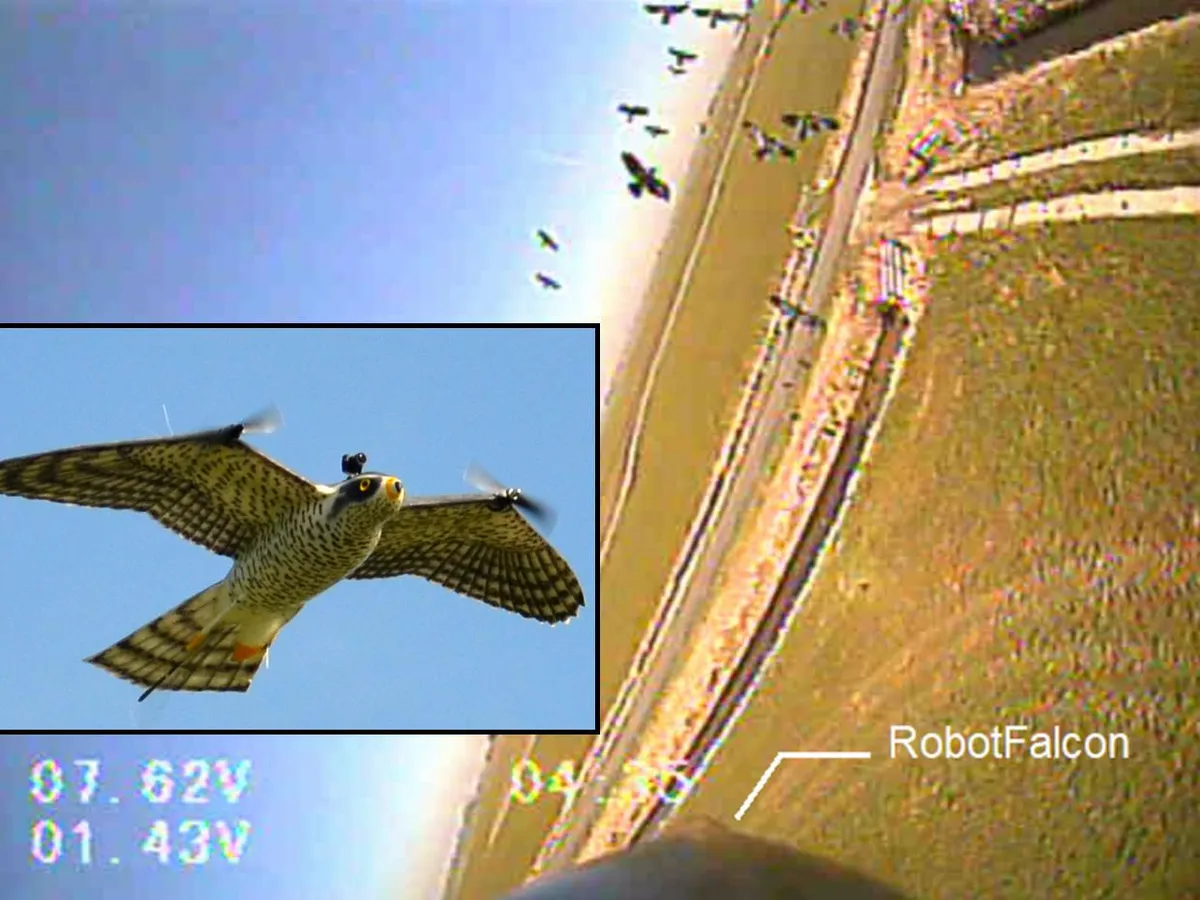
The Robotic Falcon: Guarding Birds from Planes—and Planes from Birds

As aviation continues its relentless expansion, balancing flight safety with wildlife protection remains one of the field’s most stubborn challenges. But a recent innovation—a robotic falcon that merges cutting-edge technology with natural predator behaviour, is offering a novel, perhaps transformative, solution.

 · · 29 October 2025

The Internet of Animals: A Glimpse Into a New Tech Frontier Connecting Wildlife to the Web

In a scene that mirrors the always-on, real-time connectivity of human communication, it's now possible to record every flap of a bird’s wing or the tiniest stir of an insect. This isn’t a science fiction scenario. It’s the unfolding reality of a new generation of remote sensing systems. These tools are revolutionizing the way we track animals, not just to push the boundaries of technology, but to protect and understand the biological diversity that sustains life on Earth.

 · · 29 October 2025
1 2 3 92
magnifiercrossmenuchevron-down