
It’s fascinating to see how researchers are uncovering solutions to the world’s biggest challenges through the study of miniscule organisms. Such is the case with a group of researchers who, in their quest to develop infrastructure for electric vehicles, drew inspiration from “Slime Mold” to create a versatile charging network that is both time-efficient and environmentally friendly.
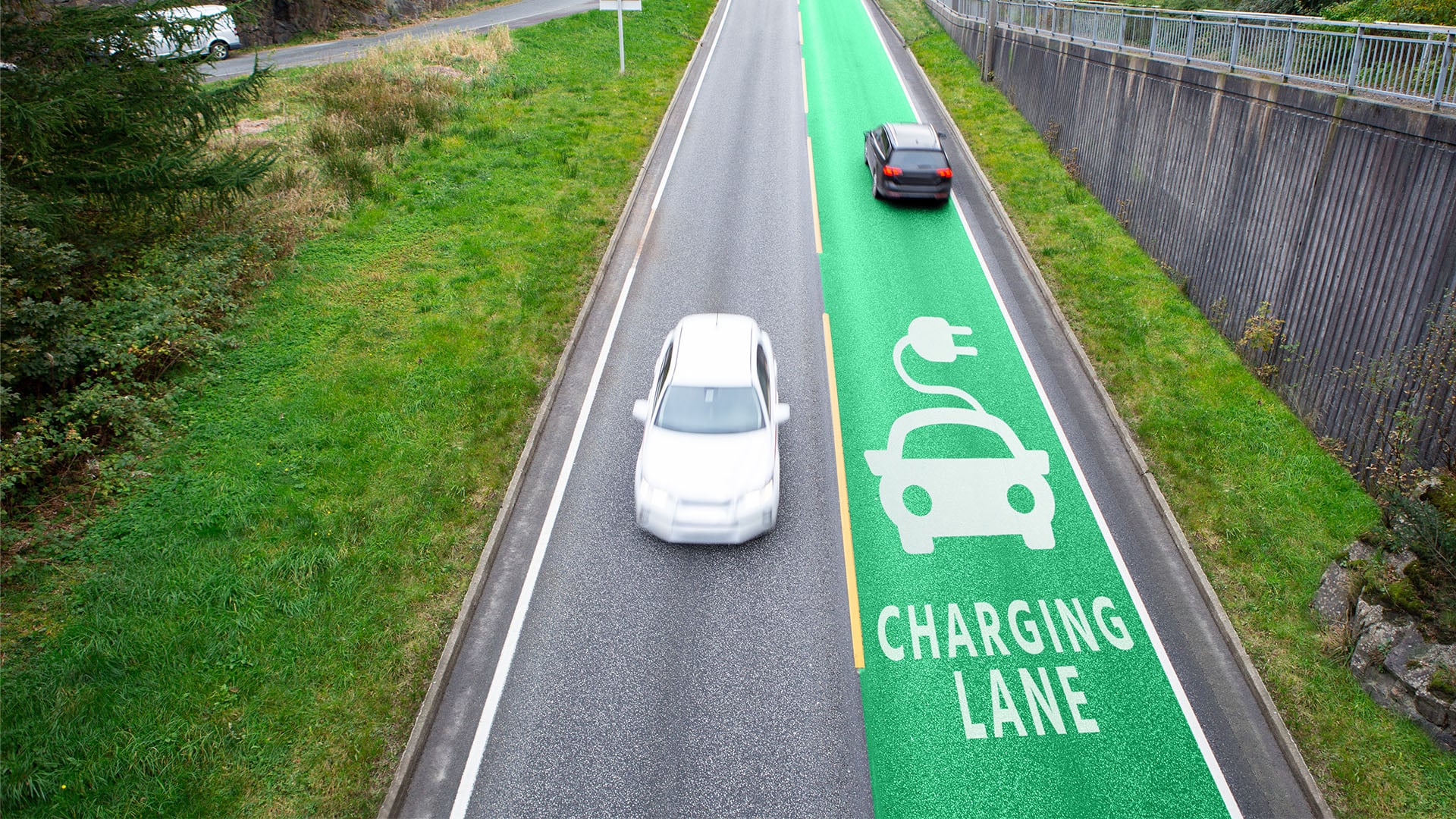
As the global shift towards cleaner transportation accelerates, electric vehicles are poised to dominate the future of sustainable mobility. Consequently, there is a pressing need for continuous advancements in their technology. The reality is that this goal remains distant; no system can thrive without a robust infrastructure. In the case of electric vehicles, infrastructure faces significant challenges. The construction of charging stations is resource-intensive, consuming substantial amounts of metals, concrete, and plastics, while also impacting ecosystems, disrupting habitats, and altering land use. Moreover, charging stations located in poorly planned areas exacerbate traffic congestion and associated emissions. Additionally, these stations require regular maintenance and inspection, further increasing costs.
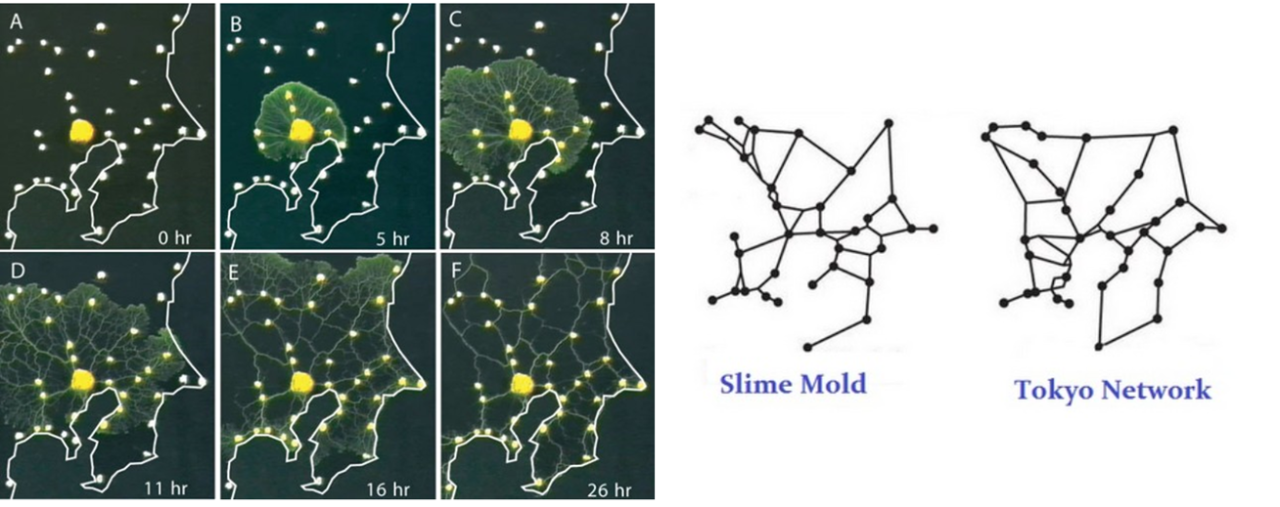
Because the ultimate objective of this trend is to protect the environment, researchers turned to nature for inspiration. They drew upon the behaviours of Slime Mold, a single-celled organism belonging to the protist kingdom. Specifically, they focused on Physarum polycephalum, commonly known as the “blob,” which thrives in damp, dark environments and plays a crucial role in decomposing organic matter and recycling it within the food web.
This single-celled organism exhibits remarkable problem-solving abilities. When seeking nutrients, it extends protoplasmic tubes, the organism’s vital substance, to construct efficient networks connecting various food sources. This behaviour allows the blob to balance exploration of new areas with exploitation of known resources. Essentially, it is a natural problem solver, optimizing resource distribution.
Researchers sought to replicate this behaviour by creating an artificial colony that mimics the growth patterns of Slime Mold, both in a computational and physical environment. This colony evolved into algorithms for planning charging station networks, based on several biological principles, including swarm intelligence. Modeled after the collective behaviour of insects, particularly ants and bees, these algorithms mimic the natural behaviours of these species in movement and foraging, leading to efficient solutions. For instance, ants are adept at finding the shortest paths to resources, a skill that is beneficial for routing and scheduling algorithms. Other algorithms mimic bird or fish swarms to develop solutions in multi-dimensional spaces. Researchers also drew inspiration from genetic algorithms that underlie natural evolution, such as selection, mating, and mutation, to develop solutions for complex optimization problems in scheduling, resource allocation, and machine learning.
This model offers approaches to two critical aspects: first, identifying optimal locations for charging stations, considering factors such as proximity to demand centres, traffic patterns, and accessibility. Second, it enables efficient routing of vehicles, optimizing their paths to minimize distance travelled, time spent, financial costs, congestion, and overall environmental impact, while also ensuring equitable distribution of charging stations.
To verify its practical applicability, the model underwent rigorous testing on real-world road networks. Today, countries around the world are exploring similar technologies. In Japan, researchers are using algorithms inspired by biological codes to optimize transportation networks and logistics services. In Singapore, smart city initiatives include optimization techniques inspired by biology. In Germany as well, scientists are drawing from biological sciences to enhance traffic flow and infrastructure planning, a trend shared by many American cities that are looking to nature to find solutions for network design and resource management.
Undoubtedly, this concept has faced and will continue to face numerous challenges, including determining the scale and scope of resources such as computing power, memory, and data storage. Additionally, managing large-scale networks with multiple variables in a real-world setting is a complex task.
Perhaps the most complex challenge is integrating the model’s output with existing systems such as geographic information systems and traffic management systems, as compatibility with current tools and systems is essential.
Moreover, successful implementation requires significant expertise in computing. The extensive requirements may limit real-time applications.
So far, practical tests have shown promising results, as this model offers sustainable and efficient solutions for electric vehicle charging stations, from reducing maintenance costs to improving traffic flow. It also holds the promise of reducing the carbon footprint associated with electric vehicle infrastructure. By addressing multiple objectives simultaneously, the model provides a comprehensive approach and a replicable experience, where decentralized decision-making and efficient network construction generate valuable insights.
This experience has highlighted the importance of reliable data for finding accurate and applicable real-world solutions, as opposed to incomplete or outdated data that leads to suboptimal results.
The most important lesson is that the key to sustainable solutions lies in the natural world around us, and learning from it will be the first step towards building a cleaner future.
References: