
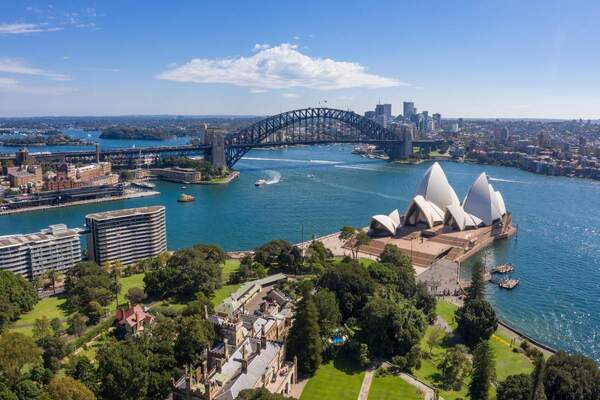
The Sydney City government, in collaboration with academic experts, is conducting a long-term adaptation study to analyse temperature fluctuations across different regions of the city. By deploying data-collecting sensors, the government aims to inform the selection of optimal cooling strategies for future projects.
It is intuitively understood that urban areas exhibit higher temperatures compared to their surroundings, even adjacent, rural regions. This phenomenon is attributed to the greater prevalence of non-porous paved surfaces relative to vegetation. These surfaces absorb solar radiation during the day and release this heat at night, a process known as the urban heat island effect.
This phenomenon poses significant risks to the environment and public health. It exacerbates heat-related illnesses and air pollution, such as heatstroke and respiratory diseases, disproportionately affecting the elderly and those with chronic health conditions. Moreover, it increases demand for air conditioning, straining energy resources.
Sydney, Australia’s capital, is experiencing a gradual increase in its annual average temperature. Projections indicate a temperature rise exceeding 3.1°C by 2070, reaching 4.5°C by 2100. For current and future residents, these figures translate to more frequent and intense heatwaves, placing significant strain on critical infrastructure systems such as energy and transportation.
Given that climate change poses one of the most significant challenges to the city, authorities have implemented a comprehensive response plan. This plan encompasses enhancing public awareness and understanding of heatwaves, air pollution, wildfires, and other climate-related events. In parallel, the city is collaborating with energy companies to identify vulnerabilities and strengths within the existing infrastructure.
As an initial step, a study on heatwaves was conducted in partnership with Western Sydney University, leading to the development of a dedicated heatwave warning system.
This study aims to map air temperature variations across an entire summer season. To achieve this, 200 custom-designed data loggers will be strategically dispersed throughout the local government area. These loggers will be positioned in diverse microclimates, including areas with varying vegetation cover, on trees, and proximal to urban infrastructure like roads and buildings. This granular data collection is essential as the urban heat island effect exhibits significant spatial heterogeneity within a city, influenced by factors such as geographic location, infrastructure, land use patterns, and the density of both green spaces and built environments.
These loggers are housed in reusable white aluminum cases equipped with internal ventilation systems. Of these, 150 will measure actual air temperature, while 50 will concurrently monitor both temperature and humidity to provide insights into human thermal perception. This is because our sense of temperature is not solely determined by numerical readings but is influenced by various factors, most notably humidity.
These devices will record temperature readings every 10 minutes, accumulating over 3 million data points by the study’s conclusion in 2024.
The work does not end with data collection. This data must be analysed and used to develop multifaceted strategies and diverse cooling projects. Cooling methods do not always yield uniform results as each region has unique characteristics that necessitate tailored strategies. For instance, planting trees provides shade and evaporative cooling, cooling centres offer refuge during heatwaves, while shaded areas and strategically placed water fountains contribute to overall cooling. Additionally, installing reflective roofs or establishing green infrastructure can be beneficial. For these initiatives to succeed, they must be accompanied by public awareness campaigns and community engagement.
A new climate action centre, funded by a $31 million grant from the City of Sydney, is currently under development. Designed to accommodate up to 400 individuals, this hub will serve as a collaborative space for innovators, investors, climate action groups, academics, and entrepreneurs. By fostering interdisciplinary collaboration, the centre aims to accelerate the development of innovative climate projects, including renewable energy, circular economy initiatives, and ecosystem restoration.
This will enable progressive climate tech companies to introduce innovative ideas, create jobs, and expand into the global market. Meanwhile, precise data and measurement tools will empower policymakers to develop future action plans and select optimal strategies for addressing heatwaves.
Furthermore, this experiment highlights the crucial role of partnerships between local governments, academia, and research institutions in addressing complex issues, particularly climate change. Universities contribute scientific expertise, knowledge, and innovative solutions, upon which governments can rely to make informed decisions and develop effective policies. This collaborative approach fosters sustainable practices and resilience, enabling the development of proactive, evidence-based strategies to tackle pressing challenges.
References:
- https://www.smartcitiesworld.net/climate-action/sydney-maps-microclimates-to-combat-urban-heat-9696
- https://www.cityofsydney.nsw.gov.au/-/media/corporate/files/2020-07-migrated/files_2/2016-022571-adapting-to-climate-change-accessible.pdf?download=true#:~:text=As%20part%20of%20our%20Sustainable,energy%2C%20and%20tri%2Dgeneration.
- https://www.governmentnews.com.au/councils-heat-island-study-a-first-for-eastern-sydney/