
Extensive efforts are made by big cities to plan and invest in ensuring the provision of the most crucial natural resource, which is water, especially in the face of climate change challenges that can adversely affect the availability of water in urban areas in two ways. It exacerbates water scarcity and contributes to accelerating population growth in cities due to the increasing migration of rural residents to cities, as environmental conditions suitable for agriculture decline in certain areas. In this context, Cape Town stands as a prominent case worthy of study in facing this challenge.
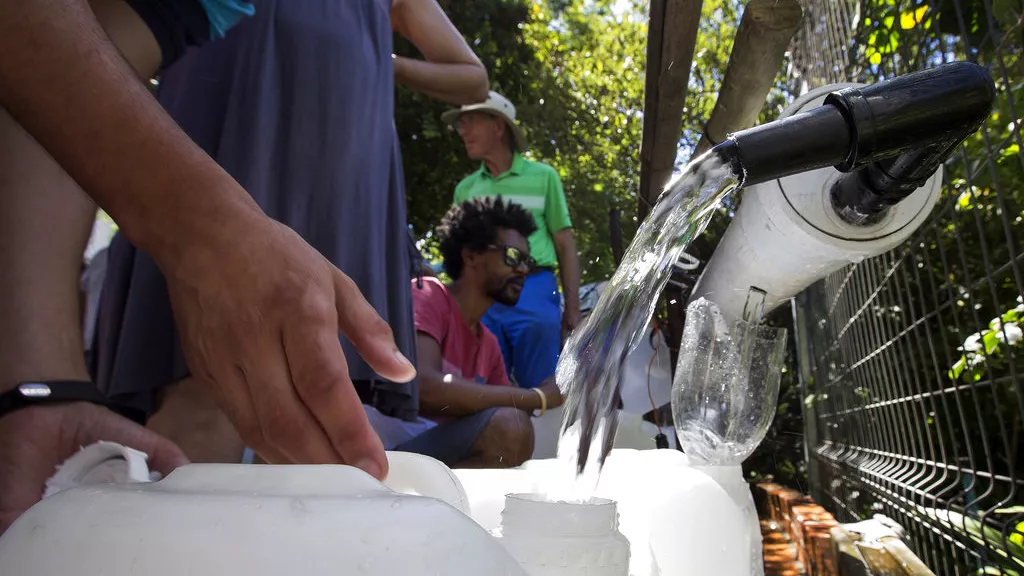
In late 2017, Cape Town, with a population of over 4.6 million, was on the verge of becoming the first major city to experience a complete water shutdown, except for some essential facilities like hospitals. The available water levels in its reservoirs, the sole source of freshwater for most city neighborhoods, had dropped to less than 25% of their capacity. A water crisis would be declared if the levels reached 13.5%, triggering measures known as "Day Zero," where water supply to the city would cease, and individual water consumption would be rationed to 25 liters per day, requiring citizens to queue at water distribution stations, which numbered around 200.
The immediate cause of this crisis was three consecutive years of declining seasonal rainfall, which is collected in artificial reservoirs, resulting in a sharp decline in dam water levels. However, there were at least two factors that exacerbated the situation, which many other cities managed to avoid. First, Cape Town heavily relied on a single water source – the few dams that entirely depend on rainfall water, making it constantly vulnerable in the absence of other water sources.
The second factor, a strange paradox, was that Cape Town had a remarkable record of conserving water resources. It was considered a model city in reducing per capita water consumption, and its "green" water use policies had won several awards. Cape Town's success in responsible water use at both government and public levels allowed the city to adapt to population growth, accommodating nearly a million additional people over the past decade without increasing water resources. This achievement appeared to have led authorities to become complacent in seeking additional resources despite the impacts of climate change.
In the face of the impending crisis, Cape Town City Council took several measures and initiatives to achieve self-sufficiency with the available water resources in the dams until the next rainy season. They first set the targeted quantity of water per person per day, relying on tools to measure the daily dam water production and water levels in the dams accurately. They also launched an awareness campaign for the city's residents, urging them to conserve water through daily practices such as taking shorter showers, reducing water use in toilets, and refraining from watering gardens with freshwater. The campaign also targeted city visitors with the slogan "Save water like a local." Electronic billboards were used to convey messages and keep residents updated on the progress – thanks to their efforts – toward "Day Zero."
The city municipality also imposed restrictions on the water allocated for agricultural use in the surrounding areas, extending the period of using the water supply for a full month. They issued a ban on using the city's network water for "non-essential" activities, such as swimming pools, garden watering, and car washing, under the threat of hefty fines.
The campaign had a positive impact on local communities, sparking discussions about water use on social media. In collaboration with the City Council, the local business sector, including offices, hotels, and restaurants, significantly contributed to water conservation through alternative practices, such as replacing handwashing with water sanitizers and importing bottled drinking water from other cities.
On the other hand, the Department of Water and Sanitation intensified the use of technology in water management, installing 18,000 devices in homes with excessive water consumption that would automatically shut off the water when daily usage exceeded 350 liters, encouraging responsible use. They also deployed advanced devices to measure water pressure at 170 locations in the water distribution network, which could accurately detect pipe bursts, leaks, and areas of high water consumption, allowing for swift action.
Cape Town successfully managed to overcome the imminent crisis, as heavy rains returned, but the specter of drought will not disappear entirely, especially with expected climate change effects. Thus, in collaboration with researchers and scientists, the city developed a strategy to enhance resilience against drought, launched in 2020. It includes diversifying water sources within projects estimated at around $335 million, most notably a new seawater desalination project worth $112 million, capable of producing 50 million liters per day by 2026. The city also issued "green bonds" to finance sustainable infrastructure projects, including water tank upgrades and water and sanitation networks.
The City Council plans to launch the "New Water Program" worth $31.4 million in 2024 to pump collected water into 850 "stormwater recharge basins," which are reservoirs for storing rainwater underground to replenish groundwater. There is also a project to treat wastewater for use in garden irrigation.
The water reservoir level report has become an integral part of the weather report on media devices, reminding citizens of the constant need to conserve water.
Cape Town is not the only city threatened by drought. The Middle East and North Africa region is one of the most water-scarce areas in terms of freshwater supply, according to a recent report from the World Bank, where countries in the region need comprehensive plans to preserve natural water resources and provide safe water for human consumption.
The lessons learned from Cape Town's experience can be summarized in three points. First, effective communication with residents, engaging them in daily life, and transparency in keeping them informed of developments and goal achievements. Second, harnessing technology for water resource management to minimize waste in households and water leakage. Third, developing a strategy to diversify water resources and support drought resilience in the future while planning for feasible implementation projects.
References:
• https://globalresilience.northeastern.edu/avoiding-a-water-crisis-how-capetown-avoided-day-zero/
• https://www.albankaldawli.org/ar/region/mena/publication/finding-institutional-solutions-to-water-scarcity-in-mena
• https://www.technologyreview.com/2021/12/23/1041301/africa-cape-town-drought-water/
• https://www.africanews.com/2023/06/07/south-africa-cape-town-innovates-to-overcome-water-shortages/
• https://www.tweakcarbon.com/post/how-cape-town-saved-itself-from-day-zero
• https://law.stanford.edu/2018/02/06/running-out-of-water-cape-town-the-u-s-and-drought/