
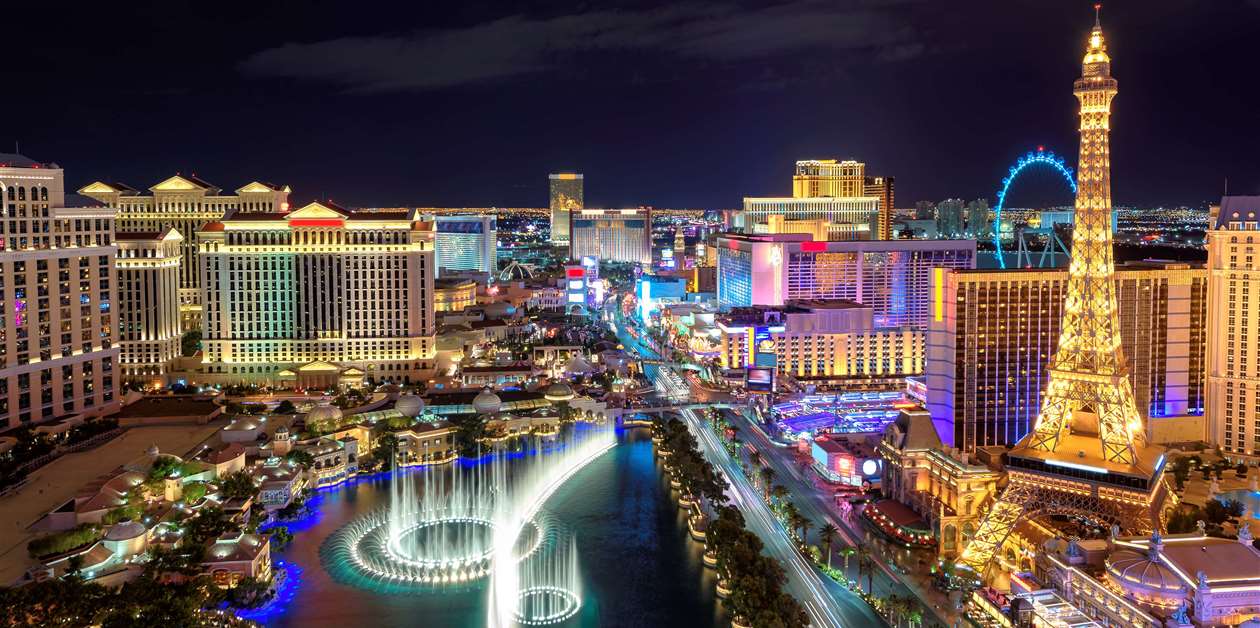
In line with the Global Goals to address climate change, Las Vegas has begun work to reduce its carbon footprint, It becomes the second city to join the "Clean Cities for a Clean Future" program to use digital twin technology to reduce emissions and save costs for building owners.
A digital twin is a virtual representation of real-world processes, relationships, and behaviors that are synchronized with specific frequency and accuracy. To create digital twins for cities, Specialists use several techniques that provide data on the design of cities and their infrastructure, In addition to geographical, spatial and other data on its operational processes, This data is collected using sensors, IoT and machine learning. Historically, This innovation was initially used to manage factories, Then to visualize the changes to be made to an enterprise or process and study their impacts, So the concept expanded to urban planning and city management.
This development came to enhance the global quest to reach the rate of zero emissions, Cities emit about 75% of the world's carbon emissions. The need for smarter and more sustainable ways to manage cities and mitigate emissions is therefore evident through digital twins.
Whereas artificial intelligence has become an essential part of this growing trend, The Las Vegas government has collaborated with Citisynth and Turpine for IoT innovations in a public-private partnership to develop the digital twin, which is based on creating a digital model for the city center that includes buildings, transportation system and infrastructure. This is to improve air quality, water management and reduce carbon emissions from major buildings and operations in the city.
The digital twin will collect, photograph and analyze data in three and four dimensions, It will link competencies in different systems, It can also provide an improved engineering platform. This will be done using IoT technology data collected by sensors and transmitted over the fifth generation network. Over time, Data will be collected from multiple sources and systems across Terbane. including those held by city, county and state authorities as well as commercial suppliers, The model will analyze and learn from previous data as part of the "Internet of Capabilities" strategy. It is the evolving form of the Internet of Things, Which works to develop and control the IoT network platform by enhancing human capabilities and digital intelligence, That is, by achieving integration between humans and computers instead of interaction between them.
In addition to the project's coverage of the Grand Valley area, It will be linked to the actual city, This means that the daily life that takes place in the streets and buildings of the city, through its electrical networks and in the air, All this will be brought to the digital twin, So that the city manages itself by itself.
However, this management process will be carried out after permission is granted according to a machine-learning model. And through them, A group of users will be able to control infrastructure such as lighting systems, traffic and others, Via digital twin.
Whereas the first objective of the initiative is to reduce greenhouse emissions, Facility owners and managers will be able to reduce the carbon footprint of their facilities by rationalizing energy consumption across different components and systems. For example, Google introduced the Nest Learning Thermostat that uses the Internet of Things to power sensors paired with a building's heating and cooling system. Thus, The meter detects room temperature and humidity and programs HVAC systems to adjust them to optimal degrees in real time. By recognizing desired spatial patterns and conditions in specific time frames, The scale creates dynamic schedules for operating systems throughout the week.
The project may face the challenge of motivating building owners to join the initiative, which may delay its expansion. But the executive team believes that it is normal for any new technology to take some time to achieve development and spread. They seek to spread awareness of the importance of sustainability efforts for the city, They are counting on this awareness to attract more individuals and companies to be part of this trend. progressively Digital twin technology will be dedicated as a useful tool for managing high-quality types of roads, sewage systems and street lighting, Access to data itself will also be an attraction for future companies and investments.
City authorities are looking to leverage the digital twin to improve mobility, air quality, noise mitigation, water management and major building emissions. This means generating more nuanced insights that allow city master systems to be managed more effectively for city planners, residents, and investors. Ernst & Young estimates that the project will save 35% of the operational costs of buildings of any size. It will also reduce greenhouse gas emissions in exchange for little or no investment. What qualifies it to increase sustainability in the future.
More broadly, Smart building automation is expected to have a market capitalization of more than $20 billion by 2027. 78% of new buildings should adopt at least one use of the Internet of Things and other smart building technologies.
As Las Vegas and other major cities prepare to join the programme, This project will set a model for cities around the world to be smarter, more efficient, safer and more sustainable.
References:
- https://cities-today.com/las-vegas-adopts-digital-twin/
- https://cities-today.com/las-vegas-digital-twin-will-be-wired-into-the-city/
- https://www.environmentalleader.com/2021/10/las-vegas-to-use-digital-twin-technology-to-fight-emissions/
- https://www.ecmag.com/