

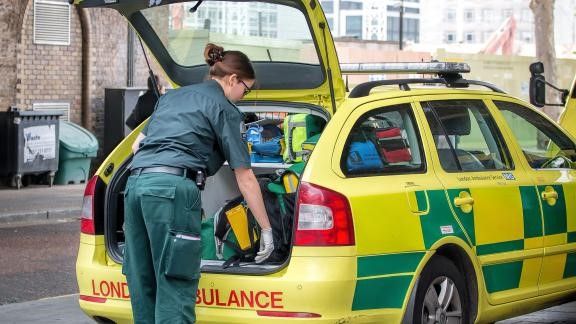
The National Health Service (NHS) in the United Kingdom initiates projects aimed at preventing seniors from facing the inconvenience of hospital admissions for various health issues. These projects involve ongoing communication between ambulance teams and physicians to assess the patient’s condition and deliver care on-site. Alternatively, virtual medical wings provide hospital services directly to patients at their bedside. Following implementation and testing, these projects have significantly alleviated the burden on patients and the healthcare system, reducing instances of overload.
As people go through senior years, their need for specialized care increases, which makes this stage of life specifically delicate. This is further complicated by the need to maintain the financial and emotional independence of seniors, alongside meeting their specific medical needs that often complex.
Many seniors face various health issues, with co-morbidity being one of the challenges. However, the symptoms they encounter, despite being frequent and recurring, aren’t always severe. These symptoms may not always justify hospital admission or even a visit to the doctor. Unnecessary hospital admission could worsen their health rather than improve it, as it could expose them to the risk of infection, stress, complications, travel fatigue, waiting times, and disrupts their carefully structured daily routines, especially among dementia patients who are sensitive to environmental change. Additionally, hospitalization can diminish seniors’ physical abilities, as prolonged bed rest can lead to muscle loss and decreased mobility, heightening the risk of falls or injury. All of this occurs without considering the hefty bills incurred upon hospital admission.
This scenario is familiar to the healthcare sector in the UK which is dealing with recurring cases of unnecessary admissions of frail elderly that strain its workforce, deplete its resources and most importantly, put vulnerable populations at risk. According to a 2018 study analyzing NHS data, hospital emergency rooms in the country receive over a thousand seniors daily without apparent need.
The solution to this complex challenge requires an innovative approach incorporating both preventative measures and technological advancement to prevent unnecessary hospital visit of frail elderly patients.
The health management in the North Central London area, which falls under the NHS, has recognized this challenge, and tasked the Integrated Care Board with designing a plan to address it.
In 2022, the board approved an initiative to launch the “Silver Triage” program, which brings together the London Ambulance Service and the NHS. Its name was chosen because “silver” is often used to refer to older adults, symbolizing the color of their hair.
The program facilitates communication between geriatric specialists and first response ambulance teams through a single phone line. Paramedics describe the patient’s current condition, medical background, initial assessment, and proposed measures, enabling doctors to provide advice. They can also assist seniors in accessing community services if hospitalization isn’t necessary.
This initiative is part of larger efforts led by the National Health Service and includes other projects such as the “Virtual Wards” project, which assists in monitoring elderly individuals with health issues through virtual units that keep them out of the hospital. They are “virtual” because they are not actual hospital beds but rather a concept of delivering hospital services to the patient’s bedside.
The “Virtual Ward” operates under the hospital system, with a team similar to those found in any department within a hospital, providing necessary care for seniors where they reside, whether at home or in care facilities, safely and conveniently, without the need to undergo the exhausting hospital experience.
The concept was developed in Croydon Primary Care Trust in South London in the early 2000s and is now in place in many parts of England, supporting people with a range of types of care, for example, frailty or acute respiratory infection.
Like any new initiative, this project faced several challenges, starting with financial and operational feasibility, as these services are not available outside office hours, which are from 9 am to 5 pm. Another challenge emerged in determining who can access the system, as it cannot be made available to all members of the ambulance teams, including drivers and others. Therefore, its use remained restricted to paramedics. The most sensitive challenge was deciding who would bear the clinical responsibility for patients benefiting from this service, with the decision settling on the Central and North West London NHS Foundation Trust as the leading entity in providing the “Silver Sorting” service.
The cases of elderly admissions to hospitals decreased from 75% in 2018 to 20% in 2023. Additionally, 100% of paramedics expressed their readiness and willingness to continue using the system, indicating its effectiveness in meeting the needs of the elderly in their homes or care facilities and avoiding unnecessary hospital visits. This success also promises to expand the program and its capabilities to serve a larger number of elderly individuals.
By integrating innovation, a proactive care approach, and modern technology, healthcare authorities hope to protect the most vulnerable elderly individuals, save on healthcare facility operational expenses, and manage a system that caters to the needs of this large demographic efficiently. These experiments underscore the importance of designing services in a way that optimizes the use of available resources and understands the roles, skills, and knowledge of workers, while maintaining trust and collaboration, and relying on a smooth and user-friendly system.
References:
- https://www.cnwl.nhs.uk/news/providing-urgent-health-care-home-older-people-living-frailty
- https://www.nhsconfed.org/case-studies/providing-urgent-health-care-home-older-people-living-frailty
- https://www.ageuk.org.uk/latest-press/articles/2023/age-uk-issues-clarion-call-for-a-big-shift-towards-joined-up-home-and-community-based-health-and-social-care-services-for-older-people/#:~:text=In%202021%2F22%20there%20were,care%20at%20the%20right%20time.
- https://www.nhsconfed.org/publications/realising-potential-virtual-wards
- https://www.england.nhs.uk/integratedcare/resources/case-studies/older-people-living-with-frailty-on-virtual-ward-keeps-them-well-at-home-and-out-of-hospital/