
Challenging the traditional mold of elder care, several European countries are adopting a new, person-centered model. Instead of confining older adults to sterile halls and rigid routines, they are moving them into communities that simulate daily life—places where residents live with freedom, familiarity, and companionship.
In much of the world, elder care is synonymous with nursing homes that cover basic medical and physical needs, with some recreational activities sprinkled in. These institutions aim to offer safety and tranquility in old age.
But for people living with dementia, such environments often fall short. Traditional care homes can neglect emotional, social, and psychological needs—an issue growing more urgent as dementia cases surge worldwide. In 2009, there were an estimated 35 million people with dementia. Today, that number exceeds 55 million. The World Health Organization projects it will reach 78 million by 2030—a staggering rise that will strain healthcare systems, families, and caregivers.
Dementia is not just memory loss. It disrupts reasoning, decision-making, and the ability to manage daily life, demanding specialized support. Yet conventional nursing homes, with their structured routines and focus on symptom management, can unintentionally foster isolation, frustration, and loss of independence. To keep pace with the changing reality, care must evolve into something more dynamic and humane—models that recognize residents’ need for connection, autonomy, and purpose.
That recognition gave rise to the idea of “dementia villages”. Their principle is simple: care environments should adapt to individuals, not the other way around.
The first such village, Hogeweyk, opened in the Netherlands in 2009. Its success inspired similar experiments around the world: Carpe Diem in Norway and NewDirection Care in Australia, which went a step further by embedding its facilities within larger neighborhoods to promote interaction with the broader community.
These villages are designed to mirror real communities. They provide familiar settings and everyday experiences while ensuring safety and professional care. Residents can move freely, reducing distress and frustration.
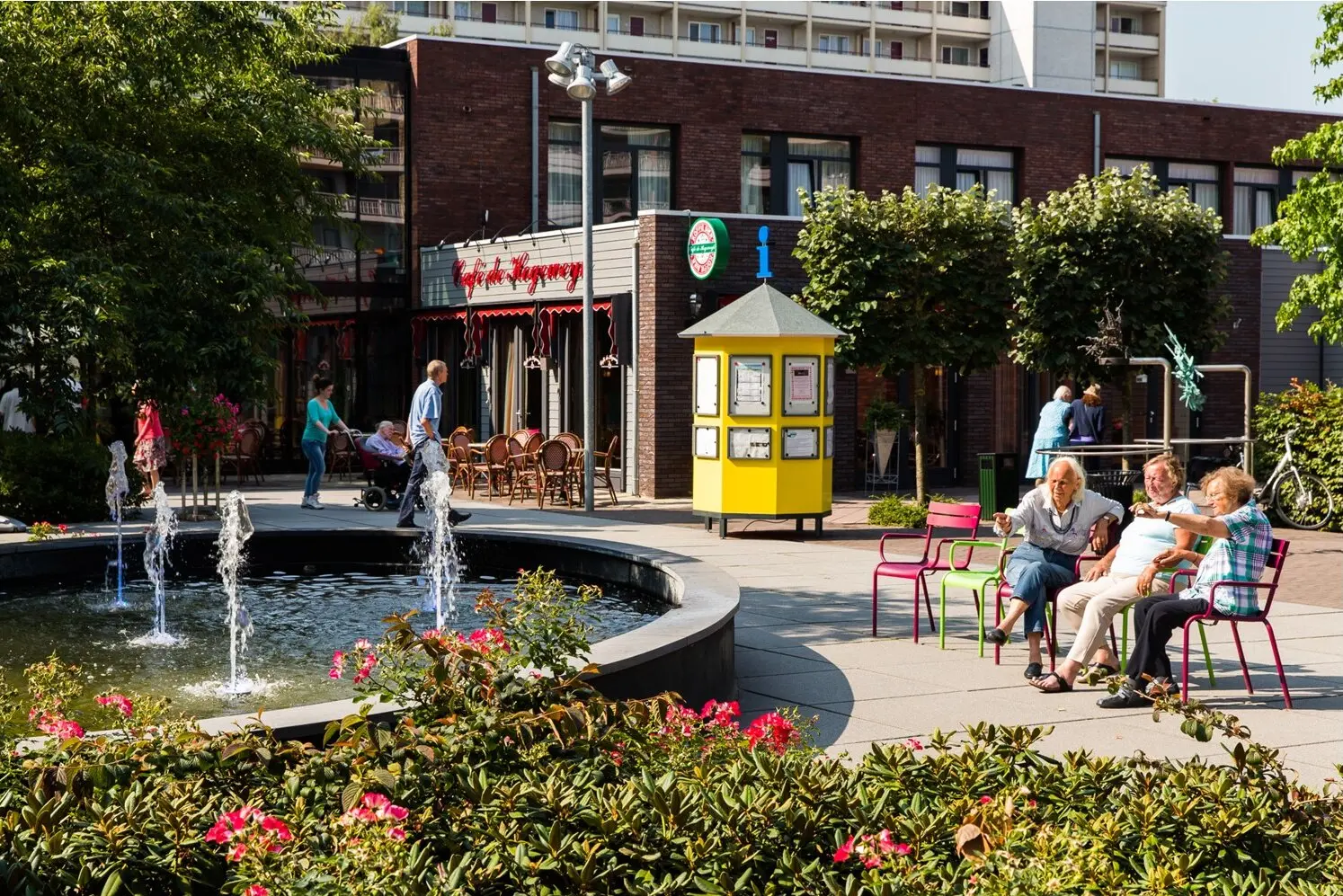
In Hogeweyk, for example, the grounds include homes, shops, a restaurant, a theater, and a club. Residents live in small groups, each with private bedrooms and shared living spaces. Caregivers—from nurses to therapists—integrate into daily routines, supporting rather than imposing.
Carpe Diem in Norway is built around a central square lined with salons, shops, and gardens—spaces designed to encourage local residents to interact with those living there. In Australia, NewDirection Care feels like a small town, where older residents with dementia live alongside neighbors as if in any community, aiming to reduce stigma and foster inclusion.
The concept is spreading. In the United States, the upcoming Avandell center will combine dementia care with a cognitive neurology clinic, community gathering spaces, and educational programs for seniors and the general public.
Still, inspiration alone does not guarantee success. Founders have had to navigate thorny trade-offs—chief among them, balancing freedom with safety. The solution has often involved discreet monitoring systems and specially trained staff who can step in when needed, without undermining residents’ independence.
Scaling these villages presents another challenge. Creating miniature communities with specialized care requires substantial investment. Until costs come down, widespread adoption will remain out of reach.
Equally important is shifting public perception. To integrate dementia care fully into communities, societies must move beyond stigma and pity, recognizing cognitive decline as a natural part of aging rather than something to be hidden away.
Evidence so far suggests dementia villages improve quality of life and mental well-being. Residents enjoy greater autonomy, choose how to spend their time, and engage in meaningful activities. Social integration comes more naturally. Data even show reduced rates of agitation and anxiety compared with traditional nursing homes.
These outcomes may help inspire institutions worldwide to rethink how elder care is delivered. By embedding dignity, freedom, and community into their design, dementia villages point to a future where growing old with cognitive decline does not mean losing a sense of self.
References:
- https://www.research.colostate.edu/healthyagingcenter/2023/09/26/dementia-villages-a-new-way-to-approach-memory-care/ https://www.nytimes.com/2023/07/03/realestate/dementia-villages-senior-living.html
- https://www.theguardian.com/society/2022/dec/30/dementia-village-in-warwick-is-a-pioneer-in-person-centred-care
- https://www.abc.net.au/news/2025-01-02/dementia-village-the-hogeweyk-changing-care/104685250