
In the push for a sustainable future, the fight against climate change must begin at home—literally. Researchers at the University of Cambridge have developed an AI model capable of identifying the least energy-efficient homes using multiple data sources. Their goal: to empower authorities with the insights needed for effective climate action, informed policymaking, and faster progress toward sustainable housing.
When we think of climate change, we often picture factories and power plants. Rarely do we stop to consider how our own homes—and daily practices—contribute to the problem. But what if our homes could be part of the solution instead of part of the crisis?
The reality is sobering. Residential buildings account for a significant share of global emissions. Roughly 25% of these are classified as “hard-to-decarbonize,” meaning they cannot easily accommodate energy-efficiency upgrades. Spread across the world, such buildings pose a major obstacle to achieving net-zero emissions.
Addressing this challenge begins with pinpointing the homes that waste the most energy. Traditionally, this has been done through conventional, often limited methods. In the UK, for example, the Local Government Association has acknowledged the shortcomings of current approaches. Academic research on the issue is sparse, and precise assessments usually require location-specific data—such as energy indicators and household behaviours—that are difficult to obtain. As a result, most analyses rely only on broad, easily accessible features.
To overcome these limits, Cambridge’s Sustainable Design Group, led by researchers in urban planning and data science, has merged urban concepts with advanced technology to accelerate sustainability efforts.
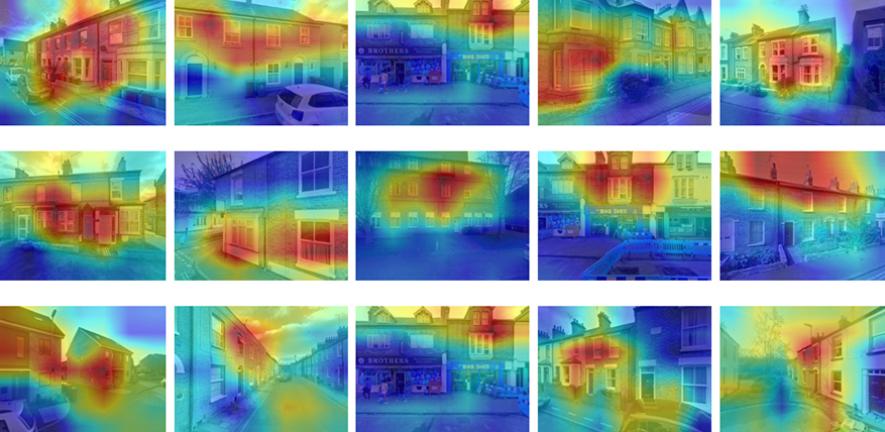
The team built an AI model trained to identify energy-inefficient homes using publicly available data: energy performance certificates, street-level images, aerial photography, land surface temperatures, and building condition records. In pilot tests across Cambridge, the model achieved 82% accuracy in spotting hard-to-decarbonize homes.
Street-view images proved particularly valuable, offering detailed visual clues about construction materials, architectural style, window placement, insulation, and overall building condition. They also revealed environmental factors that shape energy use—such as nearby trees, building shadows, orientation, and exposure to sunlight—all of which determine how much energy a home consumes for heating, cooling, and everyday living.
Still, the project faced hurdles. Open-source data varied widely in quality across regions. High-resolution datasets—like thermal imagery—are critical but often prohibitively expensive or unavailable, especially in resource-constrained areas. Integrating AI outputs into existing regulatory frameworks also presented bureaucratic challenges.
To move past these obstacles, collaboration proved essential. Urban planners, policymakers, citizens, and stakeholders had to work together to align the model’s insights with current policy goals, ensuring that the tool could actually drive meaningful change.
The project marks a significant leap in using technology to advance sustainability and energy efficiency. By enabling targeted interventions, it promises more efficient resource allocation and minimized environmental impacts.
Beyond policy, the model offers valuable guidance to investors and decision-makers, directing resources to regions in greatest need of improvement while enhancing overall effectiveness.
At the household level, the project raised awareness among residents about their own energy use, encouraging them to adopt conservation measures, retrofit their homes, and embrace greener practices. This growing awareness supports long-term sustainability goals and illustrates the transformative potential of combining technology with multidisciplinary science for innovation and adaptation.
References: