
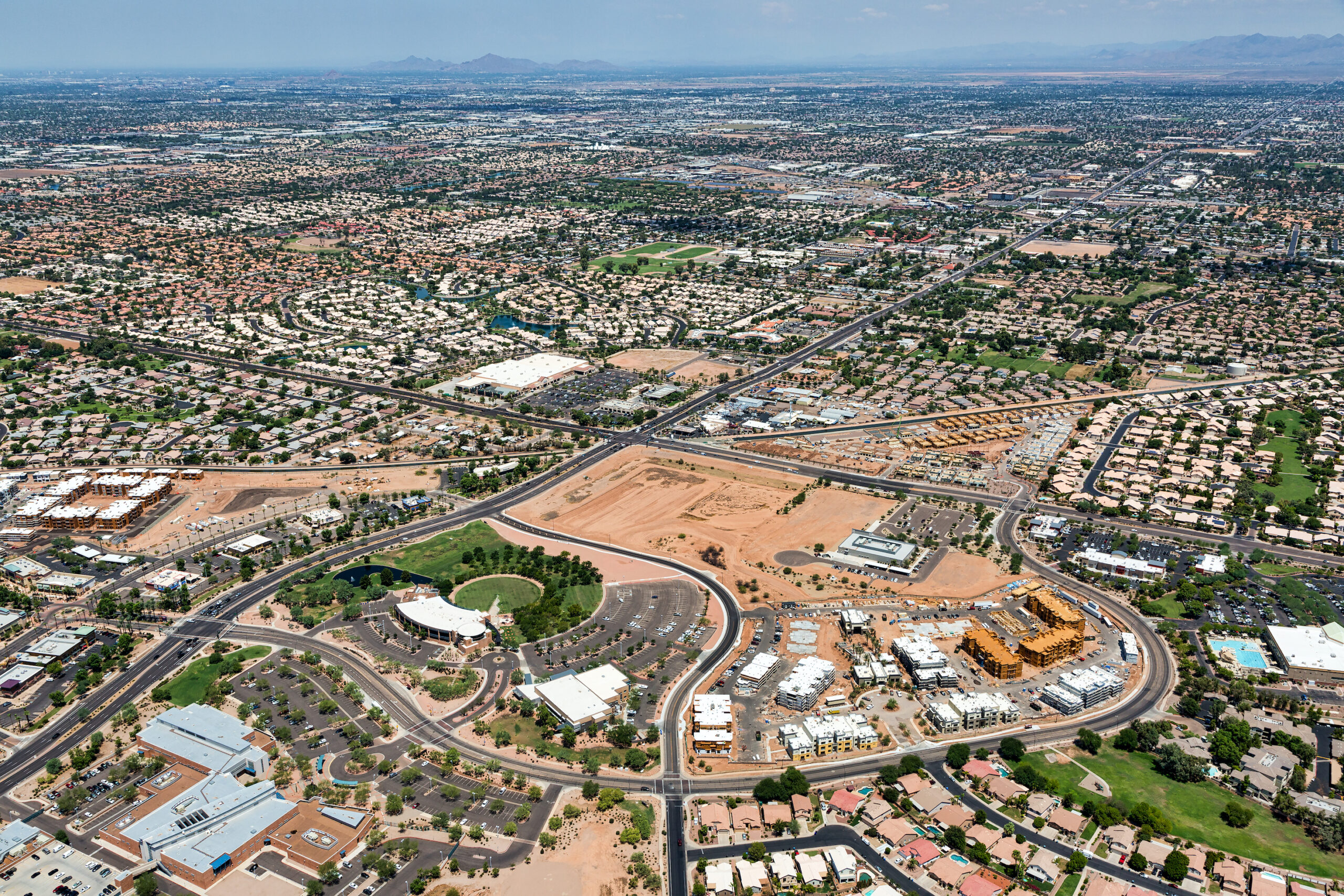
Over 20 years, Gilbert, Arizona, has transformed from an agricultural community to a thriving economic hub. This transformation was pushed by the town’s new commitment to creating a digital community and its eagerness to launch a range of diverse economic programs. The town’s population is increasing by 6,000 to 8,000 people annually and is likely to reach 300,000 people by 2030. The median age of its residents is 32, making it necessary for officials to provide suitable conditions for the development of interactive digital experiences and encourage citizen engagement through social media and multimedia channels.
One of the first steps taken by Gilbert to sustain population growth, economic development, and innovation was the development of a multi-sector approach that included a digital roadmap, in addition to a five-year strategic plan and a planning initiative based on future scenarios. Gilbert’s launched digital initiatives include posts on various social media platforms, podcasts on the preparation of digital plans, a platform to submit requests for public services, a series of videos that show Gilbert’s milestones, and economic development plans.
Gilbert developed an open data platform that enables citizens to access public information through a digital character called Alex. Developed in collaboration with Bloomberg Cities, Alex gives information on how to extract data and use the portal.
Digital roadmap
The town has developed a digital roadmap to position Gilbert as a leader in digital government while focusing on enhancing transparency, effectiveness, and innovation by providing various digital resources. The town established a department for digital communications and appointed a Chief Digital Officer responsible for implementing a range of digital initiatives and programs, including the collaboration of the Office of Digital Government with all internal, external, and digital communication initiatives, marketing and public relations plans, and open data initiatives. The Chief Digital Officer also develops and implements plans through social media and other digital tools to engage the community, in addition to overseeing all governmental social media accounts, including Police and Rescue, Parks and Recreation, and the Mayor’s Office.
The Chief Digital Officer also supervises the Open Data Portal which has integrated the online personal data specialist, Alex, responsible for providing useful information, as well as trends and statistics related to community safety, growth and development, finance and operations, and recreational and cultural events.
On another note, the Government Gone Digital podcast has produced 70 episodes focusing on the innovative approaches that Gilbert’s digital communications department has adopted for communicating with companies and community members. One episode tackled the notion of thought leadership to help other communities transition towards a digital government. Two journalists specialized in digital affairs were hired to publish information about the needs of citizens through more than 25 social media channels with over 170,000 followers. The USD 420,000 investments included digital productions that enhance community participation in economic development.
The town made sure that no aspect of the lives of citizens was overlooked. The Gilbert311 app was designed for community members to report non-emergency situations, tag geolocations, and communicate with the concerned local government entities. To keep up with the town’s state and its latest developments, the Digital State of the Town initiative was launched to produce 15-minute documentary-style videos every year to highlight to citizens the most prominent developments and plans for the next fiscal year.
Gilbert’s many digital initiatives have turned the town into a fertile ground for testing new technologies. It was chosen as the main test site for autonomous vehicles produced by Waymo, a subsidiary of Google. In the fiscal year of 2018, tourism made a huge impact on the town’s community. Gilbert’s strategic planning also resulted in visitors spending a total of USD 224 million, hotel sales reaching USD 23 million, and creating 1,700 jobs. Alex, the Open Data Portal, has earned the town a spot in the 2019 Smart50 Awards. Since it succeeded in changing the prevailing perception of the town and established its position as a digitally connected society that welcomes modern technologies, Gilbert has partnered with Northrop Grumman to build a 220,000-square-foot satellite manufacturing facility. This is how the Town of Gilbert was able to consolidate its position as a state-of-the-art site for the manufacturing of space equipment.