
In the world of art and literature, the “Future Library” initiative stands out as a unique project. This ambitious endeavour, launched in 2014, is designed to span a century, creating a literary time capsule that gathers the work of the finest writers. The city of Oslo, Norway, will unveil its contents in 2114, provided it overcomes the challenges of environmental and societal changes.
With each tick of the clock, time leaves its mark on our cultures, knowledge, stories, and the tapestry of human experience. In an era often dominated by instant gratification and quick results, long-term thinking becomes increasingly difficult. The question of what we will leave for future generations becomes ever more pressing.
It seems that the concept of the ” fast-paced world” has made people unprepared to invest in the future or oblivious to their role in leaving a liveable environment for those who will come after them, harming the planet and prolonging the effects of climate change. In addition, there are some pessimistic beliefs that may take root in individuals and within societies, beliefs that speak of the loss of hope and faith in humanity, and that monopoly and selfishness will leave for those yet unborn only waste, pollution, and the remnants of wars.
But there are always those who think outside the box. Artists from several countries, most notably Scotland, met and conceived an idea they called “The Future Library.” The Oslo Public Library embraced it as a vision and a genuine and innovative human endeavour, making it an initiative in which many cultural organizations and government institutions participate.
The project was launched in 2014 and will be built carefully over a full century, to be received by its audience – who are not yet born – in 2114. At that time, the product will be a library containing literary works by prominent and famous writers, works that have not yet seen the light, as well as some of their authors.
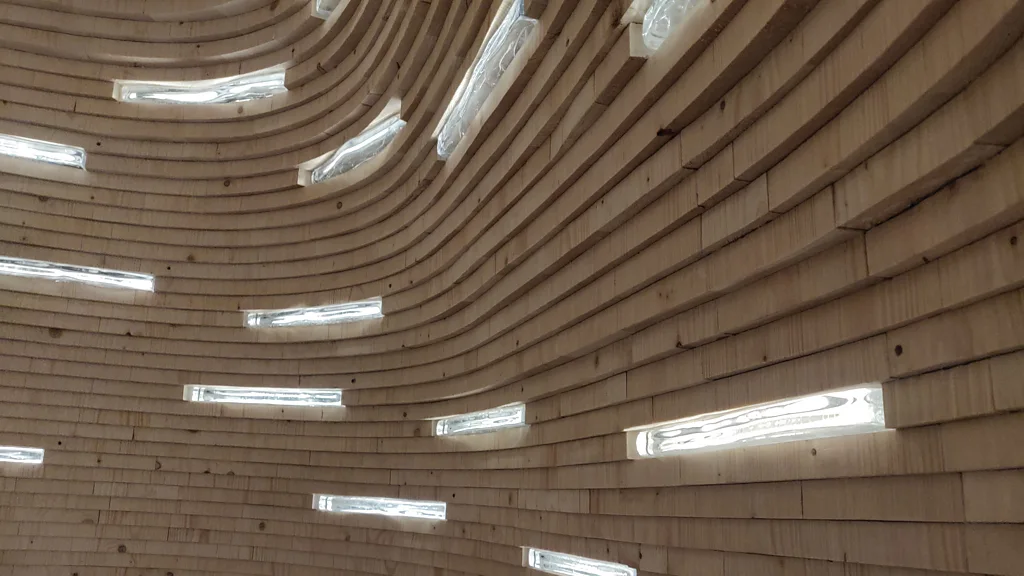
These writers will be commissioned to prepare manuscripts and share them from around the world. To ensure the longevity of these manuscripts, they will be preserved in glass drawers inside the Silent Room of the Oslo Public Library.
For our generation, the information that will be revealed will be limited to the title of each manuscript, the name of its author, and the year it was written, and nothing more. As for its printing, it will be on paper made from the bark of a thousand trees that will green a forest on the outskirts of Oslo. But these trees, like other elements of the idea, are not yet fully in existence; they are planted today gradually, to grow with time.
The Future Library Trust and governmental entities in Oslo have taken responsibility for the project, providing legal protection against potential threats, optimistic about the accelerating pace of environmental activity and its ability to support the completion of the project. Intensive efforts are being made for environmental monitoring and planning to protect and care for the cultural site through expert management.
While this project seeks to emphasize the importance of time and its impact on human civilization, it will face many challenges. A wide range of individuals, organizations, and unforeseen factors can endanger the manuscripts, the forest, or the project itself, not to mention climate change and global warming, which pose numerous threats to the growth, health, and life of trees.
Convincing public authorities, cultural organizations, and other stakeholders to commit to a project that spans a century was another major challenge. It required intensive planning to secure funding and create a framework that would continue beyond the lives of the initiators.
In addition, the project relies heavily on future generations, writers, readers, and environmentalists. But betting on societies is always worrying, and this applies to today’s society as well as future societies. Cultural, technological, or societal changes may make the project less important. Can we guarantee that future generations will appreciate the value of the project as its creators do?
Therefore, the project had to demonstrate the ability to grow and develop, through steps such as choosing the authors for each year and organizing the annual ceremony.
The sensitivity of these challenges increases if we delve into the idea of the project relying on books that no one has ever read, and our generation will never see, and confining them to one place that no one can enter for a hundred years. It is obvious that the delay in the public’s access to the texts may limit their direct cultural impact.
This idea in itself may make the contents of the “Future Library” vulnerable to leaks and theft, as a single incident of this kind could kill the idea that the project is trying to convey.
In the face of all these challenges, the initiators of the project respond that the solution is trust and hope in humanity and our collective responsibility towards future generations. They explain that the primary goal of the project is to encourage patience, giving, and long-term aspirations, and to offer something for the future without detracting from the present.
Over time, a category has formed that supports the project and mitigates the severity of long-term opinions. Confining the project to prestigious authors has contributed to its success and gained trust and acceptance, even the secrecy of the content of the manuscripts will maintain curiosity and active conversations around the world.
The initiative has been able to spark global discussions about the value of literature and art that is stronger than time, and emphasized the importance of patience and trust in the future and the next generation.
References: