
To achieve sustainability for the agriculture sector, The Japanese government seeks to use revolutionary technology for smart agriculture, Smart devices compensate for the lack of experience of novice farmers, The labour gap is bridled.
Since the beginning of the Fourth Industrial Revolution, The ax and the plow are no longer the main tools of the peasant, The Internet and automated systems with sensors that track weather, soil condition and crop and animal health, It provides intelligent statistics on production and its management methods.
Japan Despite its known economic and technical development, still have one of the lowest rates of food self-sufficiency among the world’s major economies, Which amounted to 67% according to the data of the fiscal year 2020, Based on the value of production, Calorie-based food sufficiency has dropped to 37%.
For years, The Japanese government sought to meet local needs on its own as it had done in the sixties of the twentieth century. The production rate as measured by consumption was 20% for rice, 100% for fruits and vegetables, and 91% for meat.
progressively These figures have seen a decline and Japan’s dependence on imports has increased. Today, the rates are 98% for rice, and 30% for fruits, and 76% for vegetables, and 16% for farm products, and 21% for soybeans, and 15% for wheat, and 10% for beef.
The authorities aim to reach 45% self-sufficiency by 2030. Hoping to be able to navigate geographical, demographic and climatic challenges, More than 60% of the country is mountainous areas unsuitable for agriculture. As for the remaining space, It employs farmers with an average age of 67, Their numbers are declining, Where the agricultural sector loses 50,000 farmers annually, This means that it has lost 70% of the workforce in less than half a century. And with experienced farmers, The sector is losing their expertise in using water, fertilizers and caring for crops, The development of new crops and their introduction into the production cycle also takes time, Especially in light of the growing water deficit and Japan’s humid climate, which is a fertile environment for the emergence of a large group of pests.
And because advanced technological tools are the key word in Japanese superiority, The government has resorted to digital agriculture, The Ministry of Agriculture, Forestry and Fisheries in cooperation with producers, The National Institute of Agricultural Research, The Strategic Expansion Program for R&D Investment, Private sector partners, To design a more stable and sustainable food program.
In 2016, The government launched its plan, which was based on 3 main pillars, These are big data, the Internet of Things and artificial intelligence used in diagnosing and predicting agricultural pests, Where the National Center for Agricultural and Food Research classified 120 species of insects and pathogens, He developed a program that can classify them according to images, It is an upgraded version of global models that use data to train AI algorithms.
In the Japanese version, The Ministry coordinated its efforts with research organizations active in 24 Japanese prefectures, It collected more than 700,000 images of various agricultural pests taken over the years and analyzed, classified and labeled by experts with accurate symbols. Next, Programmers have developed a system that allows image recognition more accurately by removing image backgrounds and detecting its elements using a technique called “convolutional neural network”. It is one of the deep learning methods that simulate the visual cortex in the human brain, At this stage, it can detect pests that affect 4 main crops, They are tomatoes, cucumbers, strawberries and eggplants, With an accuracy rate of more than 80%, Provide farmers with methods to combat them.
In addition, The Ministry has launched a new agricultural method called “Digital Fertilization”, It includes the use of the Internet of Things and artificial intelligence, Sensors collect various data from soil temperature, moisture, acidity and exposure to light. The software then analyzes this data to determine the crops’ need for water and fertilizers. It automatically issues the order for these materials to travel through narrow tubes that deliver them to the roots of the growing crops, Instead of watering with sprinklers and excessive fertilizing.
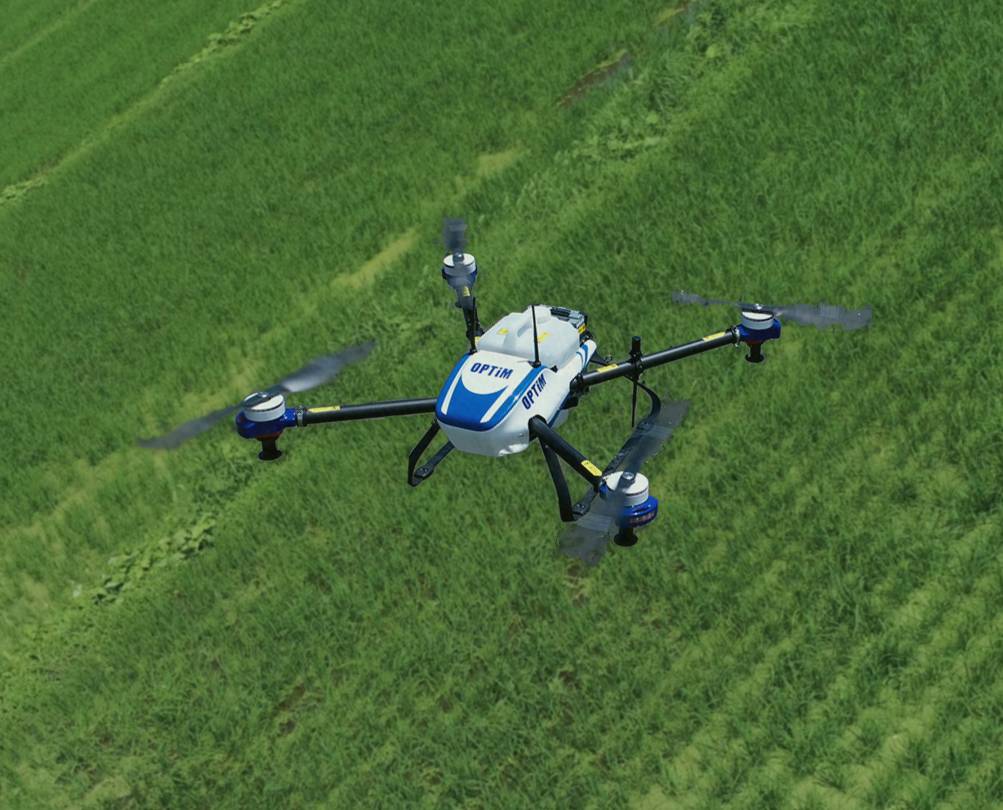
More broadly, Japan began using agricultural robots in 2018. They plow the land, cultivate rice, remove weeds and move between fields, and able to monitor any obstacles. Multiple robots can also be managed by a single person familiar with government guidelines.
today Smart agriculture projects are being implemented in more than 121 locations across Japan. After a challenging journey. For example The development of a pest detection system has been difficult for the Agricultural Research Organization, It is an academic institution that lacks experience in providing commercial services, This is what prompted her to use a cloud service to make the pest diagnosis program a software application interface, This means making it available to private enterprises at low cost and accelerating its adoption in practice, Especially after adding 8 new crops whose pests can be identified thanks to the smart system, This will also be useful in collecting data from users to improve the accuracy of the system’s work.
Agricultural robots face more complex challenges related to legal frameworks and technological development. Therefore, it may be a long time before it actually spreads.
The pest identification and digital fertilization programs will contribute to reducing the use of chemicals and pesticides. They will make the agricultural process more efficient even in areas with limited access to water. They will also provide novice farmers with the necessary expertise, Which takes into account the conditions of the surrounding environment and its changes.
References:
https://thediplomat.com/2022/05/japans-food-self-sufficiency-debate-overlooks-the-core-problem/
https://www.japan.go.jp/kizuna/2022/05/anyone_can_be_a_skilled_farmer.html
https://www.japan.go.jp/technology/innovation/digitalfarming.html